
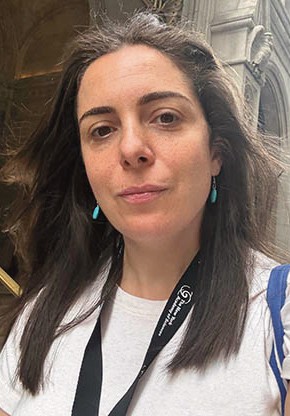

Queens memoirist and Ivy League graduate, Samantha Tal writes about issues pertaining to women’s empowerment, meritocracy, and making the most of the New York minute. She lives in Flushing with her partner and two children. Her memoir is called Waiting for Merlot. Subscribe to see her work at https://substack.com/@st447
NB: Other than the amazing diversity, what do/did you love most about living in Queens (or Queens in general)? How has Queens changed over the years?
ST: I like how Queens is not pretentious. You can simply be yourself here. It’s easy to walk to a local park and strike up a conversation with the person on the next bench. There are amenities here such as great schools (Forest Hills), many supermarkets (Flushing), and a mall (Elmhurst). That being said, the American Dream is still well and alive in Queens. Where you come from doesn’t determine where you are headed.

NB: How does Queens inspire you? What are some of your favorite places to be inspired in Queens?
ST: Queens inspires me because it was once home to famous musicians, ballplayers, actresses, and politicians. One of my favorite places is the Forest Hills Gardens neighborhood. When I took a gap year from law school, and was still trying to figure out what I’d do next, I’d jog through the Gardens. It helped me clear my mind and stop thinking so much. Sometimes while jogging, I’d listen to the whimsical lyrics of Paul Simon, who himself is a native of Queens. Many of his songs were about chasing a dream, and they left a mark on me.
NB: What advice do you have for readers who are hoping to develop their writing practice? Is writing talent innate and/or can it be taught/developed? How important is daily practice? Do you ever get stage fright/camera shy/performance anxiety or have advice about overcoming it? What advice do you have about publishing and rejection?
ST: My advice for readers who are hoping to develop their practice is to read, read, and read some more. Seeing how other authors articulate their voice will surely inspire your voice. I don’t think good writers have to be innately talented, but practice is definitely important. Finally, if ideas about a story or character come to you, try to write them down, because they are easy to forget. I’m still seeking my first literary publishing deal. Any takers? But I have dealt with rejection in the past, and the best advice I have for dealing with rejection is to grow from it, and move on.
NB: Who are some of your favorite writers, artists, poets, event hosts, performers, and other creatives with a Queens connection?
ST: Simon and Garfunkel, The Ramones, Gary Shteyngart, Christopher Dean Myers.
NB: What are your favorite restaurants, cafes, theaters, bookstores, exhibits, museums, communities, and venues in Queens? Favorite places to write or have your work performed?
ST: Forest Cafe is great for an afternoon matcha or meet-up with a friend. I had many conversations with a fellow writer there that inspired me to write my memoir. I also highly encourage visiting Kew Gardens Cinema, which has shown independent cinema for as long as I can remember. I distinctly remember watching “Call Me By Your Name,” starring a pubescent Timothy Chalamet, there. As I walked home from the theater, I wondered about how to make good art. I also love Astoria Park. After long days at teaching internships, I would go there to unwind and enjoy the trees.
NB: What is a typical day like for you?
ST: On a typical day, I wake up at 6:30 AM and get my children ready for the school day. If I’m lucky, I don’t have to daycare drop off that day, instead other family members help out. Then, I work an 8-3 job. I pretty much have to get a lot done in very little time, and I am constantly doing tasks, and “performing” in front of an audience of 4th grade students. Then I pick up my children from daycare. After doing an activity, and making dinner with my partner, the kids are put to bed. Finally, I do an activity for “me,” or I just fall asleep on my dining room table.
NB: Can you tell us more about your work and how you write about issues pertaining to women’s empowerment, meritocracy, and making the most of the New York minute?
ST: In my writing, I am currently exploring how to bring women’s issues – like dating in New York City, consent, and work-life balance – to the forefront. It can be tricky because my personal stories are different from other women’s stories. From what I read, and hear from other women, I have garnered some common themes. The expectations oftentimes placed on women, especially those who are trying to build their own bank account, are unrealistic. Many professional women of my generation were conditioned to work till we reached the top, only to find ourselves lost when we got there. And speaking up for oneself in the workplace is not always a skill that women are taught in high school. I hope to continue to explore these issues in my work, and collaborate with other writers as well.
NB: How do you know when something you’re working on (or piece, or any type of art) is “done” (finished editing, complete)?
ST: I write the piece out. Then, I put it aside. After some time, I begin to revise it. When it’s ready, I send it to a friend or my editor Ferman S. to take a look at it. It’s never really done. But you just have to feel good enough about it to share it with the world.
—Nicollette Barsamian
The Local-Express interview series was originated on July 3, 2013 by Nicollette Barsamian.