
In 2024, the New York state Legislature decided the state needed some money — $75 billion, to be exact — for “comprehensive adaptation to the effects of climate change in New York state.”
The Legislature thought it had found a good way to get the money — by taking it pro rata from every “entity” that, between 2000 and 2024, was in the business of “extracting fossil fuel or refining crude oil” and was responsible for more than a billion tons of greenhouse gas emissions. Not just every such entity in the state of New York — every one in the world.
The Legislature excluded only “any person who lacks sufficient contacts with the state to satisfy the due process clause of the United States Constitution.” Lawyers could argue for a long time about what that means — but one argument is that any entity that emitted a billion tons of greenhouse gas had to know it would affect New York’s climate, and that’s “sufficient contacts.”
You might ask: Is a state of the United States allowed to do this? The answer is pretty clearly no, as a federal judge in Syracuse decided last month.
In West Virginia v. James, Chief Judge Brenda Sannes of the United States District Court for the Northern District of New York held the New York Climate Change Superfund Act unconstitutional. The gist of the court’s holding is that this sort of law can be enacted, if at all, only by the federal government, not by a state.
It’s not hard to see why it’s a problem to let one state go after every large emitter of greenhouse gases on the planet. If New York can do it, any other state can do it too — and they won’t all do it the same way. The New York Legislature found, reassuringly, that “it is possible to determine with great accuracy the share of greenhouse gases released into the atmosphere by specific fossil fuel companies” and assigned the task of figuring it out to a state agency.
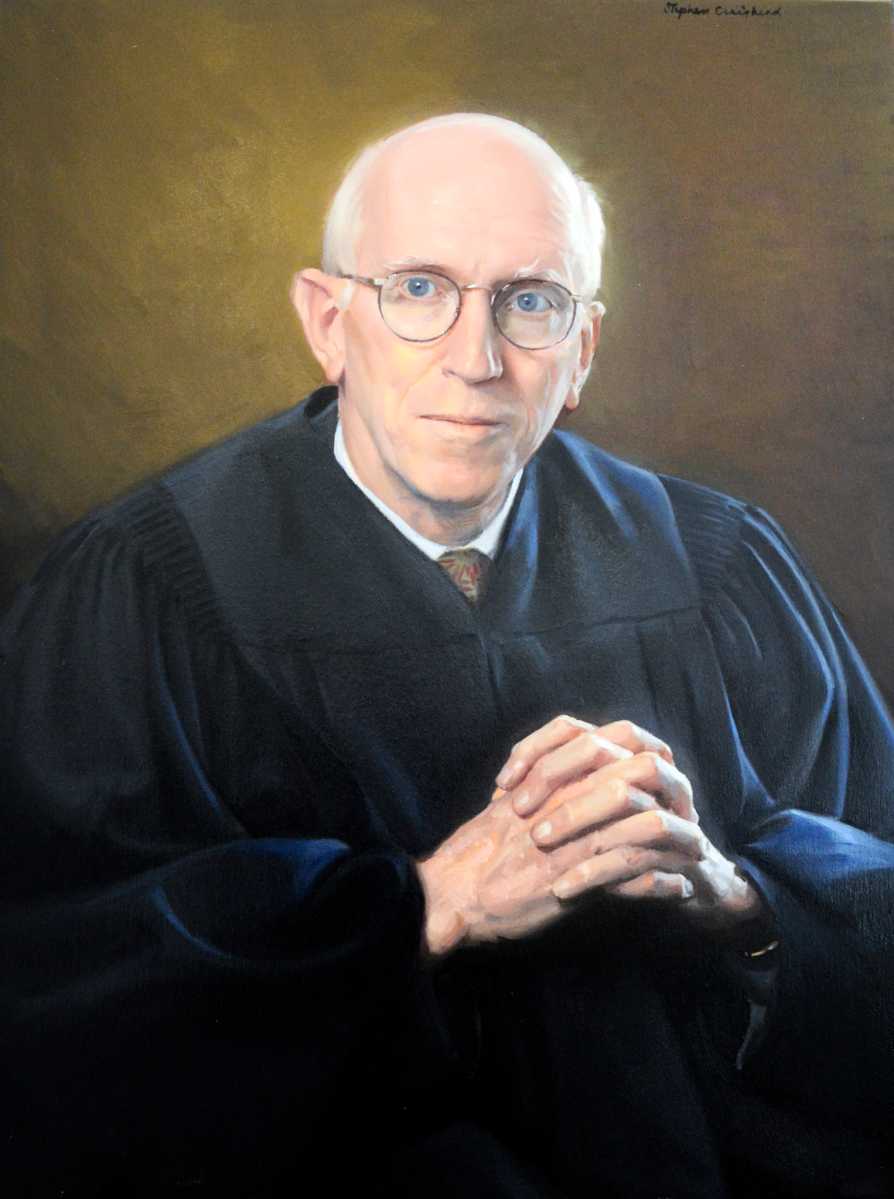 Hon. Judge Robert Smith served on New York’s highest court from 2004-2014.Historical Society of the New York Courts
But what if New Jersey does the same thing, and New Jersey’s “great accuracy” turns out to be different from New York’s? And what if the states have different ways of counting greenhouse gas emissions, so they don’t agree on which companies are over a billion tons — or if they don’t agree on whether a billion tons is the right cut-off point?
And what if they don’t agree on how much adapting to the effects of climate change will cost? New York apparently thinks $75 billion — about $3,750 for every New Yorker — will do it, but what if New Jersey thinks it will be $5,000 for everyone who lives in New Jersey?
The basic problem is that all the states will be applying different rules to charge companies for the same greenhouse gas emissions: when a particle of greenhouse gas leaves your factory, you don’t know whether it’s going to New York or New Jersey.
So 50 states can come after you, and you have to comply with 50 different sets of rules. And the problem will be aggravated because every state will tweak its rules to do the least possible harm to its own businesses — and more to everybody else’s.
Regulation of water and air pollution raises the same sort of problem: we can’t let New York and New Jersey have different rules for what people can dump in the Hudson River, much less how much smoke goes into the sky. So, courts have held for a long time that state regulations of this kind are preempted by federal law — even when Congress hasn’t passed a statute covering the case. It’s very hard to see why greenhouse gas regulation should be different.
The state’s main argument seems to be that it isn’t “regulating” greenhouse gas emissions — it’s just asking the companies who damaged the climate to pay for fixing things up. That’s a tough argument. Try explaining to a business owner that the state isn’t “regulating” her factory’s emissions, while you’re asking her to pay the state a few million dollars because of the greenhouse gas the factory emitted.
The United States Court of Appeals for the Second Circuit — the court to which New York can appeal Judge Sannes’s decision — has already held that the same logic applies to greenhouse gases as to water and air, in a 2021 case involving a New York City lawsuit for damages caused by climate change. To the naked eye, the two cases look a lot alike.
So, I predict that if the state appeals from Judge Sannes’s decision, it will lose. And if this or some similar case goes to the Supreme Court, I predict the state will lose there too. This does not look to me like a hard case.
Robert S. Smith is a former Associate Judge of the New York Court of Appeals. A retired lawyer, he serves as an advisor to the Empire Center for Public Policy.