
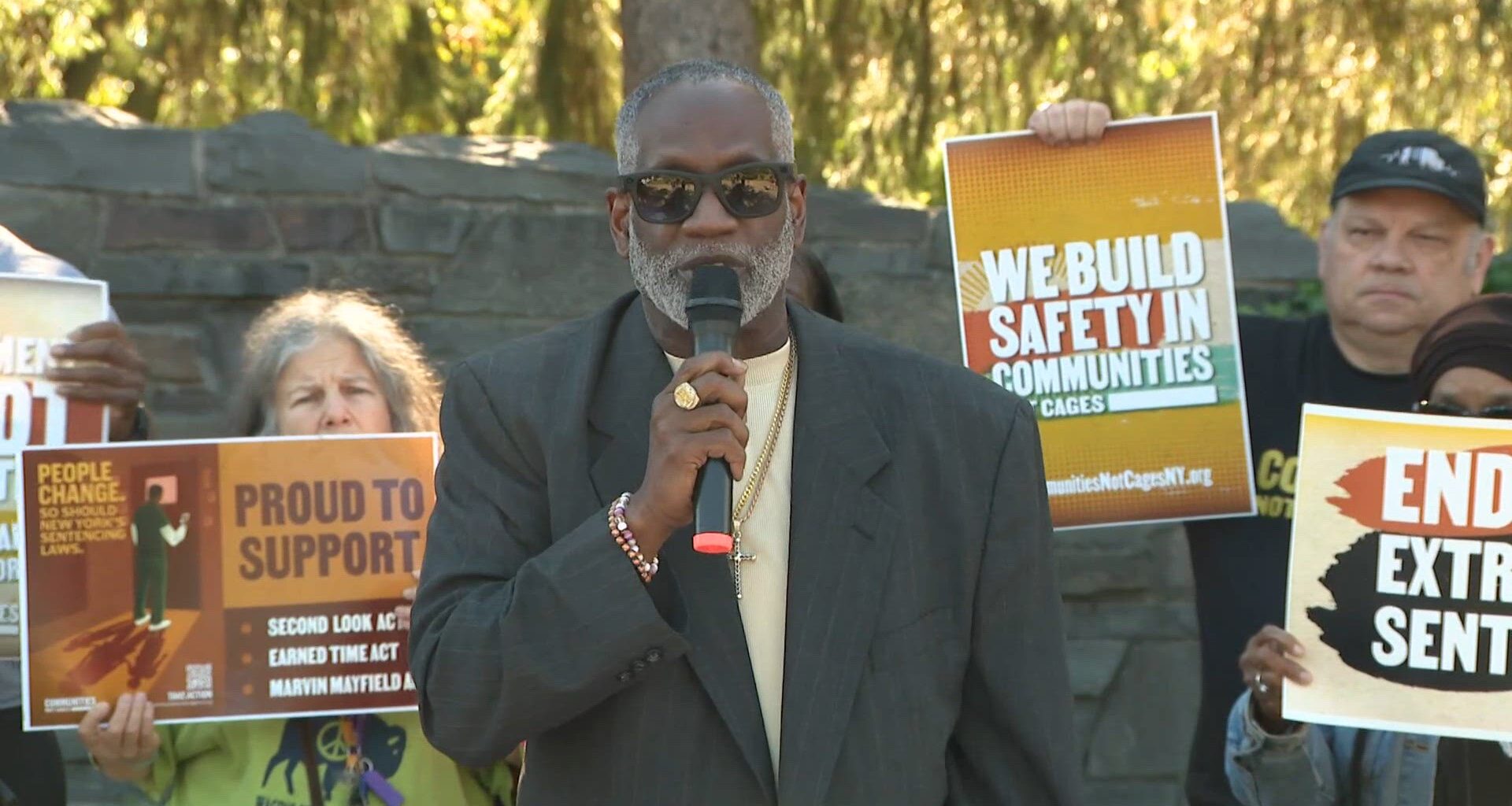
BUFFALO, N.Y. — Efforts to make New York’s prison system more humane are focusing on everything from limiting solitary confinement to expanding programs that help people rebuild their lives after incarceration.
Jerome Wright is among those calling for stronger implementation of the HALT Solitary Confinement Act, a New York law designed to limit the use of prolonged isolation in state prisons and local jails.

This story continues below.
“We need to stop this culture of violence, they need to follow the law. HALT was enacted in 2021. This is 2026. We have yet to have it fully implemented,” Wright said.
The HALT Act was created to reduce the psychological and physical harms associated with prolonged solitary confinement. Among its provisions, the law limits consecutive solitary confinement stays to 15 days and restricts the total amount of time a person can spend in isolation to 20 days within a 60-day period.
Wright and other community leaders also advocate for therapeutic and rehabilitative programs intended to reduce self-harm and violence while giving incarcerated people tools to succeed when they return to their communities.
“We want a system that is pro-social programming so that people can come out better than they went in. That’s what we want, that’s what it’s supposed to be about. That’s what the taxpayer dollars are for. We are paying $4 billion dollars a year for a system that has never worked,” Wright said.
For Walter Ball, the push for reform is also rooted in personal experience. After spending time incarcerated, Ball now works to help others avoid violence and navigate the challenges that can come with returning to the community. He runs I Am Youth, a nonprofit focused on violence interruption and mentoring high-risk youth. Ball is also calling for action on additional criminal justice legislation, including the Marvin Mayfield Act, Second Look Act and TIME Act.
“These bills — the Marvin Mayfield Act, the Second Look Act, TIME Act, these things should have been passed a long time ago,” Ball said.
The effort to support people after incarceration extends beyond legislation.
Ball, State Sen. April Baskin, and other local leaders on Thursday invited formerly incarcerated men and women to dinner at Mount Olive Baptist Church on East Delevan for an event called “Breaking Bread.”
The dinner series is intended to connect people returning from incarceration with resources and community members who can help them navigate life after prison.
“Being formerly incarcerated myself, that’s the one thing when you come home — that’s one thing, but you need to get employment, find a place to live, a lot of the resources and network that’s provided through these dinner series, Breaking Bread. This gives you a one-up, if you will, instead of having to seek these resources out yourself. They’re actually right there in the room with you,” Ball said.
For Ball, those connections are part of a broader push for change in the criminal justice system.
“It’s on the citizens to say we want this change. We voted you in office. We want this change.. These things, they need to be done. That’s why people are pushing for them so much, because they need to be done,” Ball said.
2 On Your Side reached out to the New York State Department of Corrections and Community Supervision for a response to concerns about the implementation of the HALT Act and broader prison reforms.
In a statement, a DOCCS spokesperson said, “Commissioner Martuscello has set clear goals to reduce violence of any kind within our correctional facilities. DOCCS follows all state laws, including HALT, which has been implemented across all DOCCS facilities, and will continue working with advocates and elected partners to make New York State prisons safer for all who enter and work in them.
Courts have upheld the Department’s authority to suspend certain HALT programming requirements when facility-specific emergency conditions warrant such actions. During the 2025 illegal job action, the Commissioner exercised that authority at affected facilities in response to the extraordinary circumstances facing the correctional system. DOCCS continues to operate under a Governor issued Executive Order and state of emergency that permits DOCCS that to suspend HALT programming on a facility specific basis.
As a result of ongoing litigation, the Department has no further comment.”