
Kyle Fraser, the winner of the 48th season of the blockbuster reality show “Survivor,” connected his experience on TV to two formative parts of his life: his practice as an attorney and being incarcerated as a young person.
Those two parts of Fraser emerged onto network television in very different ways, he told the crowd at the Brooklyn Bar Association’s LGBTQ+ Committee event on Sept. 25 in Downtown Brooklyn. Fraser strategically hid the fact that he was an attorney on “Survivor,” but eventually opened up about being incarcerated during the show — something he had told anyone in his life but his closest friends.
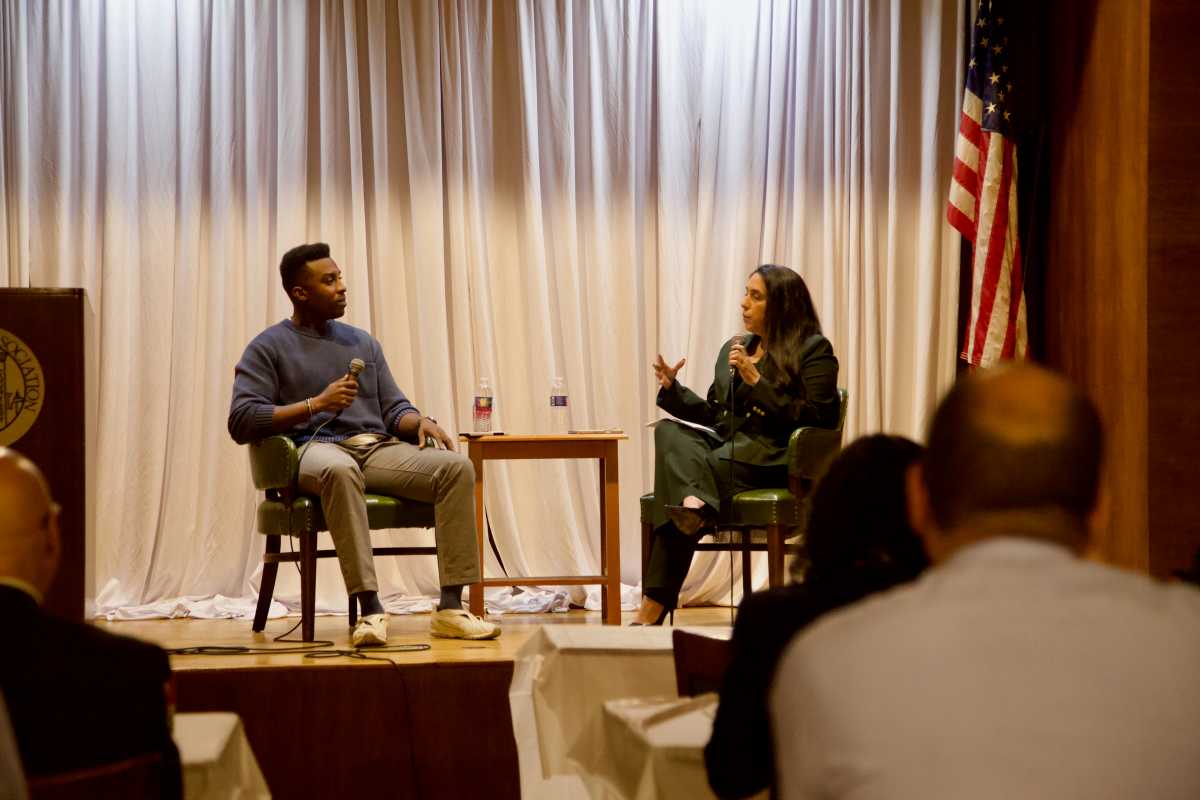
Fraser discussed the parallels between the reality TV competition and the legal profession during a “Conversation on Resilience and the Law” that the chairs of the bar’s LGBTQ+ Committee hosted on Thursday night at the bar association’s headquarters. In a conversation with Kings County Supreme Criminal Court Justice Shirin I. Zarabi, Fraser explored how winning performance on Survivor — where people must build trust, adapt and operate under pressure — is linked to his life experiences with race, professional identity, and community.
Asked how his professional experience might have shaped his ability to navigate the competition on the show, Fraser said that he would actually go further back in his past to when he was incarcerated to explain his success on the show.
“I inadvertently gained some of those skills that you’re talking about, prior to going on Survivor, and I think it’s what allowed me to kind of flourish on the show,” Fraser said.
Fraser grew up in southwest Virginia, where he lived between different social settings. He was raised in a low-income home, with a father from South America and a mother from Mount Vernon, NY, and grew up in a predominantly Black church community, while going to a white and affluent private school on scholarship. He was arrested twice as a teenager and once when he was in law school — all for youthful misdemeanors, but he noted some were the result of racial profiling.
“I remember thinking after that I am kind of good with my back against the wall, no pun intended, and so when I was on ‘Survivor’ there’s a lot of parallels to being incarcerated,” Fraser said. “You are literally stuck, somewhere where you cannot leave.”
Lessons from ‘Survivor’ in law
The isolation of “Survivor” taught Fraser how to spot opportunities to connect with strangers and build community when doing so is crucial for survival.
His being vulnerable with new people led to his lifelong friendship with “Survivor” co-contestant Kamilla Karthigesu, with whom he recently co-founded a mobile app called Paperclip. He also said that his experience with incarceration taught him to be comfortable asking for help when dealing with unfamiliar legal challenges.
Fraser said that he was very careful about sharing his experiences in jail before the show, but once it was out in the world, he felt relieved after doing so. He views his past incarceration as an important part of who he is as an attorney.
“Those skills that I’ve gained, the relationships that I’ve gained, seeing men go through hardship, but also flourish in such a terrible situation, it honestly is a part of who I am as an attorney, and how when I was in criminal defense I interacted with clients,” Fraser said. “It was so cool to finally be able to talk about it and for people to be so receptive and kind.”
Fraser had been working at a private practice for white-collar criminal defense. After the show aired, Fraser took a role as counsel handling litigation at Warner Music Group.
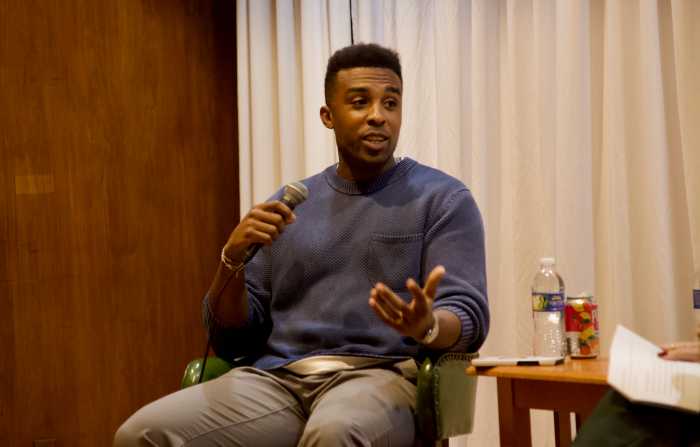 Kyle FraserPhoto by Max Parrott
As a man of color navigating a predominantly white legal profession, he said law school was the first time he was able to network with a broader community of Black peers and realize the importance of having a dedicated support network rather than operating as a “lone wolf.”
On “Survivor,” he knew he had to hide the fact that he was a lawyer because, at this point in the show’s longevity, it’s become a trope that there’s a stigma around lawyers as untrustworthy or calculating contestants.
He connected the experience to the need people sometimes feel to code-switch, or hide parts of their background for professional purposes.
In his case, on the show, he said he created a narrative for his backstory that centered on his 22-year-old self when he was working as a teacher. He successfully fooled another undercover lawyer on his season and kept his secret until the final Tribal Council, where the jury of his fellow contestants was completely shocked.
When he was preparing for his closing arguments on the show, he drew on his law school trial experience and focused on human connection. Even though he had covered up parts of his life, he said he wanted to show that the underlying personal connections he had made with the other contestants were genuine, even though it was in the context of a cutthroat game show.
The experience has made him really scrutinize the value or necessity of concealing parts of your identity in a professional setting.
“I think that as I reflect on parts of my life where I have hid things about the parts of my culture, I think if I would go back, sometimes it’s not as necessary as I think it is,” Fraser said. “And there are some things that unfortunately in our careers right now, you still kind of have to hide about yourself… but it’s less than I think it is.”
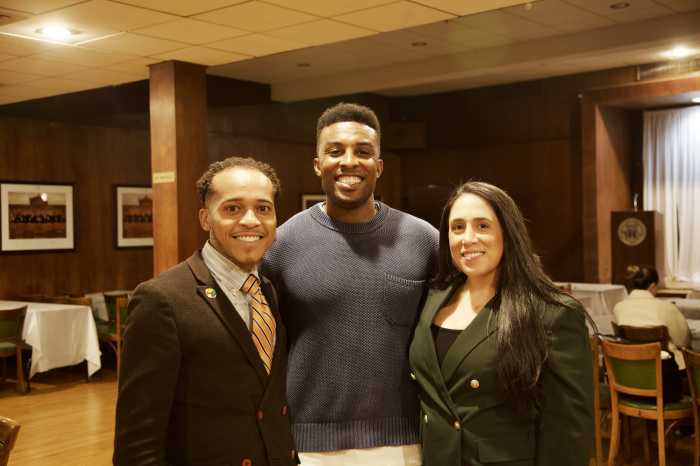 From left, attorneys Ronald Cosme, Kyle Fraser and Criminal Court Judge Shirin I. ZarabiPhoto by Max Parrott
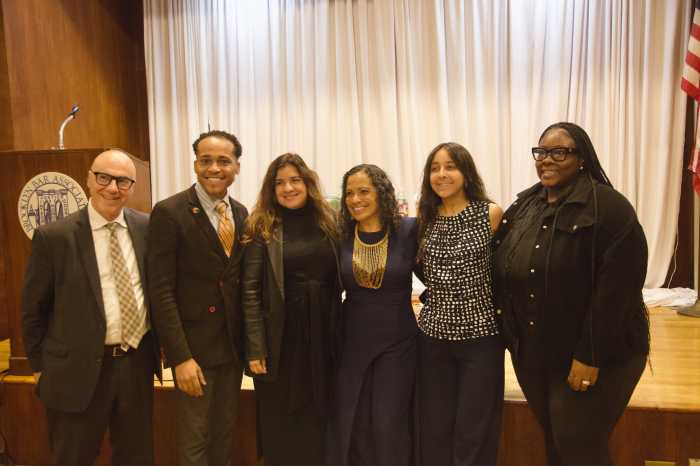 Brooklyn Bar Association membersPhoto by Max Parrott
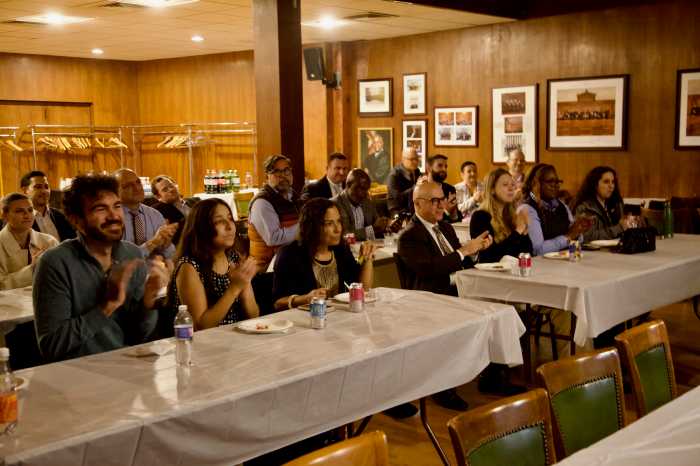 Photo by Max Parrott
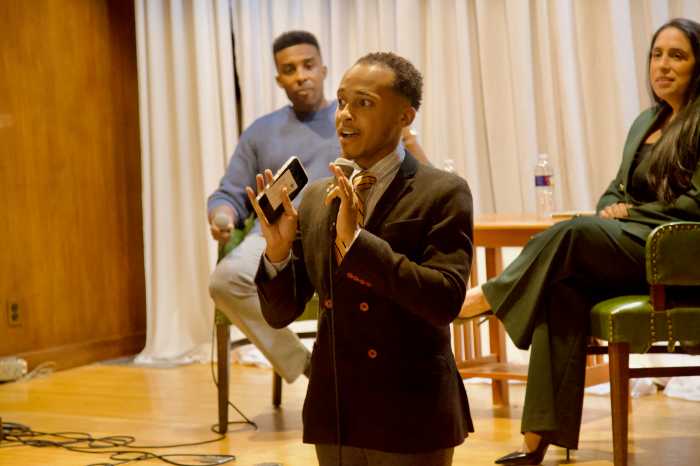 Brooklyn Bar LGBTQ+ Co-Chair Ronald CosmePhoto by Max Parrott
 Kyle FraserPhoto by Max Parrott