
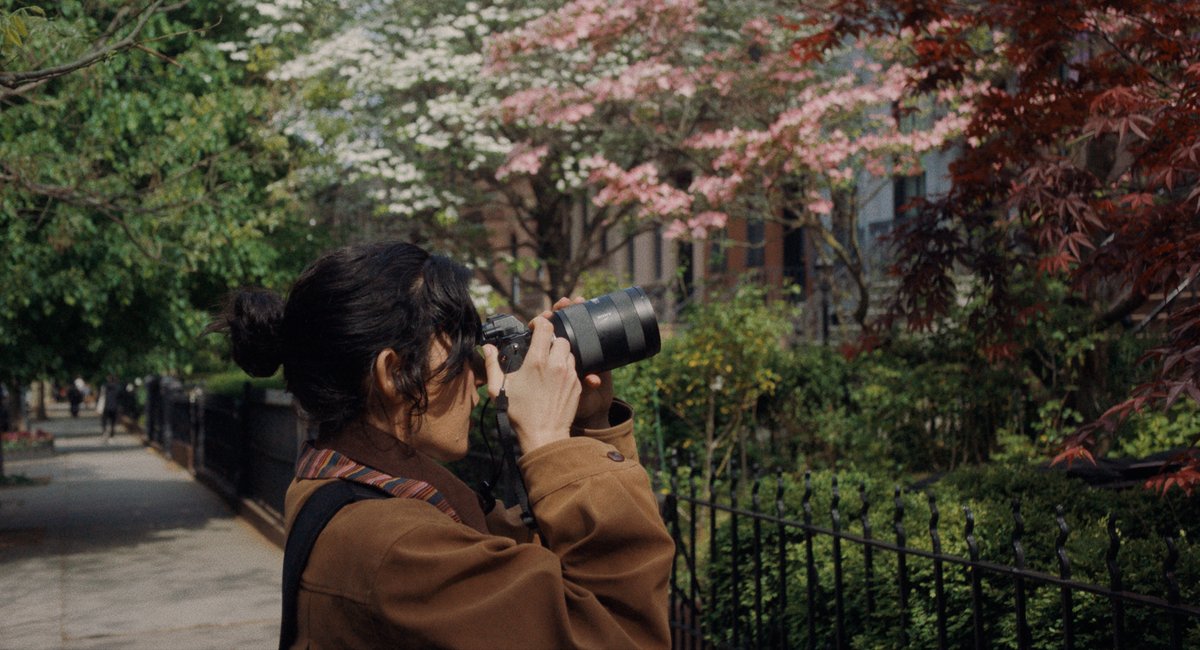
Paula González-Nasser is used to dealing with strangers’ quirks. As a longtime location scout, she has spent years knocking on the doors of homes she hopes might be used as sets for the films or TV productions she’s working on. She never knows who’s going to answer. They might let her look around and take some photos for the creative team, or they could tell her to get lost.
She is usually prepared to be surprised by what she encounters once she’s inside a stranger’s apartment. But there’s an interaction from nearly a decade ago that she hasn’t been able to shake: She was almost done touring an apartment that seemed perfect for a project when the homeowner revealed that there was one more room left to see.
“It was a room full of books and media about 9/11 conspiracies,” she recently recalled. “He spent an hour walking me through each thing, and I had to hear him out.” She couldn’t risk alienating the man if she wanted to film in his apartment.
Location scouts are Hollywood’s unsung heroes; they do a delicate dance to appease both producers and whoever controls the places they discover, whether eager homeowners or grumpy landlords. Gothamist spoke to a few scouts who described their jobs as demanding. González-Nasser drew inspiration from this tricky dynamic while writing “The Scout,” a new film following a young woman named Sofia (Mimi Davila) as she traverses New York City in search of places to shoot a TV pilot. The film, now playing at Film Forum, is González-Nasser’s debut as a feature director.
González-Nasser, who has scouted locations for TV shows such as “Younger” and “Mrs. Fletcher,” didn’t set out to make such a meta movie. Her original intention was just to write about a character who felt disconnected from her environment, and it eventually dawned on her that “scouting was the perfect vessel to explore that.”
“It’s a really interesting job because of the mental headspace that you’re in, where you’re always looking at places as potential filming spaces,” she said. “That can affect your personal relationships and friendships and just your way of operating.”
I met up with González-Nasser earlier this month at her friend’s one-bedroom apartment in Crown Heights. The friend has lived there for a while; González-Nasser knew from the moment she first saw the space that it would be perfect as a set for one of her projects (it appears in the film “Human Theories,” which she produced).
At the apartment, González-Nasser re-enacted the scouting process. If this had been her first time there, she said, she would linger at the door and photograph the foyer from multiple angles. Then she would walk into the kitchen and capture how the hallway connects the two spaces. She would wade further into the kitchen to photograph how the tall windows allow light to flood into the room, and continue this process until making her way through the entire place. There can never be too many photos.
“While I’m doing this, if I’m with the tenant or the location owner, I’m asking questions,” González-Nasser said. “Maybe I see a red flag. Like, ‘Is the upstairs neighbor building something? Is there construction going on? Is that temporary?’”
González-Nasser said she fell into location scouting. She had dreams of playing soccer professionally, but they were crushed when she tore her ACL in high school. She channeled all that energy into film production, an often arduous field, and moved to New York in 2016 with friends from Florida State University’s film school. While she was working as a production assistant on Hulu’s “Difficult People,” a location manager noticed her keen eye and asked whether she would consider scouting.
The job “kind of messed me up at first,” González-Nasser said. “When we moved here, I had no money. I lived in a four-bedroom apartment with a bunch of people, and it was infested with mice and there was probably lead in the wall. But then my job sometimes [involved] scouting these really expensive, beautiful brownstones.”
This contrast in lifestyles figures into “The Scout,” which forgoes a tight plot in favor of painting an impressionistic portrait of Sofia’s scouting adventures. She visits some gorgeous homes, complete with shiny wood floors and ornate crown molding. One of the homeowners has a young baby, giving Sofia a glimpse of an idyllic life that greatly differs from her lonely existence.
These days, González-Nasser feels better about visiting luxurious properties. She has come to enjoy touring places she couldn’t possibly afford and imagining what it would be like to live there. She connected Gothamist with a couple colleagues who shared a similar sentiment about the perks of doing this work. Benjamin Chacko, who has spent a decade working in locations, recalled the surreal experience of shutting down the Verrazzano Bridge for a chase scene in “John Wick: Chapter 3 — Parabellum.”
“Whether we’re filming in the World Trade Center or filming at JFK, you get to see things and do things that no one else can,” Chacko said. “As a New Yorker, I’m going into places where I’m like, ‘Wow, this is just so cool to see and be a part of.’”
Anthony Pissani, a location manager who has worked on films such as “Challengers” and “A Complete Unknown,” said the job is a solid stepping stone to becoming a producer because you have to collaborate with nearly every department. (As a location manager, he sticks around past the scouting stage to facilitate production as well.)
He added, “My old manager used to say, ‘Think of us like the Marines. We’re the first ones there. Once the company lands, they do their thing, and then we’re the last ones out. We clean up, make sure everything’s left in good order and get out of there.’”
González-Nasser said that working as a scout prepared her for the otherwise daunting task of writing, directing and producing her debut feature. It might go without saying, but she did also serve as the film’s primary location scout. She arrived at her friend’s Crown Heights apartment with a present: a baseball cap reading, “Always scouting.” It’s a skill set González-Nasser will never shed. And for that, she’s grateful.
“In any project I’m a part of, I’ll always be scouting,” she said. “Even if I’m directing, I want to have such a big part in finding locations because it’s such a big part of my creative process. And it’s just fun.”