
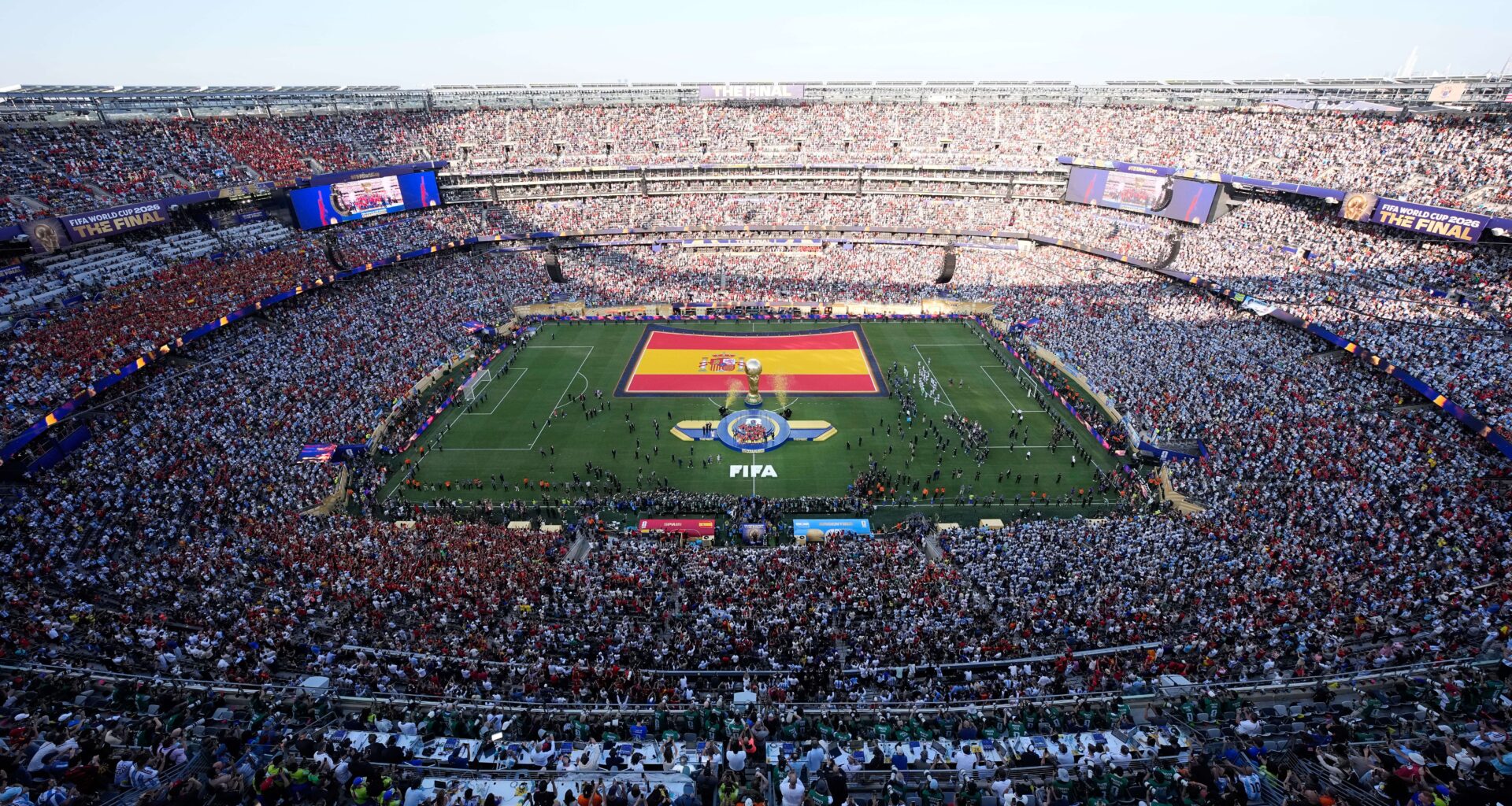
No disrespect to the dozen or so major cities throughout America — and the hundreds throughout the world — but this summer which just ended belonged to New York.
Knicks in five. Eight World Cup games at MetLife Stadium, including the final. Jay-Z’s sold-out homecoming concerts at Yankee Stadium. The country’s most widely attended celebration of America’s 250th anniversary, including a parade of 80 tall ships through New York Harbor. And those were just the one-off occasions.
The city also played host to many other longstanding annual summertime events, from the U.S Open to Gov Ball to the Puerto Rican Day Parade. (According to estimates, there were also nearly 20,000 weddings in the city this summer, including one celebrating the union of a certain Taylor and Travis.)
The region didn’t just prove that we’re capable of hosting multiple major events. We showed that we can do it in a way that makes the people who live here better off, makes the greatest city in the world even stronger, and makes the planet’s most iconic events even more so.
That starts with our economy. When it comes to major celebrations and spectacles, this region has a big advantage: we don’t need to build out our tourism infrastructure. We’re already home to world-class hotels, transit, stadiums, and businesses prepared to welcome millions of celebratory customers.
Nor is it just the tourism industry that benefits from tourism. Guests who arrive in town for a concert or a big game become patrons at the city’s museums, bars, restaurants, galleries, and theaters, making sure that the impact of the event is felt far beyond the event itself.
Compared to most cities, even large and thriving ones, New York can reap greater benefits from hosting while paying lower costs.
We saw this during the 2026 FIFA World Cup, where I served as CEO of the New York New Jersey Host Committee. An economic impact report from the Oxford Economics Company, Tourism Economics, found that the tournament generated a total economic impact of $3.5 billion, exceeding initial projections. $1.9 billion in direct spending during the World Cup included $653 million on lodging, $346 million on food and beverage, and $264 million on retail.
The eight games played at MetLife Stadium, along with fan events and programming in all five boroughs and New Jersey, brought in about $1.4 billion in labor income and spurred $414.2 million in state and local tax revenues.
Those statistics mean more dollars in the pockets of small business owners, more good-paying jobs, and more opportunities for everyone. And while the tournament — and the direct spending associated with it — may be over, the boost to the economy isn’t. Many of the people who came to New York this summer to experience a once-in-a-lifetime moment will return as tourists, students, and investors.
The World Cup also demonstrated that the benefits of hosting major events goes beyond dollars and cents. While plenty of New Yorkers were among the 645,000 fans who attended a match at MetLife this summer, you didn’t have to be in the stadium to be part of the world’s biggest sporting event.
In Queens, the Billie Jean King National Tennis Center became the Group Stage HQ. Brooklyn Bridge Park was home to the longest-running Fan Zone in the nation. Rockefeller Center hosted one of the most star-studded pickup games in soccer history, 50,000 fans packed Central Park for the final, and the mayor’s office kept soccer fields open late for pickup games in all five boroughs.
Thanks to New Yorkers, the World Cup wasn’t just about the games, either. Norwegians took over Times Square for the Viking Row, and Brazilians turned Midtown into a Carnival. Social media was full of fans from around the world discovering bagels and New York pizza. Norwegian superstar Erling Haaland was responsible for the most famous Katz’s Deli moment since “When Harry Met Sally.”
Hosting the world’s biggest events reminded us of all the reasons we love this city — and it brought out the best in us, too. From the throngs who packed the streets during Knicks games to the fans who braved a heat wave to get near Madison Square Garden during Taylor and Travis’s wedding, New Yorkers weren’t just spectators. We made these celebrations our own.
Yet at the same time, perhaps the most remarkable aspect of this remarkable summer was how unremarkable it could sometimes feel. Because New Yorkers don’t just welcome the best the world has to offer. We expect it. We know that hosting the planet’s biggest events makes this city even better. And we know that the world’s greatest city makes the planet’s biggest events even better when they happen here.
When this city brings home a championship or opens its doors to fans for an international tournament or huge concert series, it becomes more than just another event. It adds to our ever-growing list of Only in New York moments.
Which is why this summer should be just the beginning. The 2031 Women’s World Cup will be held on U.S. soil. Where better to hold the final than in New York? Then there’s the largest global event NYC has never hosted: the Olympics. Let’s bring the games here, in a way that doesn’t just take advantage of all New York has to offer, but allows every New Yorker to take part.
This summer has reminded us what’s possible. Now, it’s our job to make those possibilities come to life.
After the final whistle of the World Cup Final, just as it had for every other game, Frank Sinatra’s “New York, New York,” came over the speakers. Forty-six years after the song was first recorded, it still contains the truest testament to New York’s promise as a city of dreamers and strivers. If I can make it there, I’ll make it anywhere.
When it comes to world-class events, however, you can’t just make them anywhere. If you want them to be truly one-of-a-kind for everyone watching around the globe, while reminding New Yorkers why there’s no place we’d rather call home, there’s only one place to do it. The only question is whether we’ll build on this summer’s momentum.
The answer? It’s up to us, New York.
Lasry served as CEO of the New York New Jersey FIFA World Cup Host Committee.