
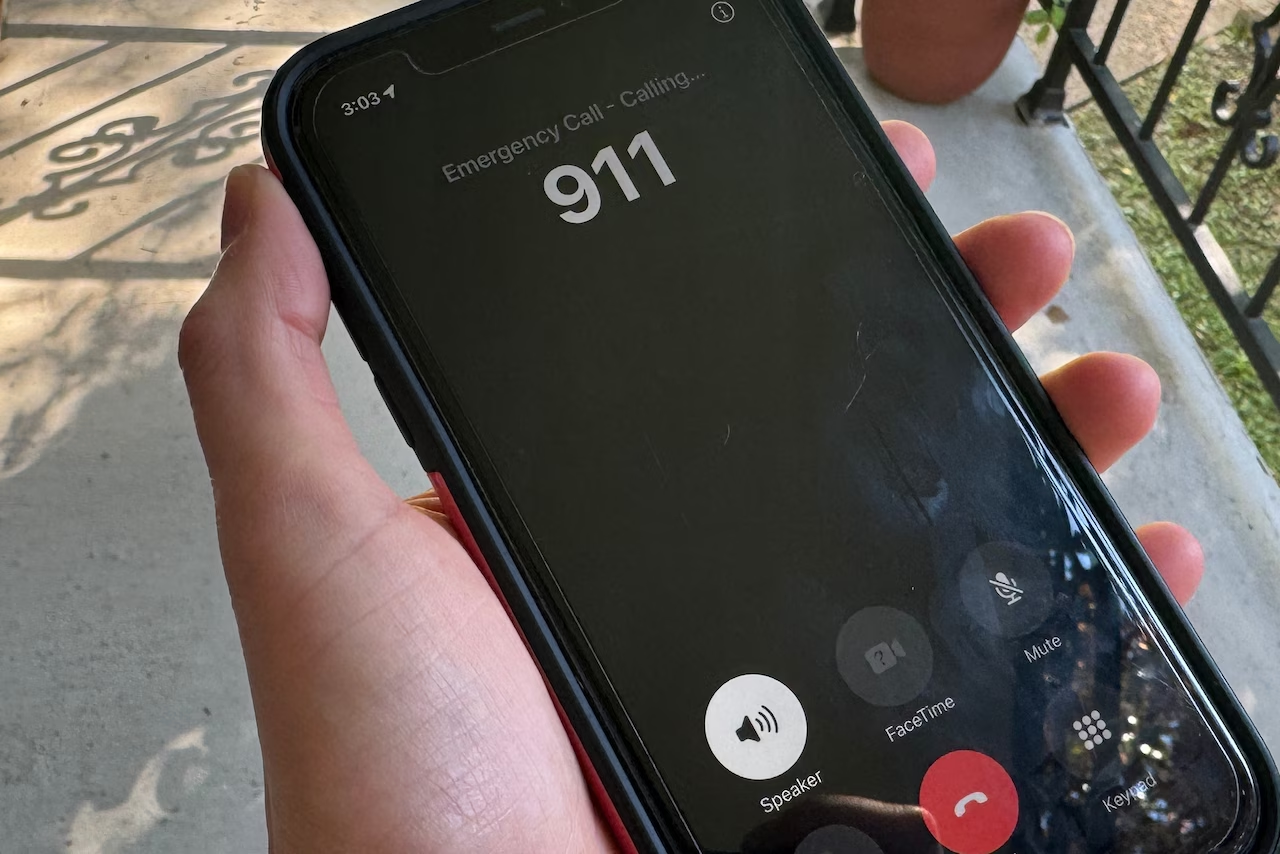
A New York City Council member plans to propose legislation aimed at improving how officials respond to 911 outages after an hours-long technological glitch in August disrupted about 1,700 emergency calls.
911 outage exposes system vulnerabilities
Councilmember Oswald Feliz, chair of the council’s technology committee, said the outage exposed vulnerabilities in the city’s emergency communications system and highlighted the need for better procedures when the system fails.
“Our 911 call system is vulnerable, and it needs a lot of work to make sure that it’s safe and reliable,” Feliz told Gothamist.
Lisa Gelobter, the city’s chief technology officer, told the City Council earlier this month that a routine software upgrade at the Bronx 911 call center caused the August disruption.
More than 700 of the affected calls were made by New Yorkers seeking emergency assistance, she said, and about 100 callers never connected with an operator.
Officials took hours to determine the scope of the outage and reroute calls to another call center in Brooklyn, Gelobter said. The city did not notify the public while the outage was underway.
Gelobter said officials focused on restoring service and did not want to discourage people from calling 911. The city is now reviewing 911 call recordings to monitor for potential problems and taking additional precautions during technology upgrades, she said.
A long-delayed upgrade
Feliz told Gothamist he is drafting legislation that would require the city to notify the public when a 911 outage occurs. He is also considering measures to improve how outages are detected and ensure backup systems function properly.
The August outage occurred as the city continues a long-delayed overhaul of its emergency communications technology through Next Generation 911. The digital system is designed to allow dispatchers to receive photos and videos and more accurately identify the locations of emergency calls.
The project had cost the city more than $240 million as of August 2026, according to City Hall. It was originally expected to be completed in 2021, but subsequent projections pushed the completion date to late 2024 and then summer 2026. Gelobter told the council this month that the system is now expected to be completed in 2027.
“I inherited this program that the last administration did not prioritize,” Gelobter said. “But that’s going to change under my watch.”
Rebecca Neusteter, executive director of the University of Chicago Health Lab and author of a book about 911 systems, told Gothamist that outdated technology and underinvestment have affected emergency communications systems across the country.
She said upgrading the technology can improve the experience for both emergency callers and dispatchers but requires sustained funding and attention from policymakers.
Feliz told Gothamist that the city should ensure the overhaul is completed safely and without disrupting service but questioned why the upgrade has taken so many years.
“No system should take almost a decade to upgrade, especially something related to technology,” he said.