
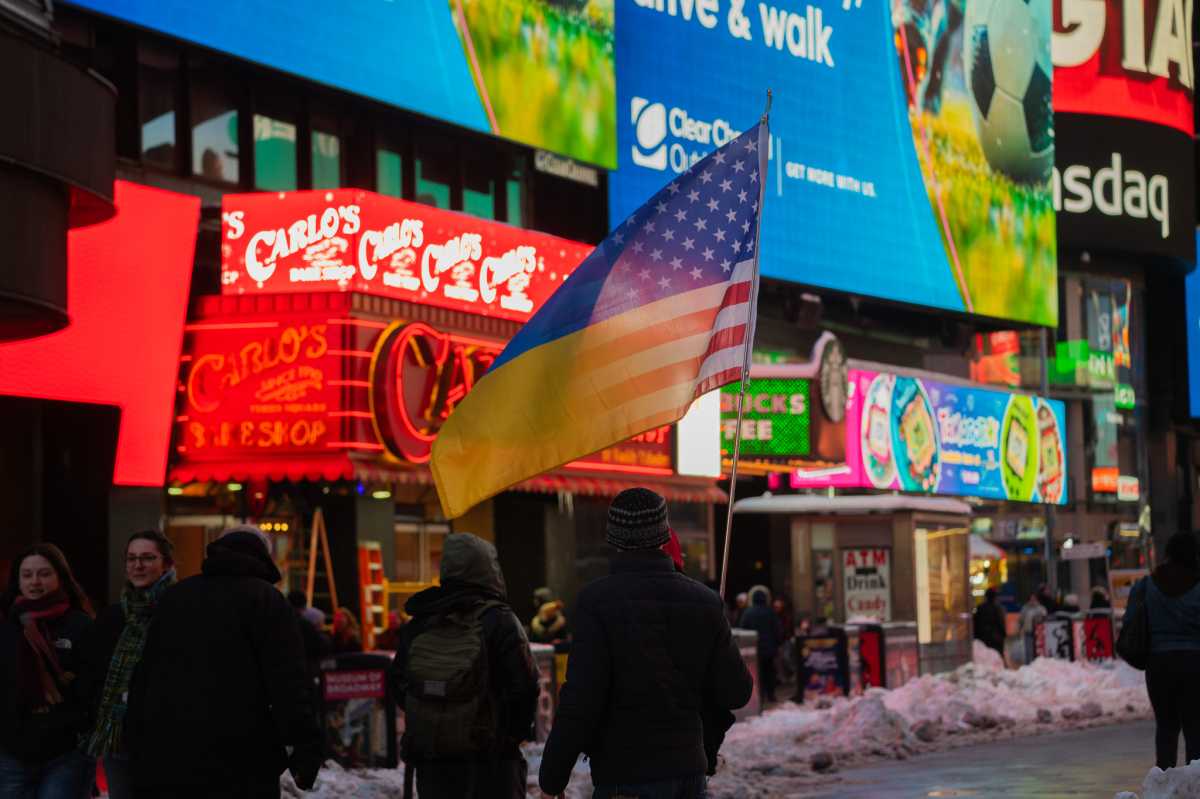
Since President Donald Trump returned to office in 2025, steps have been taken to end the Temporary Protected Status (TPS) program for more than a million recipients, including tens of thousands living in New York.
This year saw recipients from countries such as Haiti, Syria, Venezuela, and Yemen lose their status. Some are currently in limbo as recipients await to hear if their status has been extended.
Among those recipients are 101,000 Ukrainians who fled their country not long after Russia invaded theirs in February 2022. The TPS program was made official in October 2023 for Ukrainians already in the United States to apply. There was also the United for Ukraine program, which was for those not yet living in the U.S.
However, United for Ukraine was suspended last year, and the two-year humanitarian parole is now ending. The same is happening for Ukrainians with TPS; their time is ending on October 19th with no word yet of any extensions. With less than a month to go before the deadline, many Ukrainians living in New York are feeling in limbo.
“It’s a very stressful situation,” says Olena, who left the Kyiv region in 2022. She has a work permit, but is still waiting for the paperwork allowing her to stay in the U.S. to come in. “We don’t know what to do. We are waiting. We are working. We are doing everything we can. We’re all nervous, but the situation is that we are doing our best, and we have only one thing to do is to wait.”
Andrew Stasiw, the principal of St. George Academy in Little Ukraine in the East Village, says many of his students are Ukrainian refugees, and their families are awaiting and wondering what will happen if their TPS is not renewed.
“They don’t know what to say or do,” Stasiw says. “Like the reaction right now is, ‘We hope something changes. We hope it gets renewed. They wouldn’t do this to us, would they?’ Some of them are like, ‘Where do I go? I’ve established some roots here in the last three years. I have a job.’”
The New York Legal Assistance Group (NYLAG) says their Ukrainian clients have expressed the terror of having to return to their war-torn country as Russia continues to increase its attacks. On Sunday, eight people were killed across the country while six were reported dead on Saturday. President Zelenskyy said that over the past week, Russia had attacked Ukraine with 3,900 drones, aerial bombs and other missiles.
“They’re terrified,” says Yuliya Dolich, Coordinating Senior Paralegal in NYLAG’s Immigrant Protection Unit. “Because if they have to return to Ukraine, where the war is still ongoing, virtually nowhere in Ukraine is safe right now. Ukraine is running low on air defense interceptors. Ukraine is very vulnerable. So Ukrainians are watching the news and they’re terrified of what they see. Also, there is another winter approaching. There will be heat and water outages, and we have a lot of single mothers. We have a lot of elderly clients. They know they will not be able to live under such harsh conditions.”
Ukrainian refugees brace for the worst
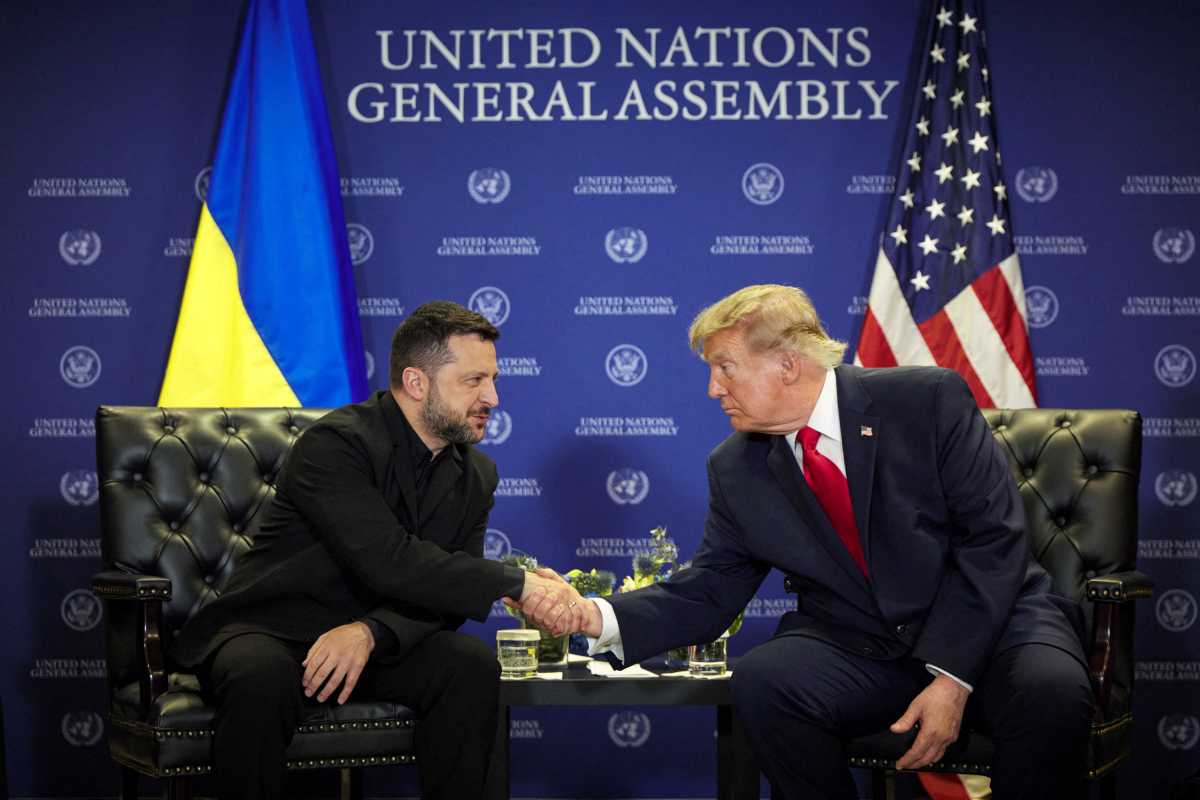 US President Donald Trump and Ukraine’s President Volodymyr Zelenskiy shake hands as they meet on the sidelines of the 81st United Nations General Assembly (UNGA) in New York City, in this handout released Sept. 22, 2026.Ukrainian Presidential Press Service/Handout via REUTERS
While they wait for news on their TPS renewals, many have lost their TPS work permits back in August. Dolich’s clients have asked for help to pay for food and other needs. Stasiw explains that going to food banks is not something many Ukrainians are willing to do because they are a proud people.
Some recipients are already preparing for the possibility of having to leave the United States. With returning to their country not being an option, the option is to go to other countries, such as Canada, Germany, Moldova, Italy, and elsewhere.
Stasiw says the families at his school are looking into those countries, while Olena says the process to apply to enter Canada takes several months.
Along with the anxiety over the delayed TPS news, there is also the fear of ICE. At St. George Academy, a few students expressed to Stasiw about their fears over ICE picking them up or their parents. Dolich confirmed NYLAG’s Ukrainian clients have been detained.
“They’re afraid to return to Ukraine because of the war,” she said. “But here, they’re also afraid of being detained by ICE, not having employment authorization. And it’s heartbreaking for us, but at the same time, there is not a lot that we can do. All of our requests to expedite cases are just being ignored and dismissed. All of our phone calls to USCIS also have been dismissed.”
Olena explains that she has been fortunate to receive a permit and now works at an art gallery. She has not thought of leaving the U.S. if nothing changes in October. But she points out that not all Ukrainians have enough money to leave for another country, and will become undocumented if their TPS is not extended. Olena also wants the U.S. government to work with other countries in making it easier for Ukrainians to relocate to theirs.
The U.S.’s relationship with Ukraine and its President, Volodymyr Zelenskyy, has also been shaky ever since Trump returned to the White House. A hostile meeting at the Oval Office in February 2025, when Trump called Zelenskyy “a dictator,” stands out as an example of their rocky diplomatic relationship.
Now, with the U.S. pushing Ukrainian refugees to decide whether to return to war-torn Ukraine or not, can this also impact how the two countries work together?
Julie George, a political science professor at the CUNY Graduate Center, who has researched the former Soviet Union, says it all depends on where Ukrainians go if they leave the U.S.
“A return of Ukrainians to Ukraine could actually build capacity to resist Russian invasion and also build in a post-conflict context,” George explains. “Depending on who is going back, and if they return to Ukraine as opposed to any other non-Ukrainian destination. In general, Ukraine’s demographic condition was problematic prior to the full-scale invasion and has accelerated since.”
Professor George also explains that Russia may be seeing the TPS and United for Ukraine programs ending as a sign of rising xenophobia and isolationism within the United States. She also thinks Russia may see all of this as a shift in America’s policies towards NATO.
“That said, these facts were already in evidence as key talking points of Trump’s second term,” she says. “So it actually might be a sign of weakness of the president’s ability to bring aid to Russia, rather than a significant sign of strength to help Russia’s interests.”
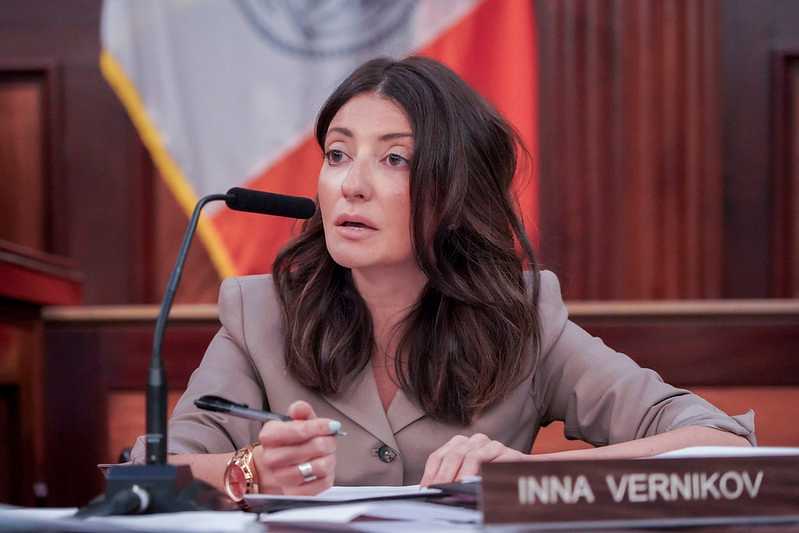 Brooklyn City Council Member Inna Vernikov.Photo by Gerardo Romo / NYC Council Media Unit.
One Brooklyn elected official, formerly from Ukraine, feels strongly about the Trump administration ending TPS for Ukrainians.
City Council Member Inna Vernikov, a Republican whose southern Brooklyn district consists of Brighton Beach, Sheepshead Bay, Midwood, and Gravesend, wrote an August letter to President Trump, with excerpts published in the NY Post, in which she called for the Department of Homeland Security to extend the TPS designation for another 18 months.
“Ukrainians who have built lives in the United States have also become productive members of our communities,” Vernikov said, according to the Post. “They are working, paying taxes, raising families, supporting local businesses, and contributing to our economy…They should not be forced to choose between returning to an active war zone and abruptly losing the legal protections that allow them to remain and work here.”
‘What’s next, we don’t know’
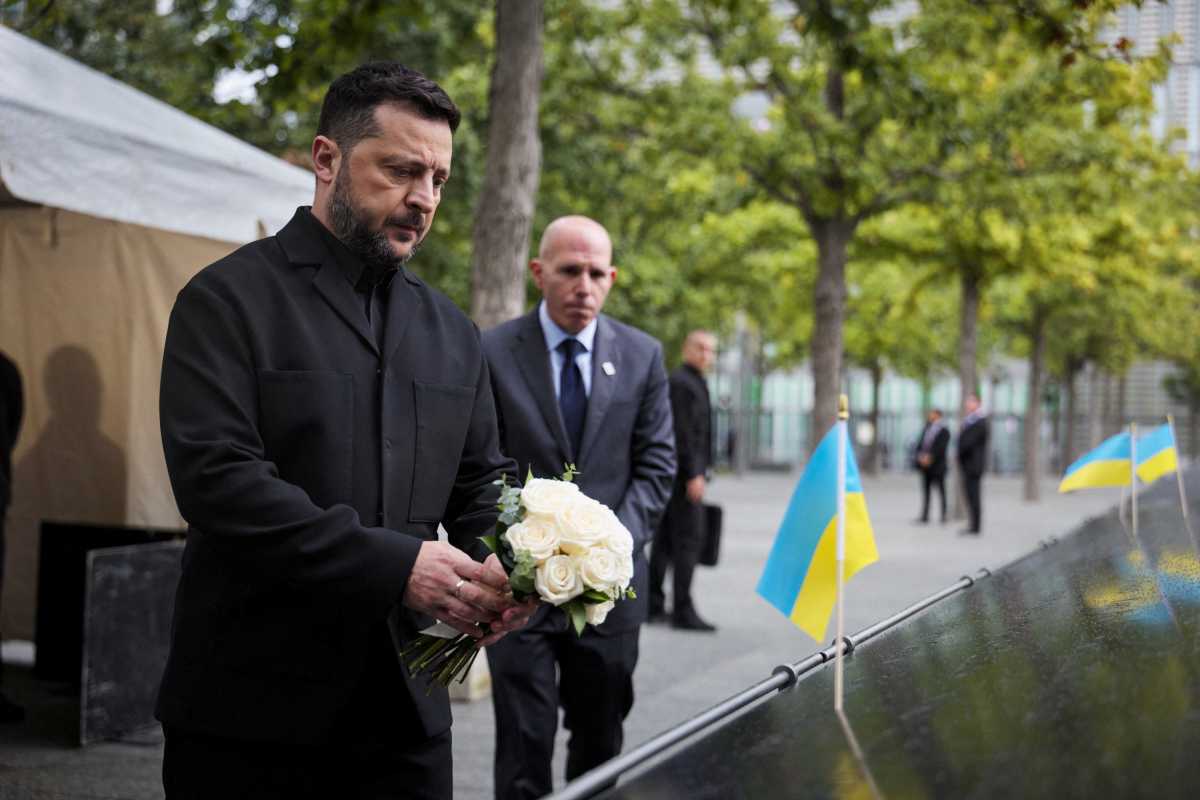 Ukraine’s President Volodymyr Zelenskiy visits the 9/11 Memorial & Museum ahead of the 81st United Nations General Assembly in New York City, in this handout picture released Sept. 22, 2026.Ukrainian Presidential Press Service/Handout via REUTERS
With less than a month to go before an extension may or may not be made, Ukrainian TPS recipients could hope for the best, but expect the worst. In the meantime, some are going through their daily lives, including the students at St. George Academy. Three seniors spoke to amNewYork about their anxiety. Their families have applied for TPS every year, and have done so a few months ago. But for the first time, they are experiencing a delay.
“We do this annually because it expires,” one boy said. “What’s next, we don’t know. There is some insecurity now.”
A girl said she is applying for college despite the wait, but without a TPS, she cannot apply for a scholarship.
When asked how the Ukrainian families feel about the United States now, Stasiw replies that despite the uncertainty, many feel gratitude. They are grateful for their American neighbors and have felt welcomed and supported.
“They say like, ‘where would we be now’? They love America. Some of them never want to go back,” Stasiw says.
Dolich reports the same sentiments from her clients, though they also do not understand why the U.S. government may not allow them to stay. But most importantly, their clients want answers so they can move on with their lives.
Olena wonders what can the United States do to end Russia’s aggression. She hopes the speeches made by world leaders during last week’s United Nations General Assembly would be a sign of hope.
“We just want to stop [Russian] aggression, which is escalating all the time,” Olena said. “What will the United States do next to stop Russians, to stop Putin? We don’t know, and no one knows. And now it’s the period of the end of UNGA, and there were lots of discussions and communication about it, and there were lots of attention paid to the problem of Ukraine right now. I personally hope that it will somehow help our country.”
Stasiw says Ukrainians are strong and have the ability to wade through difficult periods. They have been telling him a common expression they use to get through this stressful time: “Pobachemo shto boodeh” — we’ll see what comes next.