
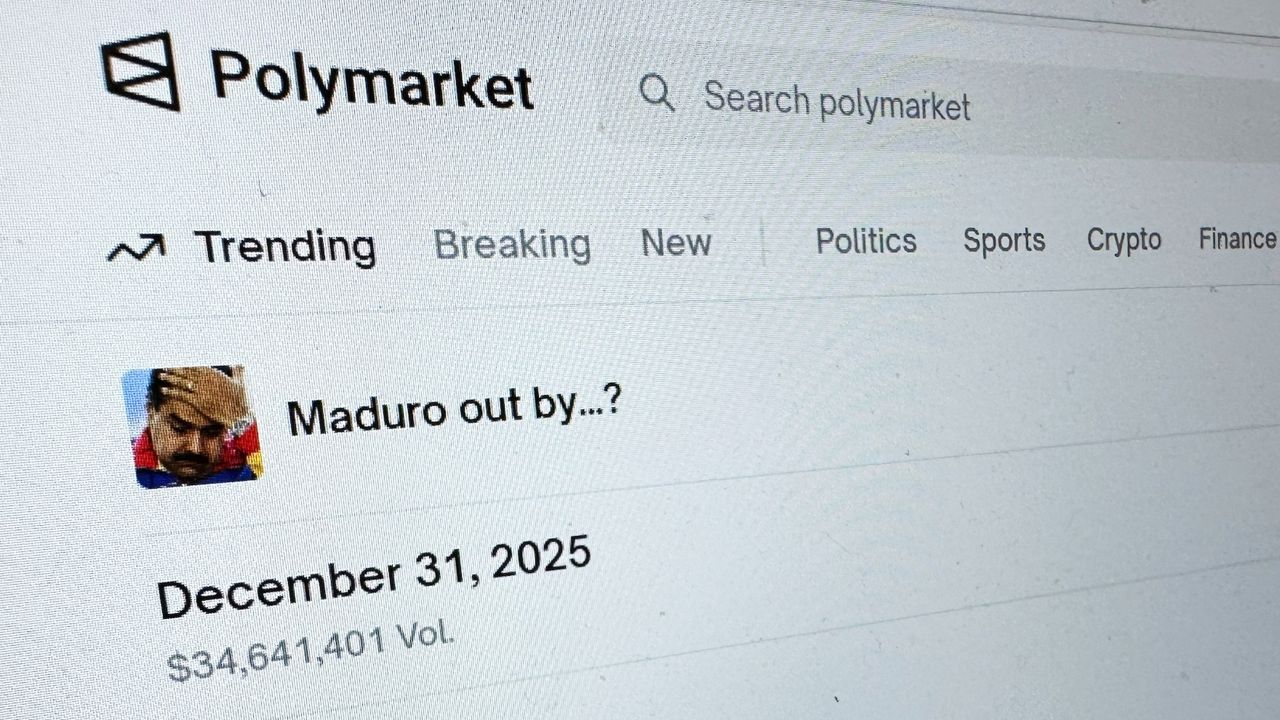
NEW YORK — A legal fight between New York and prediction market Polymarket is raising a larger question over the rapidly growing industry: Who gets to regulate it, the state or the federal government?
New York Attorney General Letitia James and Gov. Kathy Hochul sued Polymarket last week, accusing the company of operating an illegal gambling business in the state without a gaming license.
Polymarket allows users to buy contracts based on whether they believe an event will or will not happen, including outcomes involving sports, elections and entertainment. The company considers those products federally regulated event contracts. New York argues they amount to bets.
That distinction is at the center of the state’s case.
If the products are considered gambling, New York argues Polymarket must follow state requirements that apply to licensed gambling operators, including consumer protections and problem gambling safeguards. Taxes collected through the state’s regulated gambling industry also help fund public education and other programs.
The state is also raising concerns about age restrictions. Polymarket allows users as young as 18 to participate, while New York requires people to be at least 21 to participate in mobile sports betting.
“Our gambling laws exist to protect New Yorkers, prevent the potential harms of problem gambling, and ensure funding for educational and public benefit programs,” James said in a statement to Spectrum News 1.
The lawsuit is part of a broader effort by the James administration to challenge prediction markets operating in New York. Her office has also taken legal action against Kalshi, Coinbase and Gemini over prediction market offerings.
Polymarket, however, is fighting back.
Just hours after New York filed its case, Polymarket sued the state in federal court, arguing the Commodity Futures Trading Commission has authority over its markets and that federal commodities law prevents New York from regulating the contracts as gambling.
The competing lawsuits could ultimately help determine how much power states have over an industry that argues it is already regulated at the federal level.
Meanwhile, state lawmakers are considering two different approaches in Albany. Assemblymember John McDonald has introduced legislation that would require prediction market operators to obtain a license through the state Department of Financial Services. His proposal would also establish standards of conduct and give the department enforcement authority over the industry.
“We know that gambling continues to grow significantly, and we want to have the proper resources and consumer protections in place so that companies cannot take advantage of them,” McDonald told Spectrum News 1.
Sen. Joseph Addabbo Jr., chair of the Senate Racing, Gaming and Wagering Committee, is sponsoring a separate proposal known as the ORACLE Act.
His legislation would establish state rules for prediction markets, prohibit users under 21 from participating and require safeguards for people considered at risk of problem gambling. It would also prohibit New Yorkers from participating in certain markets, including those involving elections, sporting events, deaths and catastrophic events.
“These prediction market entities find loopholes with terminology,” Addabbo told Spectrum News 1. “It’s not an event contract. It is a game of chance. It is something that we regulate in New York already and to operate in New York.”
Polymarket disputes that premise, arguing New York does not have the authority to regulate its federally overseen contracts as gambling.
That leaves the state legislation facing the same underlying question as the lawsuits: whether Albany has the authority to impose its rules on federally regulated prediction markets.
When asked whether New York and prediction market companies could continue fighting the issue in court, McDonald said litigation could continue “for a significant period of time.”
“My fear is always is for the innocent consumer who starts on this, maybe has a little bit of fun, and then all of a sudden that builds into an addiction,” McDonald said.
Polymarket did not immediately respond to Spectrum News 1’s request for an interview.
Addabbo’s bill advanced through the Senate Racing, Gaming and Wagering Committee in May and is currently in the Senate Finance Committee. He told Spectrum News 1 he wants the issue to be part of state budget discussions when lawmakers return to Albany.
McDonald’s proposal remains in the Assembly Racing and Wagering Committee.