
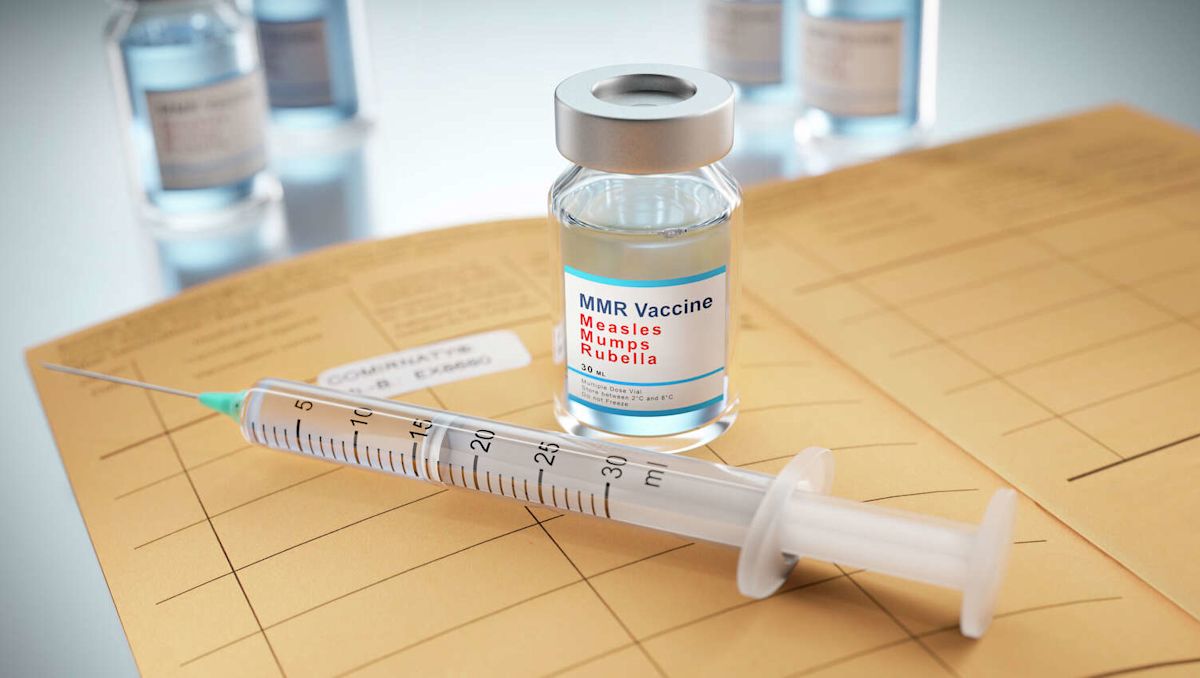
More New York children are completing their routine childhood vaccinations than a decade ago, but a growing share are falling behind the recommended vaccination schedule, according to a new study by the New York Health Foundation.
The study found that the share of children completing the seven-vaccine series by the recommended age of 2 increased 14% between 2013 and 2023. By age 5, the completion rate was up 22%. The vaccine series protects children against diseases including measles, polio, whooping cough, hepatitis B, chickenpox, Hib and pneumococcal disease.
The gains were uneven over the decade. Completion rates by age 2 rose steadily through 2019, then leveled off during the COVID-19 pandemic before slipping slightly after 2022. By contrast, completion rates by age 5 have continued to increase.
Even as more children ultimately completed the vaccine series, more were doing so later than recommended. The gap between completion rates at age 2 and age 5 widened from about 11 percentage points in 2013 to about 17 percentage points in 2023.

The pandemic disrupted routine healthcare, said Dr. Melissa Stockwell, a pediatrics professor at Columbia University. It became harder for families to access healthcare, and many delayed routine medical visits for their children because they wanted to avoid COVID-19 exposure.
However, completion rates by age 2 continued to decline in 2022 and 2023, even after the worst of the pandemic had passed.
“There is an erosion of trust in public health which did come from the pandemic,” Stockwell said. Misinformation about COVID-19 vaccines – including false claims that they could alter a person’s DNA – spilled into broader concerns about childhood immunizations, leaving some parents uncertain about whether to vaccinate their children on schedule.
Long-standing myths about childhood vaccines continue to circulate, said Dr. Jana Shaw, a professor of pediatrics at Upstate Medical University in Syracuse. One of the most persistent is the false claim that the MMR vaccine causes autism, despite extensive research finding no link between the two. Such misinformation can discourage vaccination and increase the risk of outbreaks of vaccine-preventable diseases.
Related: Here’s where early measles vaccination rates were the lowest in New York
But misinformation is only part of the picture. Shaw said parents choose not to vaccinate for many reasons. Some believe their children are unlikely to get diseases such as measles, some have religious objections, and others believe natural infection provides better protection than vaccination. Since July, the New York State Department of Health reported measles cases in unvaccinated individuals in Allegany, Chenango, Madison, Otsego, Seneca, Steuben, and Tioga counties.
Stockwell said some families also face practical barriers that may contribute to the decreasing completion rates by age 2, including limited transportation, parents’ inability to take time off work for medical visits and unstable health insurance. In addition, cuts to Medicaid, the government health insurance program for low-income families and people with disabilities, could make preventive care harder to access for some families, Stockwell said.
By age 5, however, New York’s school vaccination requirements helped drive the continued increase in completion rates, Stockwell said, as many children catch up on their vaccinations before enrolling in school.
Getting vaccinated on schedule is important because the vaccines protect against viruses and bacteria that can cause serious illnesses in young children, according to Dr. Jana Shaw, a professor of pediatrics at Upstate Medical University in Syracuse.
“The vaccines are selected to target severe bacteria that can cause meningitis, pneumonia, bloodstream infections and sepsis,” Shaw said. “Children don’t have any protection once the maternal antibodies are gone after they are born.”
Getting vaccinated on schedule is also important because the recommended schedule spaces doses to provide the best protection, said Dr. Chloe Teasdale, doctoral program director in the Department of Epidemiology and Biostatistics at the City University of New York. For vaccines like DTaP, polio, MMR and varicella, children are supposed to receive the earlier doses before age 2 and the final doses between ages 4 and 6.
Vaccination completion rates varied widely across New York counties. Statewide, about 6 in 10 children completed the recommended seven-vaccine series by age two in 2023. Rockland County had the lowest completion rate at 32% – less than half that of Warren County, where 78% of children completed the series by their second birthday.

County vaccination rates also are shaped by local factors, including healthcare access, school vaccination policies and community norms, Stockwell said. In communities where local leaders, schools, religious organizations and families broadly support vaccination, vaccination rates tend to be higher.
High vaccination rates help protect the broader community, Stockwell said. “If everyone around someone who is infected is vaccinated, it’s mostly going to stop with that person,” she said. “If more people are unvaccinated, then it’s going to transmit to more people.”
In July 2022, New York reported its first confirmed case of polio since 1990 in an unvaccinated Rockland County resident, Teasdale said. The virus was later detected repeatedly in wastewater, indicating it had been circulating silently in multiple New York counties, which can be highly dangerous for unvaccinated young kids.
Improving childhood vaccination rates will take more than making vaccines available, the experts said. Building trust between families and healthcare providers is just as important. Pediatricians remain the most trusted source of vaccine information for many parents, Teasdale said. She said providers should present vaccines as a routine part of children’s care while encouraging parents to ask questions and discuss any concerns, an approach research has shown increases vaccine acceptance.
The experts said schools, community organizations and healthcare providers all have a role to play in helping families stay on schedule. Text reminders, community education and conversations with trusted pediatricians can help parents keep their children up to date on routine vaccinations.
Subscribe
There’s more to Albany with the Times Union. Subscribe today for just 25¢.
This article originally published at Why more New York children are falling behind on childhood vaccinations.