
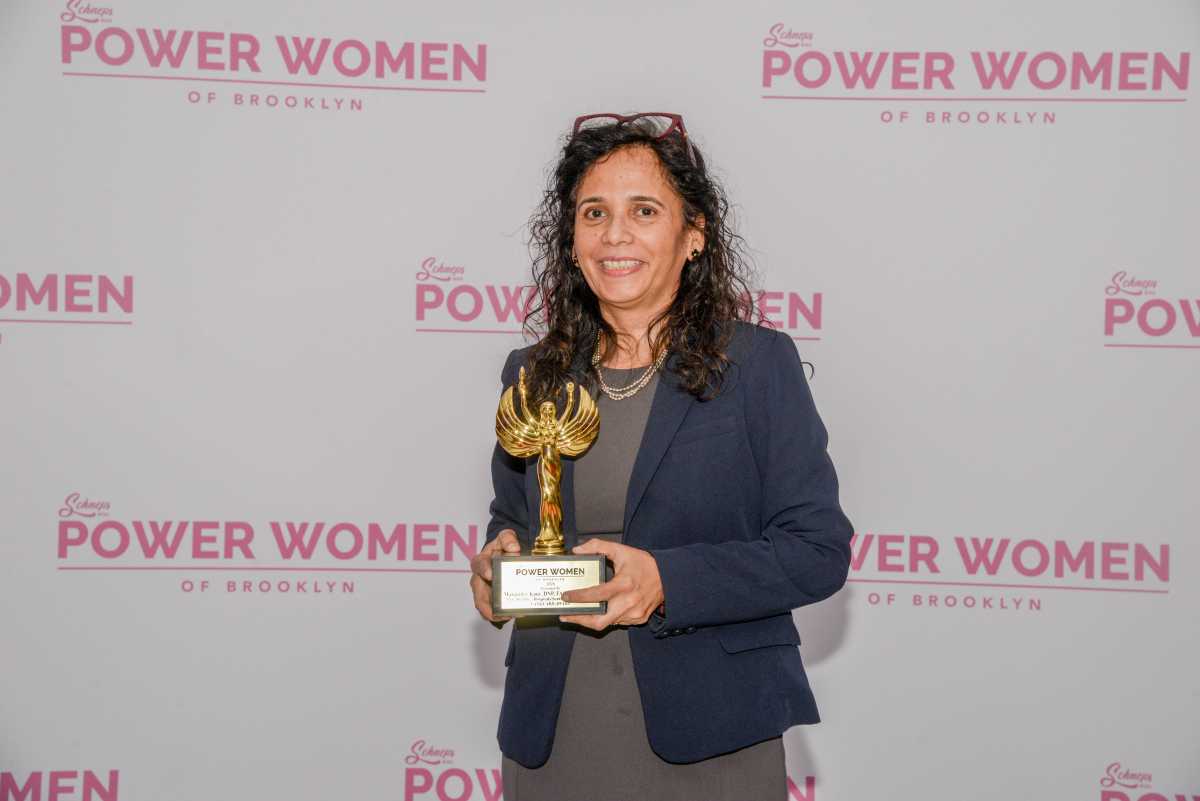
Manjinder Kaur spent years caring for patients at New York City hospitals. Now, she’s running one.
Kaur became Chief Executive Officer of NYC Health + Hospitals/South Brooklyn Health in July, making her the first nurse to lead a New York City Health and Hospitals institution in “recent history,” after rising through clinical and administrative roles in the city’s public hospital system.
She came to New York from India, started her career as a trauma nurse at Lincoln Hospital and worked her way up through the ranks — from the bedside to chief nursing officer to chief operating officer and, now, CEO.
“I was numb. Everybody asks me how do you feel?” she said recently of her new role. “It’s the same challenges. I was very involved as a COO, so it was not a big work shift. I was prepared for this.”
Others talked about the importance of a CEO who has a clinical background, noting that the system now has more CEOs who arrive with various types of clinical training.
“It’s a big deal when you have a clinical person like a nurse,” said Sandra Sneed, CEO of the system’s Woodhull Hospital. “When you have clinical people with additional training. There are two different skill sets. A clinical person gives you insight. However you have to have the administrative or business aspects. When you combine it, it’s a powerful combination.”
The system, in an online post, noted that she had most recently served as South Brooklyn Health COO since 2024, “as she led operational and multi-disciplinary teams to implement many improvements at South Brooklyn Health,” including those impacting patient and staff safety.
“She also oversaw the overhaul of the throughput management process at South Brooklyn Health resulting in a length-of-stay reduction of over two days for Med/Surg patients,” the system said in an online post.
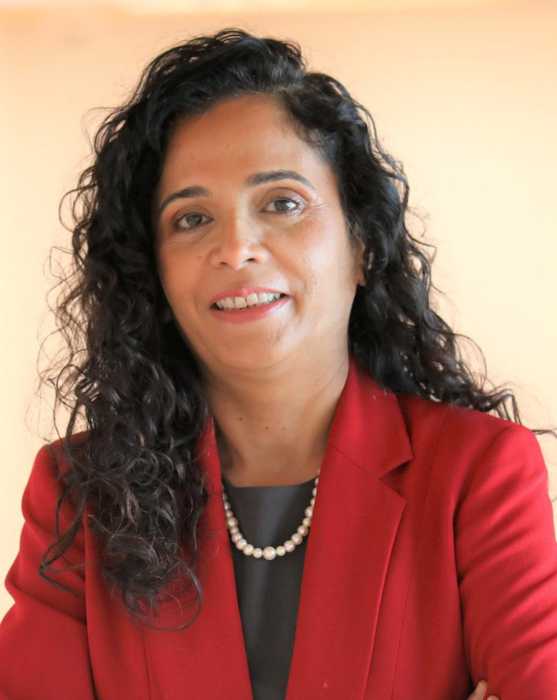 Manjinder Kaur, CEO of South Brooklyn Health, rose from trauma nurse to hospital chief after more than a decade in clinical and administrative roles.Photo courtesy of NYC Health + Hospitals/South Brooklyn Health
Clinicians as CEOs
While Kaur’s rise is newsworthy, it’s part of a trend at New York City hospitals as clinicians and social workers become CEOs.
Cristina Contreras recently was named CEO of Lincoln Hospital in the Bronx after leading the system’s Metropolitan Hospital in East Harlem, bringing the background of a social worker to her role.
Contreras got a BSW from Herbert H. Lehman College, an MSW from Fordham University and an MPA from Baruch College, as well as an honorary doctorate from the New York College of Podiatric Medicine.
“This diverse educational foundation supports her ability to address healthcare challenges with a balanced perspective,” according to her biography.
Sneed, meanwhile, is a former occupational therapist who said more nurses are taking the helm, including some who helped her over the years.
“It is becoming more common,” Sneed said. “I’ve been mentored not by a nurse CEO, but a nurse COO in another state. That was one of my early mentors when I was young in my career. And I’ve been mentored by nurse executives who become CEOs.”
Sneed said her medical training helps her better understand what’s happening in the hospital, while her MBA helps with the business side.
She added that Dr. Mitch Katz, CEO of New York City Health and Hospitals, has brought in CEOs with diverse backgrounds.
“He is very open minded and inclusive,” Sneed said. “He has a diverse team of CEOs.”
From CNO to CEO
Naming chief nursing officers as CEOs is still not as common as one might expect, considering that more than half of clinicians typically are nurses.
Anthony T.J. De Angelis, writing in Nurse Leader, a trade publication, in an essay in late 2024 titled “The Uncharted Path: Understanding the Gap Between Chief Nursing Officers and CEO Roles in Healthcare,” argued that being a chief nursing officer can prepare someone well to be CEO.
“Leveraging their diverse experiences, leadership skills, and commitment to patient care, nurse leaders can contribute significantly to the transformation and improvement of the healthcare system,” he wrote.
He said the American Hospital Association counted around 6,129 hospitals nationwide, with no specific number of CNOs who became CEOs. Becker’s Magazine, several years ago, looked at a far smaller number of hospitals and identified more than 30 in its sample.
De Angelis wrote that many CNOs possess qualities such as “compassion, empathy, dedication, and a deep understanding of how policies affect caregivers and patients.”
Nursing executives, he wrote, typically “oversee more than half of the organization, which means they have knowledge and experience in finances, budgets, productivity, and supply chain.”
Becker’s in August 2026 said it tracked 219 new hospital and health system CEO appointments. COOs accounted for 68 of the promotions, or roughly 31%, while CEOs moving from one hospital to another accounted for 54, or 25%.
Promotions from other internal executive roles led to 28, or about 13%, while interim or acting CEOs took 18 positions, CFOs accounted for eight and CNOs took seven, while physicians took five positions.
Coming to America
Kaur started her nursing career in India before coming to the United States in 2004, where she obtained her bachelor’s, master’s and then doctorate degree in nursing.
She started her career at Lincoln Hospital in the Bronx as a trauma nurse at one of the busiest trauma centers in the nation, working there from 2006 to 2016.
“It was unique. I come from India. It was culture shock,” she said. “Learning the U.S. healthcare system. It’s totally different than the Indian healthcare system.”
 NYC Health + Hospitals/South Brooklyn Health.Photo courtesy of NYC Health+Hospitals/South Brooklyn Health
She said the place and the pace were very different from what she was used to in India.
“The way people talk is totally different,” Kaur said. “I’m from the countryside, very slow pace and a different way of talking.”
She arrived at South Brooklyn Health in 2016 as a nursing consultant, working as an assistant director of nursing in the ER.
“COVID hit in 2020. That’s when a lot of challenges came,” she said. “I rose to those challenges.”
Being an ER nurse during COVID was difficult, leading her to adjust her lifestyle to protect those around her.
“I was present during that time. I lived in a hotel,” Kaur said. “I didn’t want to take the infection with me.”
She stayed with some staff members, developing close relationships during a difficult time, forging relationships and laying the groundwork for her rise through the ranks.
From bedside to board room
Kaur became chief nursing officer, or CNO, in 2021 and COO in 2024 before becoming CEO this July.
She replaced a CEO who held the job for six years but said they worked together, allowing her to transition to the role of CEO.
“As a CNO, it’s very challenging role,” she said of that position. “I think my passion was operations. Nursing practice, I did that. I wanted to advance more. And do more operations.”
She said she understands nursing, but running a hospital involves much more than medicine, such as facilities, engineering, pharmacy and radiology.
Kaur leads a 351-bed community hospital with a stroke center as well as a PCI Center for the heart.
“We are very busy, indeed,” she said. “We see about 100,000 patients.”
Kaur spends time in her office but also elsewhere in the hospital, where she had worked as a nurse.
“I walk around the hospital. I see our staff there regularly. I have an open door policy,” she said. “I’m responsible for overall management of the hospital in every aspect, whether it’s clinical quality, financial, community. All the pillars.”
She wants to support providers but not meddle in specific cases, where her staff employ their own expertise.
“I do have a medical background,” she said. “I try not to interfere too much with those currently responsible. I want to give them respect.”