
There is no hotter ticket in town than the Shuffle Along 10th Anniversary reunion concerts being held at Lincoln Center’s Rose Theater.
The concerts, which feature much of the 2016 musical’s original Broadway cast reprising their performances, were packed to the brim as audience and artist alike connected across the footlights in celebration of this now legendary production.
Shuffle Along, which kickstarted the Harlem Renaissance in 1921, was one of the first commercially successful mainstream all-Black Broadway sensations. In 2016, the musical was partially revived under the extensive title Shuffle Along, or the Making of the Musical Sensation of 1921 and All That Followed, using the music of the original production to explore the history of the work and the lives of those who made it.
The 2016 production had the misfortune of opening in the same Broadway season as Hamilton, which steamrolled over every other musical in town in terms of publicity and public attention. That unfortunate circumstance, combined with one of the most controversial producing decisions of the 21st century (incendiary producer Scott Rudin closed the show following star Audra McDonald‘s unexpected pregnancy; after four years, a lawsuit related to the decision dissolved) caused the production to close at the Music Box Theatre a little under five months after it began, delivering 38 previews and 100 performances to theatre lovers as they clamored to experience its wonders.
Now, Shuffle Along is back, with many of the 2016 stars returning to give the musical its due, including Audra McDonald, Brian Stokes Mitchell, Billy Porter, Adrienne Warren, Brandon Victor Dixon, Brooks Ashmanskas, Amber Iman, Darius de Haas, JC Montgomery, Arbender J. Robinson, and Christian Dante White, along with ensemblists Afra Hines, Curtis Holland, Adrienne Howard, Erin N. Moore, Janelle Neal, Karissa Royster, Pamela Yasutake, Lamont Brown, Lisa LaTouche, and Richard Riaz Yoder. The performances also feature Norm Lewis, stepping in for original cast member Joshua Henry.
Armed with pen, paper, and an open heart, this theatre historian took notes on the September 27 performance, ahead of the September 28 encore. Here were 10 special highlights from the evening.
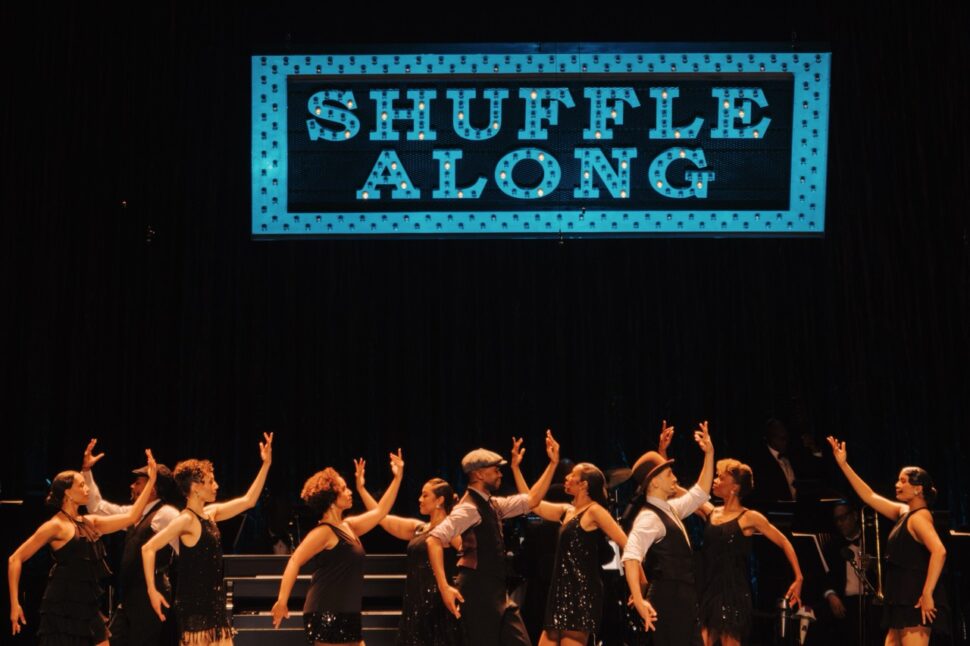
Company of Shuffle Along
(Lawrence Sumulong)
1. An Undercurrent of Joy
From the moment audience members were ushered into the Rose Theater, the energy was electric. In spite of the rainy nor’easter blustering outside, the concert was fully sold out, with a standby line snaking its way through the Columbus Circle complex. The concert was clearly the place to be for the theatre industry, with gasp-inducing theatre icons intermingling with bright eyed young theatre lovers as they all worked their way inside. Once seated, however, tears were quickly flowing as it became clear that the show’s tireless ensemble was warming up their tapping feet just behind the Rose’s plush gold curtain. To quote an elderly woman who was emotionally overwrought 15 minutes before curtain as the rhythmic sounds travelled over the footlights: “Oh my lord, I am grateful to see good theatre tonight!”
2. Dance to Wake the Dead
It is generally assumed when staging reunion concerts that blocking and choreography will be dramatically simplified from their original states, struck alongside unnecessary costume changes, set pieces, and props. George C. Wolfe and Savion Glover wholly ignored that convention, and I could weep from my gratitude. (Ok, full honesty, I did weep. During the opening number. About 30 seconds in).
Glover’s Tony-nominated choreography was almost entirely recreated for the reunion, in all of its high-octane glory. Glover is, for my money, the best choreographer in any discipline living today, and from the moment his ensemble locked into their precision footwork, I was overcome with emotion. Great dancing is not just steps, or storytelling, or even athletic excellence; it is energy made manifest, a physical tether from performer to perceiver that can pound the heart, widen the eye, and clench the fist. When executed correctly, a great Glover number can bewitch an audience, and this sold-out crowd was in the palm of his hand from the ensemble’s very first downbeat. By the time Curtis Holland (one of the greatest dancers currently working on Broadway) had taken center stage for the first of his many solos throughout the night, multiple people were standing and cheering their praise, unable to remain seated as Glover’s energy coursed through them. It was the best that Broadway as an art form can be, and we are so incredibly fortunate that these hard-working ensemblists put in the time to bring it to life for these two performances.
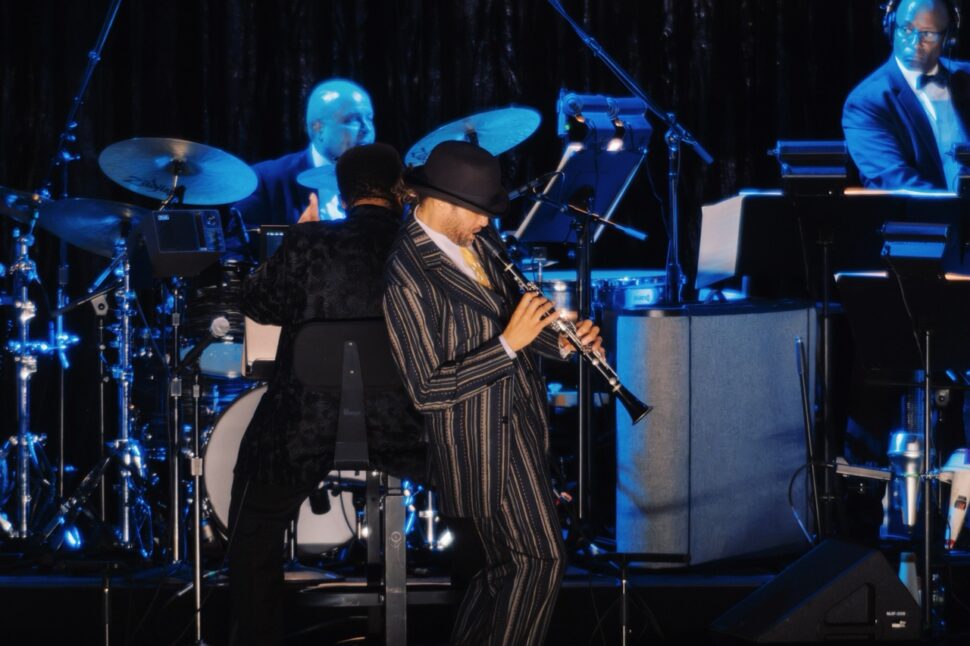
Savion Glover in Shuffle Along
(Lawrence Sumulong)
3. At Long Last, Welcome to the Stage Dr. Savion Glover
And SPEAKING of Glover: after a decade of waiting, a dream deferred was realized as the legendary dancer and choreographer strapped on his own tap shoes to dance the role of William Grant Still during the song “4 Black Keys.” Glover was originally scheduled to perform as Still during the musical’s 2016 Broadway run, but his tenure never came to pass following the show’s upsettingly early closing. Glover’s performance as Still, a color-barrier–shattering Black composer who got his start playing in the pit of Shuffle Along in 1921, was jaw dropping as he poured himself into the movement, presenting rhythmic complexity that had the packed auditorium shouting out adulation in one of many mid-show standing ovations.
4. Adrienne Warren, An Undeniable Triple Threat
The 2016 Shuffle Along cast was a watershed moment for Black talent on Broadway, uniting some of the most iconic stars of the era with a new generation of performers who would quickly become beloved in their own right. One such star was Adrienne Warren, who captured hearts and minds with her Tony-nominated dual performance as both Gertrude Saunders and Florence Mills.
Now a Tony-winning headliner, it was a supreme pleasure to watch Warren turn back the clock as she reminded the rapt audience that yes, her vocal instrument is that versatile, and yes, she has the dancing skills to lead a Glover number without appearing to even come close to losing her breath. In an age where triple threat talents are often not the ones receiving marquee billing, Warren is the kind of star that is undeniable, no matter the era. Hand her a delicate love ballad from 1920, a ragged-edge Tina Turner song from 1971, or a new piece written specifically for her in 2026: she’ll weave you gold.
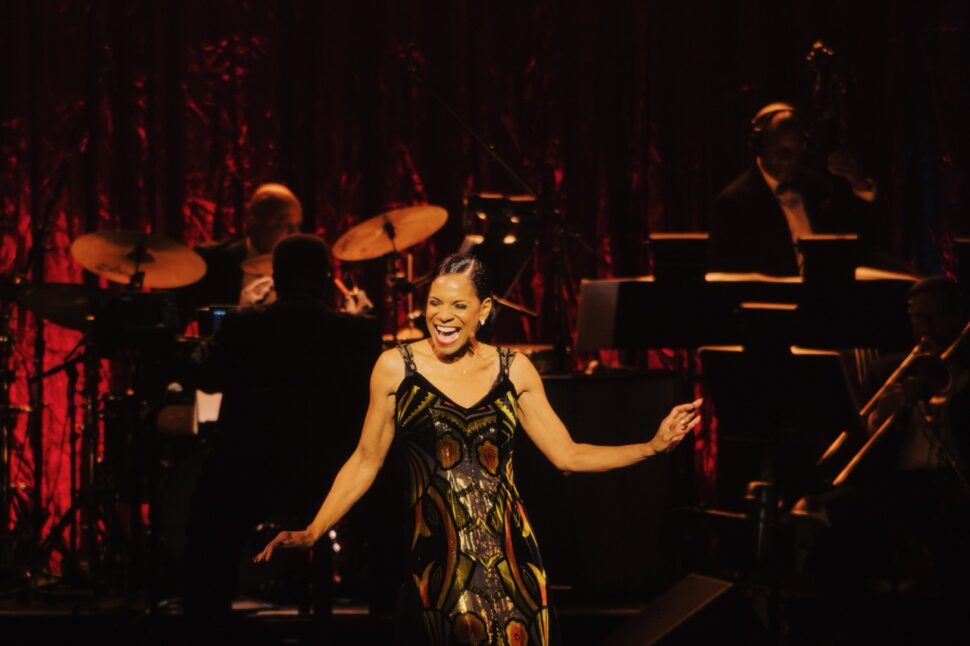
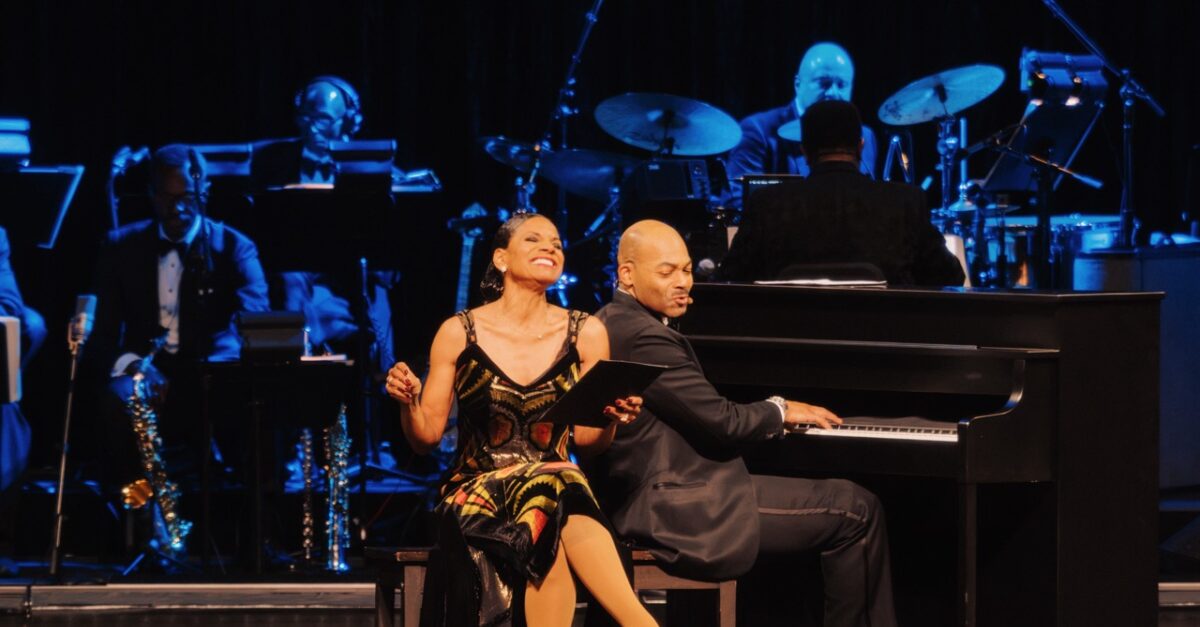
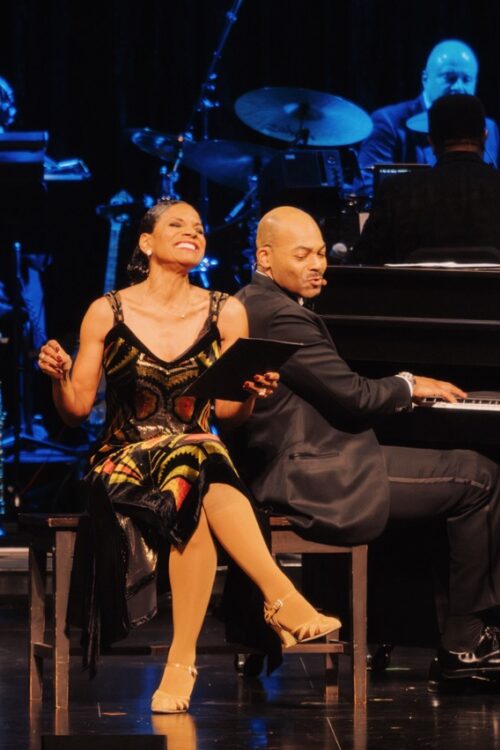
Audra McDonald
(Lawrence Sumulong)
5. Audra McDonald. That’s it, That’s the Highlight.
If Warren is the Millennial example of excellence, then Audra McDonald is certainly Generation X’s. McDonald is widely recognized as one of the greatest performers in American theatrical history, with a voice that has inspired just about every soprano that has stepped near a Broadway stage since Carousel in 1994. Six Tonys (and 5 additional nominations) later, McDonald continues to exist in a class all her own, with a pristinely maintained vocal instrument, impressively honed physical chops, and a deeply grounded acting style that roots so deeply you’d think she had access to the core of human emotion itself.
One of McDonald’s occasionally overlooked traits, however, is that she can be incredibly funny when she wants to be. While her Broadway credits over the last decade (Frankie and Johnny in the Clair de Lune, Ohio State Murders, Gypsy) have been on the drama side of the theatrical spectrum, her comedic chops are whip smart, and from the moment she put Norm Lewis’s Noble Sissle in his place with a razor edged dismissal, she had the audience in stitches. With charm pouring off of her in waves, that comedy was flipped to devastating effect in Act Two, as she shattered hearts with her rendition of “Memories of You.” If it was ever in doubt (and it certainly wasn’t in this writer’s mind), McDonald remains the grand dame of musical theatre, no matter the tone.
6. Brian Stokes Mitchell Owes Lincoln Center a New Roof
A lot has changed for the cast of Shuffle Along since 2016. Entire arcs of life can take place over a decade, and in a decade as tumultuous as 2016 to 2026, just about every person alive has gone through a significant transformation. For two-time Tony recipient Brian Stokes Mitchell, that transformation was nearly his last.
In 2020, Mitchell contracted COVID-19, becoming extremely ill in the period prior to vaccines being developed. While Mitchell blessedly never had to be ventilated, he was very ill, reaching a fevered state near 105 degrees fahrenheit as his body fought against the ravages of the virus. Thankfully, Mitchell survived, but his recovery was complex: after all, a lingering virus targeting the respiratory system is a nightmare for a singer. While he appeared in the 2023 Ragtime reunion concert and Encores presentation of Love Life, his performance as F.E. Miller in Shuffle Along was made legendary in 2016 for the sheer depth of breath and tone he delivered; would anything need to be tweaked in order to make it possible for him to perform it a decade later, after everything he endured? At the reunion concert, as Stokes belted his way through “Swing Along” and other highly resonant songs within the show’s score, Mitchell was in top form, proving once and for all that he has come out the other side of his ordeal with his head held high, and his ability to suck the marrow out of a melody intact. Bravo.
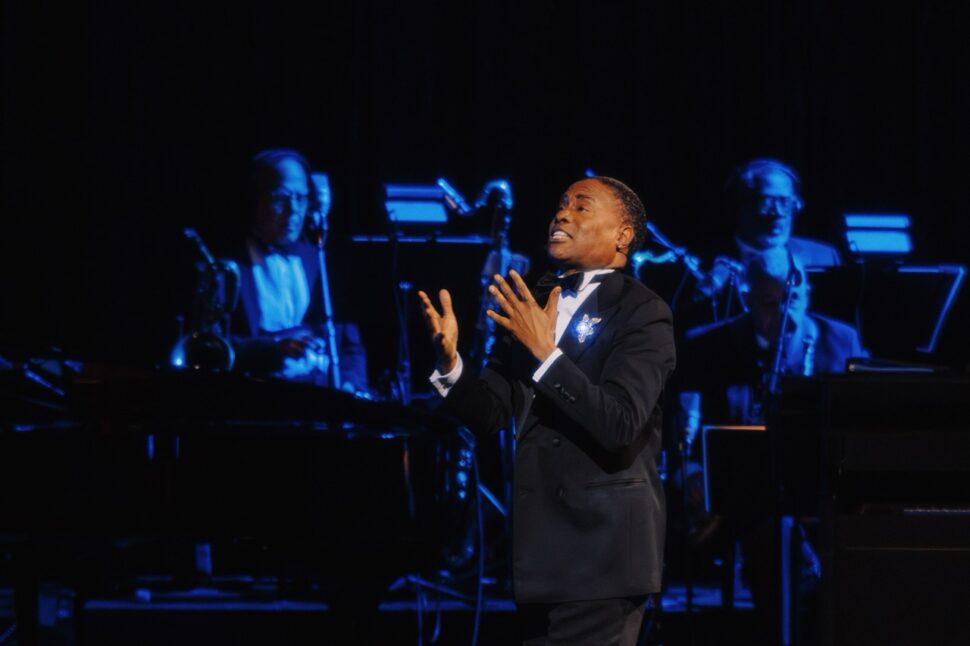
Billy Porter
(Lawrence Sumulong)
7. Billy Porter’s “Low Down Blues”
If Mitchell had a rough 2020, then Porter’s 2025 was cataclysmic. Last year, he spent three days in a coma on the verge of death from sepsis after ignoring an infection while performing as the Emcee in Cabaret on Broadway. Porter considers his survival a miracle, narrowly escaping with his life.
Since recovering, Porter has thrown himself into stage work, seeking connection wherever it can be found, whether in Encores’ new version of La Cage Aux Follies or in the one-night-only industrial musical Bill Pay. Porter was rehearsing for the Shuffle Along reunion at the same time as he was preparing Bill Pay, which likely accounts for the rather bumpy first act he delivered, losing his lines during Aubrey Lyles‘ solo scene explaining his upbringing. Those troubles appeared to invigorate his second act, however, as when Porter returned to the stage for his solo song “Low Down Blues,” it was as a man possessed.
Before our very eyes, Porter purged the demons of the past year, ripping into himself as he sang to the gods, his ancestors, and anyone else who could hear his desperate cry for connection. He was an exposed nerve ending, frayed and sparking with pain as he beat his chest and plowed through the score with every ounce of energy he had left in his body. By the end of the number, both Porter and the audience were weeping as he pushed his way through the final notes, with much of the crowd leaping to its feet before he had even bowed his head. In an act of bravery, Porter offered his most visceral, uninhibited self to the audience, and he was welcomed with an ovation that wholly eclipsed the orchestra’s final notes.
8. Brooks Ashmanskas is the Best There Is
One of Broadway’s greatest living character actors, Brooks Ashmanskas, delivered a masterclass performance as every white character in Shuffle Along, switching between physicalities, accents, and attitudes quicker than a manual radio dial. Since 2016, Ashmanskas has been a particularly inspired casting choice from Wolfe, as he possesses the vaudevillian flair of Bert Lahr, the acerbic wit of Dorothy Parker, and rubber face skills that would earn kudos from Lucille Ball. Every ounce of Ashmanskas’ skill was on display at the reunion concert, transforming from character to character with little more than a hat or a jacket, all before delivering one of the most impactful second act rug pulls in musical theatre history.
Written by original music supervisor Daryl Waters and Wolfe, “The Original Broadway Rag” is the kind of song that sucks the oxygen out of the room from the volume of audience gasps. As a cuttingly cruel theatre critic Carlo, Ashmanskas lays out the future that awaited Shuffle Along following its 1921 triumph, naming many shows that owed it a deep debt of gratitude (including Ain’t Misbehavin’, Black and Blue, Don’t Bother Me, I Can’t Cope), even as their fame eclipsed Shuffle Along’s as it was relegated to the furthest annals of theatre history, languishing in obscurity as the show was forgotten by the public.
The song, often referred to by the alternative title “They Won’t Remember You,” is an absolute gut punch, and as Ashmanskas whipped the energy of the room into a tragic frenzy, Amber Iman keened from the side with such grief-filled sorrow you could practically see it in the air. It was the kind of climax that can never be forgotten.
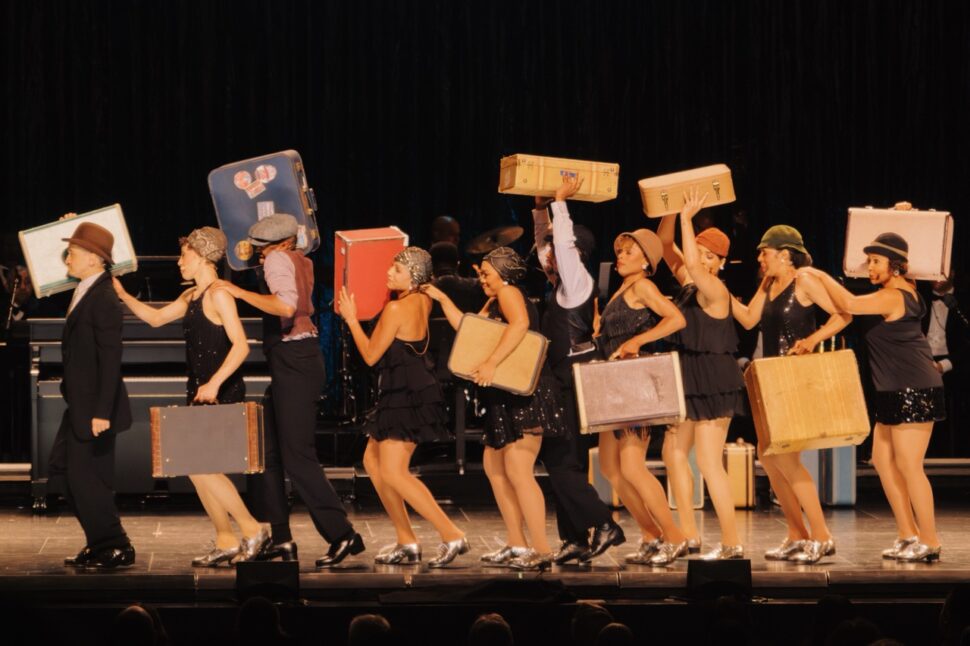
Company of Shuffle Along
(Lawrence Sumulong)
9. History is the Story of Us All
And, thanks to the 2016 rendition of Shuffle Along, the show itself has been rescued from the fate Ashmanskas prophesied. The 2016 version of Shuffle Along is many things: a revival of Blake and Sissle’s original Shuffle Along score, a revisal of Blake and Lyles’ plot, and even a reprisal of the respect that was stripped from the boundary-breaking, ceiling-shattering original production. Shuffle Along kickstarted the Harlem Renaissance, presented a Black love story on stage to a wide audience for the first time, depicted a Black town holding an election in the American South when real-life Black Americans were often beaten and even killed for exercising their right to vote, and broke the touring theatrical color barrier, both on and off stage. It was the kind of early industry hit that should have been undeniable, but due to societal racism, interpersonal conflicts, and the intentional ignorance of several power brokers, it was buried in the historical record for decades. The 2016 production brought it back from the grave and transformed it into the best kind of theatrical teaching tool, as entertaining as it is illuminating.
As Wolfe wrote in the show’s first act, “sons and daughters of the long dark night, our time has come to walk into the light.” Shuffle Along is the kind of show that every theatre lover should sit with, and absorb. It is masterful construction and craft from every angle, exhibiting excellence in its highest form. It is, in truth, one of the reasons I became a musical theatre historian in the first place. This show, the people who made it, the people it impacted and the art they made in response: they all matter, in the deep, soul-scratching way we all yearn to matter. Shuffle Along is not just an exploration of a 1921 musical; it is a love letter to history, and those that believe themselves to be lost within it. The impact of that 1921 musical-that-could continues more than a century later, long after its original creators believed its time in the spotlight had passed.
10. A Great Performance Indeed!
And now, that impact is going to be magnified across generations, state lines, and even borders. This reunion concert production will be broadcast on television and available to stream in 2027. It was revealed onstage prior to the September 27 performance recounted in this story both concerts are being captured for PBS’ Tony Award-winning Great Performances series. The air date of the recording, and its position within the 2027 Great Performances slate, is forthcoming.
The energy within the Rose Theater was beyond passionate. I cannot wait to see how that translates to the screen, and for so many more people to experience the wonder it contains.