
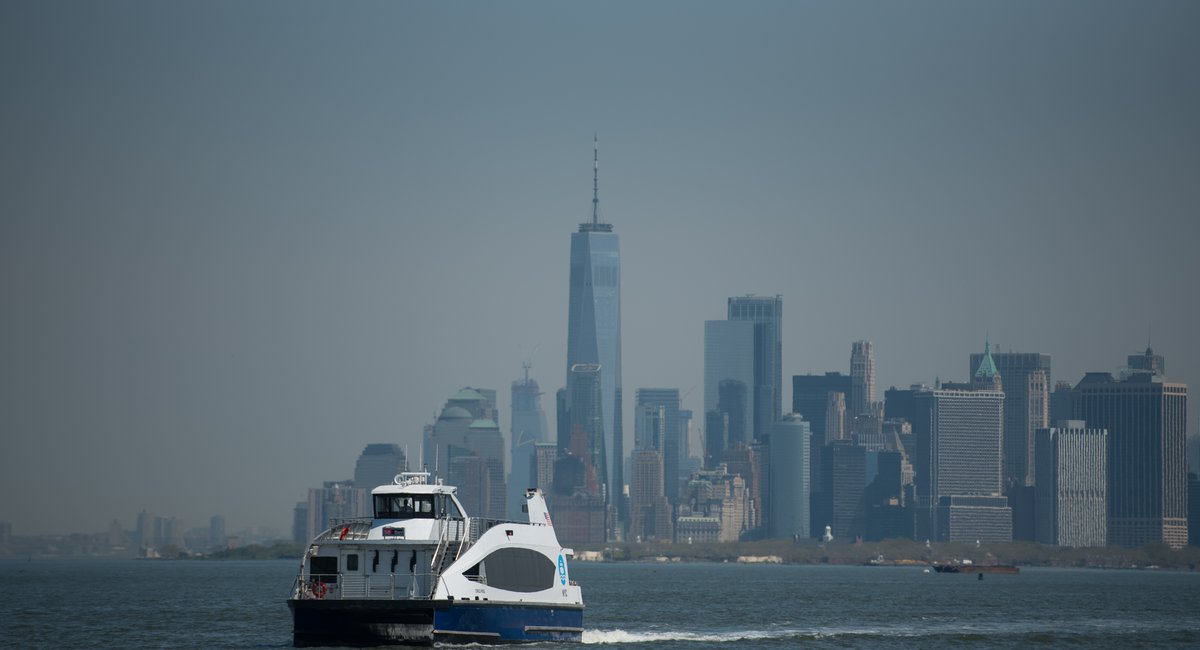
Those making a spontaneous jaunt on an NYC Ferry are about to be charged more for the pleasure. Starting Oct. 19, the price of a single-ride ticket will increase from $4.50 to $5.
Buying tickets in bulk will also become more expensive, though the increase will be smaller. A pack of 10 rides will cost $30, up from $29, putting it on par with the $3 it costs to ride the subway.
The reduced-fare pass – which is open to those 65 and older, people with disabilities and low-income New Yorkers – will cost $1.50, up from $1.45.
The cost of a 2-day unlimited pass will remain the same at $15. Two special ferries that offer reserved seating to Rockaway Beach during the summer and holiday – the Rockaway Rocket and Rockaway Reserve – will continue to cost $12 each way.
The New York City Economic Development Corporation approved the fare hikes on Wednesday. City officials attributed the increases to inflation and said the increases would bring an additional $2 million a year in revenue.
“Each year, the cost to provide NYC Ferry service increases along with costs of light fuel,” said Matthew Petric, a senior vice president at the EDC. “These fare increases help offset some of those costs.”
NYC Ferry, which was first introduced by former Mayor Bill de Blasio in 2017, launched with a handful of routes and with the aim of connecting “transit deserts” along the New York waterfront. Although it was once viewed primarily as a tourist attraction, NYC Ferry now serves over 7 million riders annually. About 80% of all ferry rides are between boroughs.
This past summer, the system broke its one-day ridership record at least three times.
Still, the system, which is seen as catering to higher-income New Yorkers and tourists, is heavily subsidized and has been criticized as a waste of taxpayer dollars.
The per rider subsidy during the first year of the ferry’s operation was nearly $11.
Now, due to fare hikes and the ferries’ popularity, that subsidy has fallen to around $8. While that’s lower than ferry systems in other major cities — one in San Francisco costs the city nearly $21 per rider – it’s four times more than the $2-per-rider assumed by the MTA for passengers on the subway. But more than 4.5 million people ride the subway every day, compared to 20,000 people taking the ferries.
EDC board members approved the fare hike unanimously.
Wednesday’s board meeting in Lower Manhattan also marked the arrival of new leadership at the EDC. In July, after months of delay, Mayor Zohran Mamdani tapped Anthony Shorris, a former top de Blasio aide, as CEO and Lina Khan, an antitrust expert, as the board’s chair.
Mamdani has said he wants the EDC to put affordability and economic justice at the center of the agency’s mission. Often described as the “swiss army knife” of economic development, the EDC has the power to enter into contracts for city-owned land and issue tax breaks. It collects over $1 billion in annual revenues, according to a recent financial report.
Proponents have described the EDC as a powerful vehicle working with the private sector to create new jobs. Critics have accused the agency — which employs around 500 people — for being too cozy with corporate interests.
In her opening remarks, Khan said she wanted to make a “clear-eyed assessment of what has been working and where we may need to switch course.”
“We have an opportunity and indeed an obligation to rethink how the city pursues economic development,” she said.