
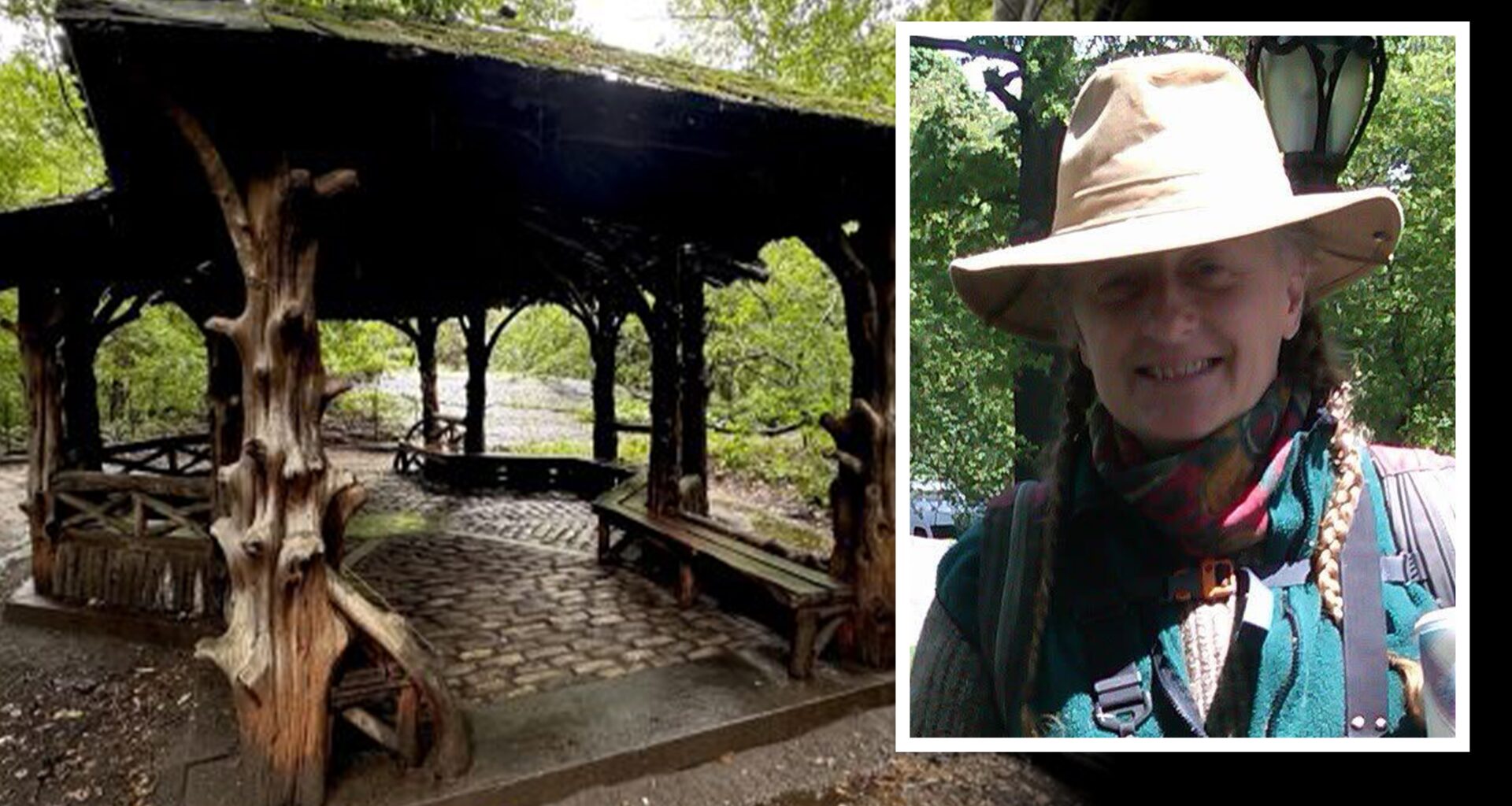
The accused Central Park killer of Elise Bainbridge Hill gave a chilling confession to police, claiming the beloved homeless artist hit him with a stick first, which he then grabbed and beat her with more than 20 times “until she couldn’t hit me anymore,” court documents filed Thursday alleged.
The disturbing account emerged in charging papers as Jonathan Robles, 36, was arraigned for murder at a Manhattan Criminal Court proceeding he attended remotely from his hospital bedside.
A witness discovered Hill, who also went by the name Francis Lee Rogers, early Sunday by a gazebo close to The Ramble and Central Park Boathouse near East Drive and E. 74th St., according to the complaint. The 63-year-old was lying lifeless with a head injury and cuts all over her head and hands. The witness also saw pieces of a stick near Hill that appeared to be covered in blood.
Robles turned himself in later Sunday and confessed to the killing, identifying the victim in a photo and telling members of the Central Park Precinct Detective Squad, “She hit me on my body with a stick, so I took the stick from her. I hit her with it more than 20 times. I did it until she couldn’t hit me anymore,” the complaint alleges.
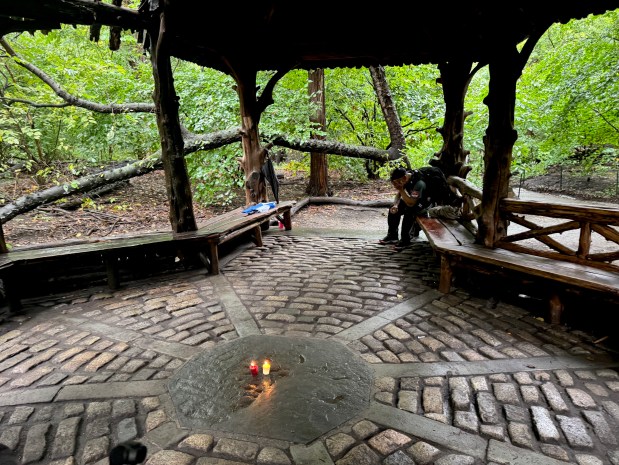 Elise Bainbridge Hill was found dead in this gazebo, called “Rustic Shelter,” near East Drive and E. 74th St. in Central Park’s Ramble on Sunday, Sept. 27, 2026. Here, a man cries near candles laid earlier for Bainbridge Hill. (Rebecca White / New York Daily News)
Robles, who police said was hospitalized for a hand injury after turning himself in, was held without bail on Thursday by Judge Sheridan Jack-Browne, who also ordered a psychiatric evaluation. Prosecutors said they had secured an indictment from a grand jury and that Robles would next appear in court Oct. 13.
Reached for comment, his attorney, Mitchell Schuman, said, “The court ordered a psychiatric evaluation to see whether Mr. Robles is mentally fit to proceed with this case. It is very clear that he suffers from a serious mental illness and once the evaluations are completed, that issue will be dealt with in court.”
Robles and Hill had previous hostile encounters with one another and at one point stayed in or near the same homeless encampment, police previously said.
Robles lives in a transitional housing facility in Hell’s Kitchen, according to police, and Hill was living in the park after her former landlord at an E. 76th St. apartment tried to evict her.
Hill, a talented painter fondly known to many in the bird-watching community who frequent The Ramble, was the subject of a 2007 documentary, “Begging Naked.” The poignant film examines how life’s vagaries can shape a person’s existence, documenting Hill’s experiences as a sex worker and struggles with addiction, poverty and mental illness after fleeing her home and an abusive father when she was a teen.
Hill ultimately went to rehab, the documentary details, where she learned how to paint and other forms of artistic expression.
While she continued to struggle, according to those who knew her, the devoted artist was unwavering in her dedication to her craft, painting vibrant and ethereal scenes of the wildlife in Central Park in works she often sold to tourists. A friend of hers, Joe Lopez, told The News on Monday that Hill was in charge of the bird feeders at The Ramble for a time.
The filmmaker behind the documentary, Karen Gehres, had been friends with Hill since the 1990s, but said they had grown apart as Hill’s mental health worsened. Speaking to The News in the wake of Hill’s killing, she described her old friend as highly intelligent and loyal.
“She’s probably one of the most intelligent people I’ve ever met in my life. She’s hilarious, a great sense of humor, the most amazing artist,” Gehres said Monday.
“She resisted leaving the park when I was still talking to her. She was a very, very, very fiercely independent person. Anybody that’s ever dealt with anybody that has mental illness, they know that sometimes it just doesn’t matter what you say, how much you try.”