

The chain, which opened its first store at 30-06 34th St. in Astoria in July 2017, quickly expanded its presence across the city and the United States but had begun scaling down operations in recent weeks, closing down all of its stores in Connecticut and Virginia.
But the proverbial cookie crumbled on Thursday evening, when the company informed staff via email that it would permanently shutter all remaining locations in New York, New Jersey and Texas at the end of the business day.
“Our industry and business have faced a challenging environment,” Chip City told staff in an email viewed by QNS and amNewYork. “Consumers are spending less, and their preferences are evolving, and that has negatively impacted our sales. … Unfortunately, we no longer have the funding required to operate this business.”
Chip City’s rapid expansion was driven by private equity, with Danny Meyer’s Enlightened Hospitality Investments providing $10 million in 2022 followed by a further round of $7.5 million in funding in 2024.
But staff wrote on social media that they noticed “red flags” with the company’s supply chain earlier in the week before receiving an email on Thursday, informing them that the company would be ceasing all operations.
Chip City later confirmed it was closing all locations in a statement to QNS.
“Despite extensive efforts to stabilize our business in the face of significant macro-economic headwinds, we have made the very difficult decision to close all of our Chip City locations,” the company said in a statement. “We are grateful to our dedicated employees and loyal customers who have supported us for the past 10 years.”
Former Chip City CEO sues for breach of contract
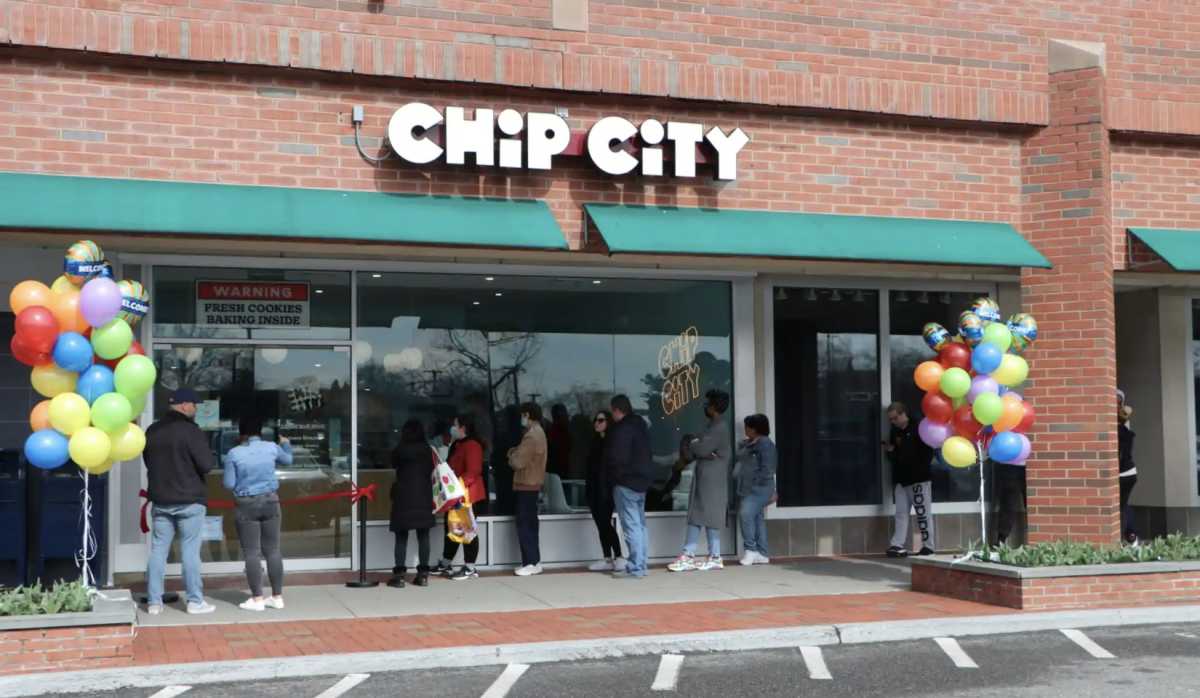 Chip City abruptly closed down its stores.File photo by Jenna Bagcal
The news comes shortly after co-founder and former CEO Peter Phillips sued Chip City and its controlling investor over an alleged breach of contract regarding his severance payments on Sept. 28.
Phillips, who agreed to step down as CEO on March 2, also accused Chip City of willful wage theft and unlawful retaliation in the lawsuit, alleging that the company abruptly ceased paying his transition salary and health benefits in mid-September – three months before the nine-month transition period ended.
Phillips alleged that the company informed him that his pay would remain frozen until transferred four web domains to the company and signed documents related to five SBA loans on which he claimed he remained a guarantor. The loans allegedly total more than $640,000.
During the transition period, Phillips alleged, the company began raising questions about $900,000 in pre-closing company expenses dating to his time as CEO, which he described as “manufactured” counterclaims. Phillips claimed in the lawsuit that the March 2 agreement resolved all pre-closing expenditure inquiries.
In a letter to Phillips on May 26, then-Chip City interim CEO Fred LeFranc sought information regarding a number of non-Chip City expenses, including $110,271 in payments from Chip City’s accounts to Somedays Bakery and Massi’s, which are both owned by Phillips.
LeFranc also sought information regarding rent payments at a Chip City location in Astoria, stating that the company appeared to have overpaid for rent at the location by $53,000 between September 2022 and May 2026.
He additionally flagged approximately $443,000 in payments to a construction company affiliated with Phillips, adding that the company had not been able to locate invoices, contracts or other documents that would substantiate how the payments related to Chip City operations.
The letter did not accuse Phillips of any wrongdoing.
Phillips claimed in the lawsuit that the March 2 agreement resolved all pre-closing expenditure inquiries, stating that the severance agreement covered all claims, “whether known or unknown.”
Chip City has not yet responded to a request for comment regarding the lawsuit. The company and its controlling investors have also not yet responded to the allegations in court. The lawsuit does not establish that the dispute is linked to the recent closures or any financial difficulty.
Staff, meanwhile, confirmed that they will be paid through Oct. 18. However, the New York State Worker Adjustment and Retraining Notification (WARN) Act requires businesses to provide 90-day notice ahead of mass layoffs or closures. A company found to be in violation of the WARN Act may be liable to pay employees up to 60 days’ worth of back pay and benefits.
To add insult to injury, one of the shuttered Chip City locations had money reported stolen from it early Friday morning.
Police said just after 2:30 a.m. on Oct. 2, at 370 Columbus Ave. on the Upper West Side, two unidentified individuals were observed on surveillance cameras entering the location and removing an unknown amount of cash.
The incident was reported to the 20th Precinct. Police said no arrests have been made in the ongoing investigation.
This story first appeared on our sister publication qns.com.