
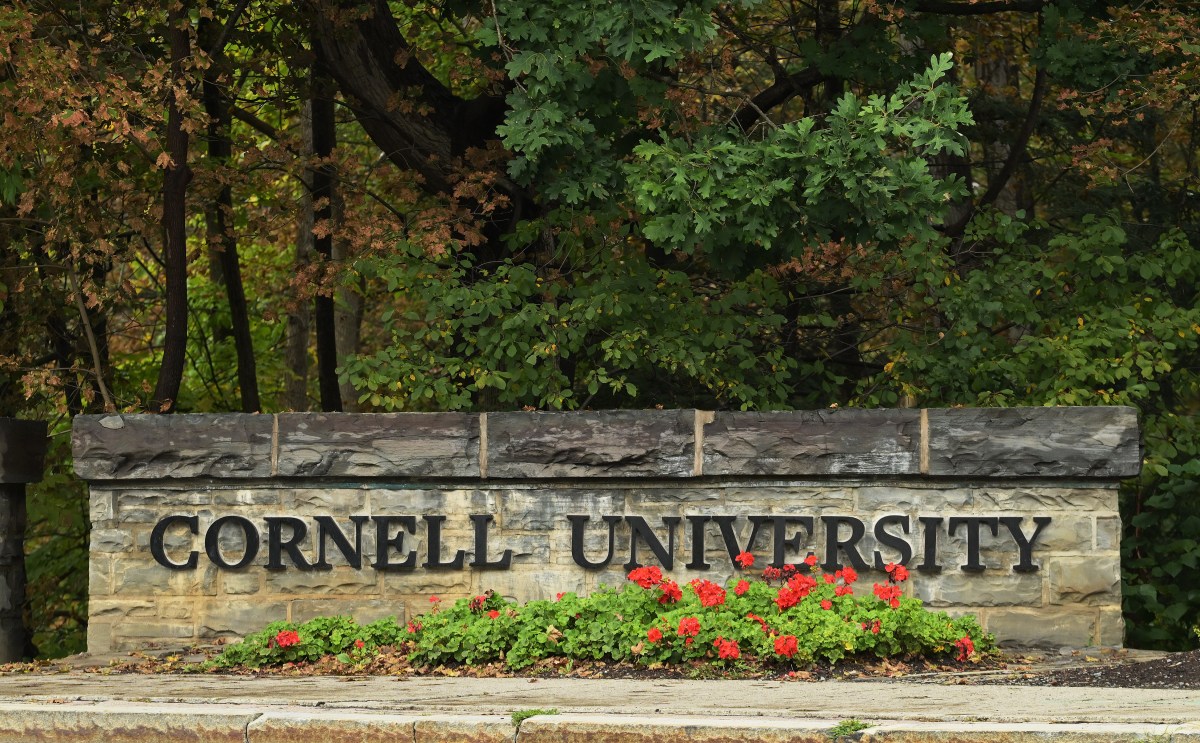
New York Governor Kathy Hochul vowed to work with legislators Friday to close the state’s so-called “voluntary intoxication loophole” amid an investigation into an alleged gang rape at Cornell University in 2024.
Hochul, who appointed state Attorney General Letitia James as a special prosecutor to oversee an investigation into the woman’s allegations, said the case had exposed a “gap in state law” that must be rectified.
Read More on News
“If someone is too intoxicated to consent, it should not matter whether they chose to use drugs or alcohol,” Hochul told reporters Friday during a news conference alongside James. “Voluntarily intoxication is not a license for sexual assault or gang rape—period. I support closing this loophole, and will work with the New York state Legislature to accomplish this.”
Hochul appointed James after “new information” surfaced that raised questions about how the case was handled in 2024, insisting she had lost faith in the ability of Tompkins County Attorney Matthew Van Houten to oversee a reopened investigation.
Van Houten had cited the state law as he defended his initial decision not to file criminal charges against any of the seven men who were later sued by the alleged victim.
“At the heart of all this is one young woman and what she deserved from the very beginning,” Hochul said Friday. “Every parent who sends their child off to college expects them to be safe. And if something terrible happens, the student deserves to know that the people they turn to will listen to them, protect them and fight for them. That is the bare minimum. This brave young woman deserved that in 2024 and she deserves it now.”
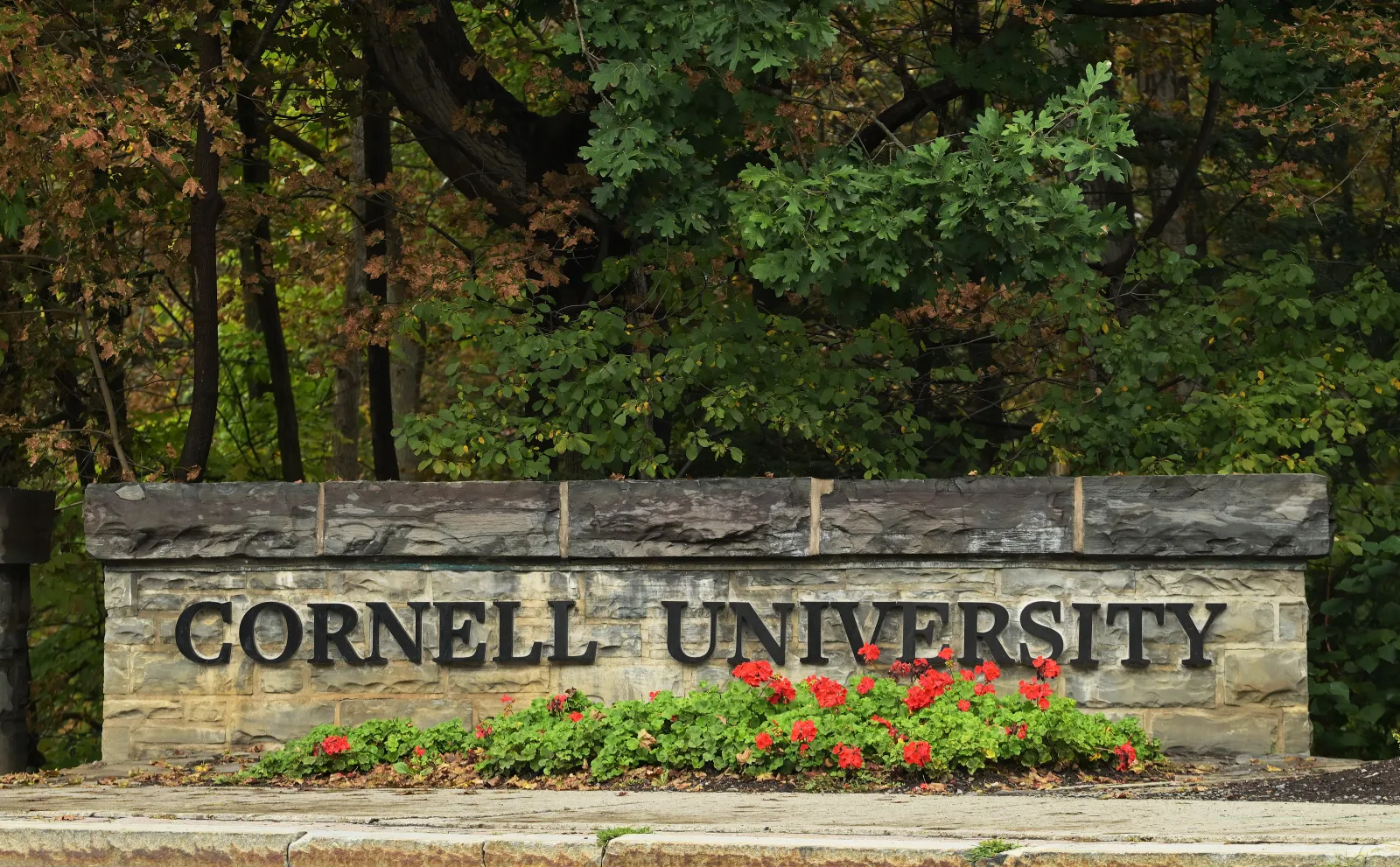
Hochul said she intended to do “everything possible” to close the loophole, which makes it more difficult to prosecute people who have victimized others who are too intoxicated to consent to sexual activity.
“This is critically important to me,” Hochul said, adding she would encourage legislators to pass a bill to close the voluntary intoxication exemption as soon as January.
While a proposal to close the loophole has previously been approved by the state Senate at least four times since 2019, the measure never reached the Assembly for a vote, Gothamist reported Friday.
Manhattan District Attorney Alvin Bragg applauded Hochul’s vow to take action amid the ongoing criminal investigation into the alleged 2024 rape at the Ivy League institution.
“Driven by what we see in our own practice, we have long called for New York State to eliminate the voluntary intoxication loophole,” Bragg said Friday in a post on X. “Drugging someone to rape them is clearly wrong. So is raping someone who became intoxicated by voluntarily drinking or taking drugs. In either case, the person is incapable of meaningful consent, and our laws should clearly recognize both as rape.”
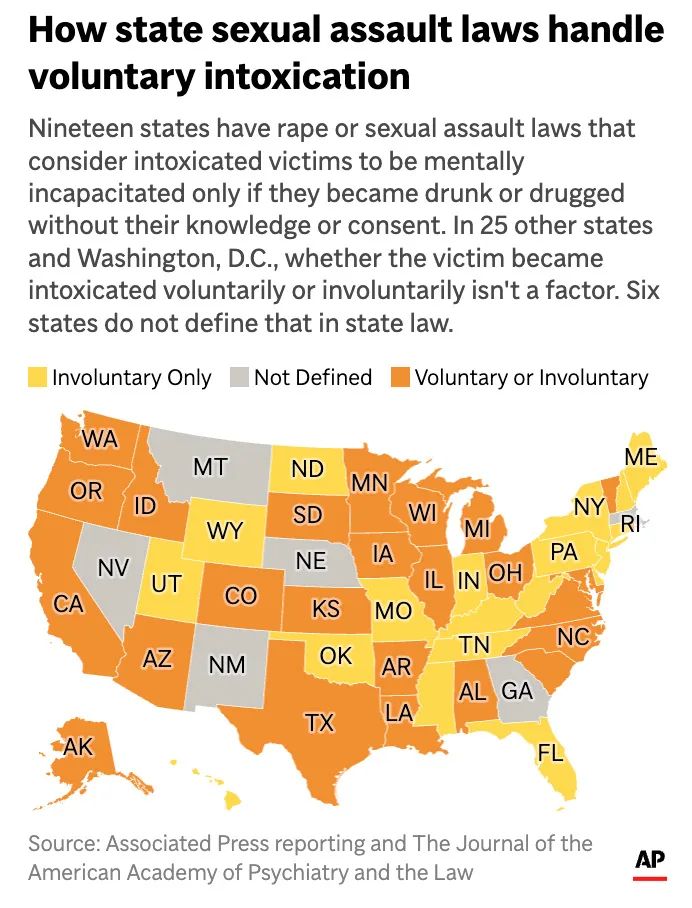
New York is one of 19 states with rape or sexual assault laws that deem intoxicated victims to be mentally incapacitated only if they become drunk or were drugged without their knowledge or consent, the Associated Press (AP) reported on Tuesday.
State Assemblyman Jeffery Dinowitz, who has sponsored proposals to change the law since 2019, said the allegations of sexually assault at the Chi Phi fraternity house in October 2024 indicate the sense of urgency to close the legal loophole.
“It’s just outrageous and it makes me angry that we haven’t passed this yet,” Dinowitz told AP on Tuesday, adding the proposal “would at least ensure that the survivor would get justice.”
The New York State Association of Criminal Defense Lawyers (NYSACDL), which represents criminal defense attorneys across the state, disputes the premise that New York has a “voluntary intoxication loophole.” The organization argues that current law already allows prosecutors to bring rape and sexual assault charges when a person is too incapacitated to consent, regardless of whether that person voluntarily consumed alcohol or drugs.
It raised concerns that the proposed legislation could expand criminal liability without clearly defining the point at which intoxication renders someone incapable of consenting.
“New York law does not contain a loophole that allows a person accused of rape or sexual assault to avoid accountability because a victim was voluntarily intoxicated,” NYSACDL said in a statement. “Intoxication is not a defense to sexual assault, and people have been convicted of rape in cases involving voluntarily intoxicated victims.”
“Claims that a loophole exists are not supported by the law, and proposals based on that premise risk creating confusion while eroding fundamental due process protections and increasing the risk of wrongful convictions,” the statement continued.
The current Senate bill states that a victim must have been “temporarily incapable of appraising or controlling” their conduct, and that the condition was known or reasonably should have been known to the defendant. NYSACDL has called for additional guardrails in the legislation, including language requiring a victim to be “incapable of clearly expressing lack of consent.”
Yung-Mi Lee, a representative of NYSACDL, told Newsweek the additional language is important to distinguish between someone who has been drinking yet still able to offer consent, and someone who is so intoxicated that they cannot meaningfully communicate a lack of consent.
“There has to be outward signs. Defense attorneys would call it due process protections,” she said.
The NYSACDL warned in its statement that the legislation was simply too vague to be fairly enforced.
“Proposed legislation that would brand someone a rapist if their partner is voluntarily intoxicated and later claims a crime was committed because they were “incapable of appraising or controlling their conduct” is simply too vague to be fairly enforced,” the NYSACDL said. “The proposed legislation fails to provide any objective guidance about when a partner is too intoxicated to legally agree to engage in sexual conduct.”
Some of the 19 states with rape or sexual assaults that deem intoxicated victims to be mentally incapacitated only if they become drunk or were drugged without their knowledge or consent have been gradually moving to update them, the news outlet reported.
In 2021, after the Minnesota Supreme Court overturned a sexual misconduct conviction because an incapacitated victim had voluntarily become intoxicated, state legislators revised laws to allow charges to be filed whether a person had voluntarily or involuntarily become inebriated.
“That business of whether the victim was voluntarily intoxicated or involuntarily intoxicated should really not matter in the vast majority of cases, if not all of them,” University of Minnesota professor Chinmoy Gulrajani told AP.
Michigan and Texas also made similar revisions to its sexual assault laws in 2023 and 2025, respectively, the outlet also reported.
Van Houten has acknowledged that Dinowitz’s proposed legislation, Bill A101, would have required his office to further investigate the report made by the former Cornell student identified solely as Jane Doe in a lawsuit filed against the university and seven former fraternity brothers.
“Yes, we would have, under the law, had to investigate further and determine what other individuals knew or should have known about her mental state,” the district attorney told the New York Post on Wednesday.
The reopened probe into the alleged 2024 rape could lead to criminal prosecutions, James reiterated Friday.
“Every New Yorker deserves to know that when they report a crime, it will be investigated fully and fairly, that they will be seen and heard,” James told reporters. “That is the promise of our justice system. I stand ready to lead a process guided by the facts and the law.”
One of the accused fraternity brothers allegedly sent messages to fellow members inviting them to take part, the woman’s lawsuit claims. The shocking details of the alleged sexual assault at Cornell University in 2024 has sparked a national conversation about violence against women on college campuses and public comments by actresses Florence Pugh and Mariska Hargitay, as well as New York Democrat Alexandria Ocasio-Cortez.
“When I read about what happened at Cornell, those men posted in a group chat,” Ocasio-Cortez said Sunday at the Ithaca Downtown Conference Center. “That means it was normal to them. We cannot protect those spaces anymore. Never again.”
President Donald Trump, meanwhile, criticized Hochul’s decision to appoint James as a special prosecutor when asked by reporters Friday.
“Letitia James is a corrupt person, she’s totally corrupt,” Trump said. “And I feel badly for whoever she’s looking at because they won’t get a fair shake.”
New York City Mayor Zohran Mamdani also reacted on X on Friday, writing, “The allegations in the Cornell sexual assault case are deeply disturbing and gut-wrenching. Cornell University has failed this survivor. I fully support Governor Hochul’s decision to name Attorney General James as special prosecutor in this case and look forward to the complete and extensive investigation that is to come. Accountability and justice cannot simply be values, they must also be delivered.”
Contact Newsweek editors on this story: Samantha Beech, Edward T. Cummins and Anna Commander