
Federal tariffs on MTA rolling stock will add at least $1 billion to a $23 billion program to buy new subway cars, commuter railcars and buses, the agency estimates.
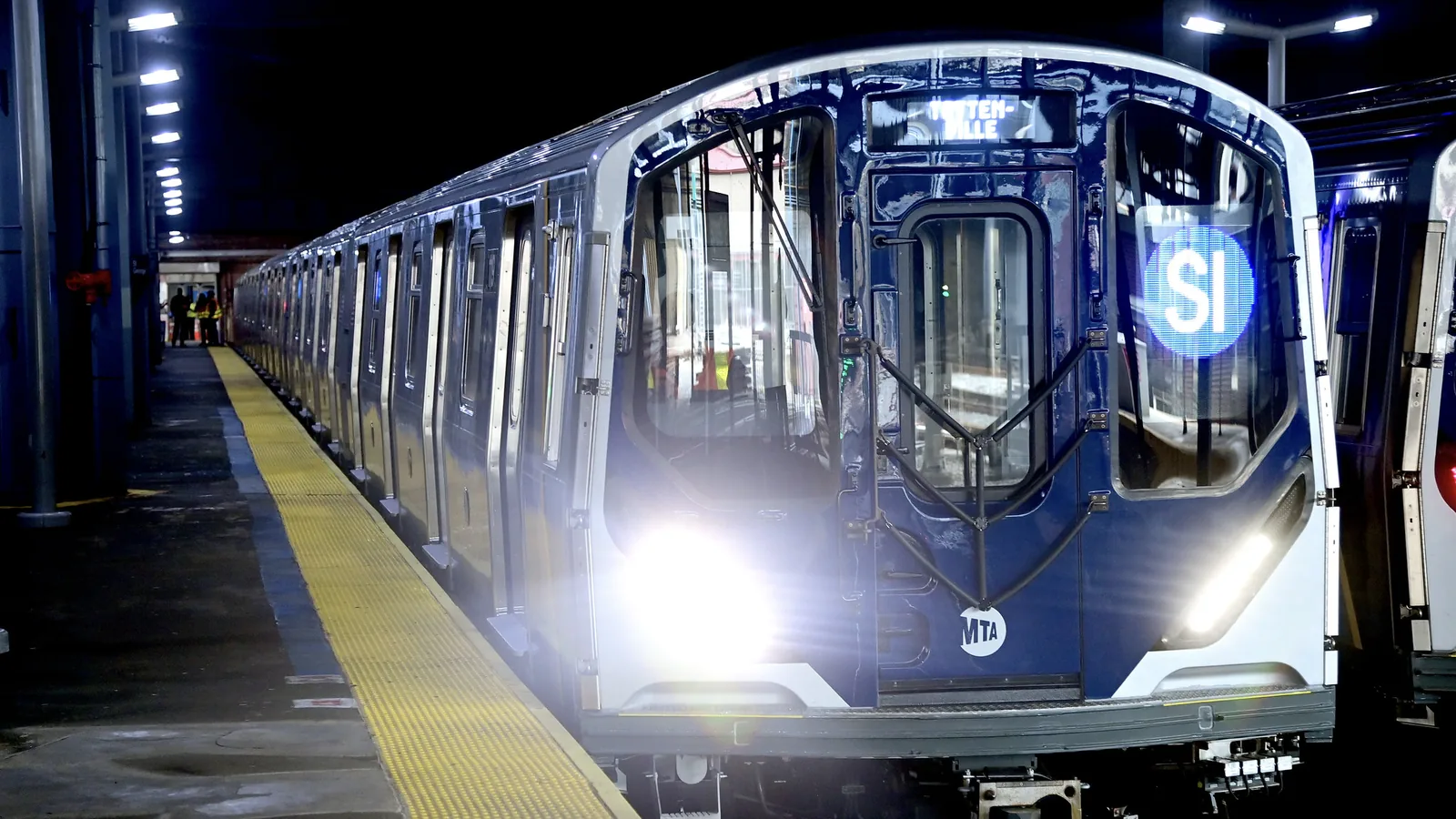
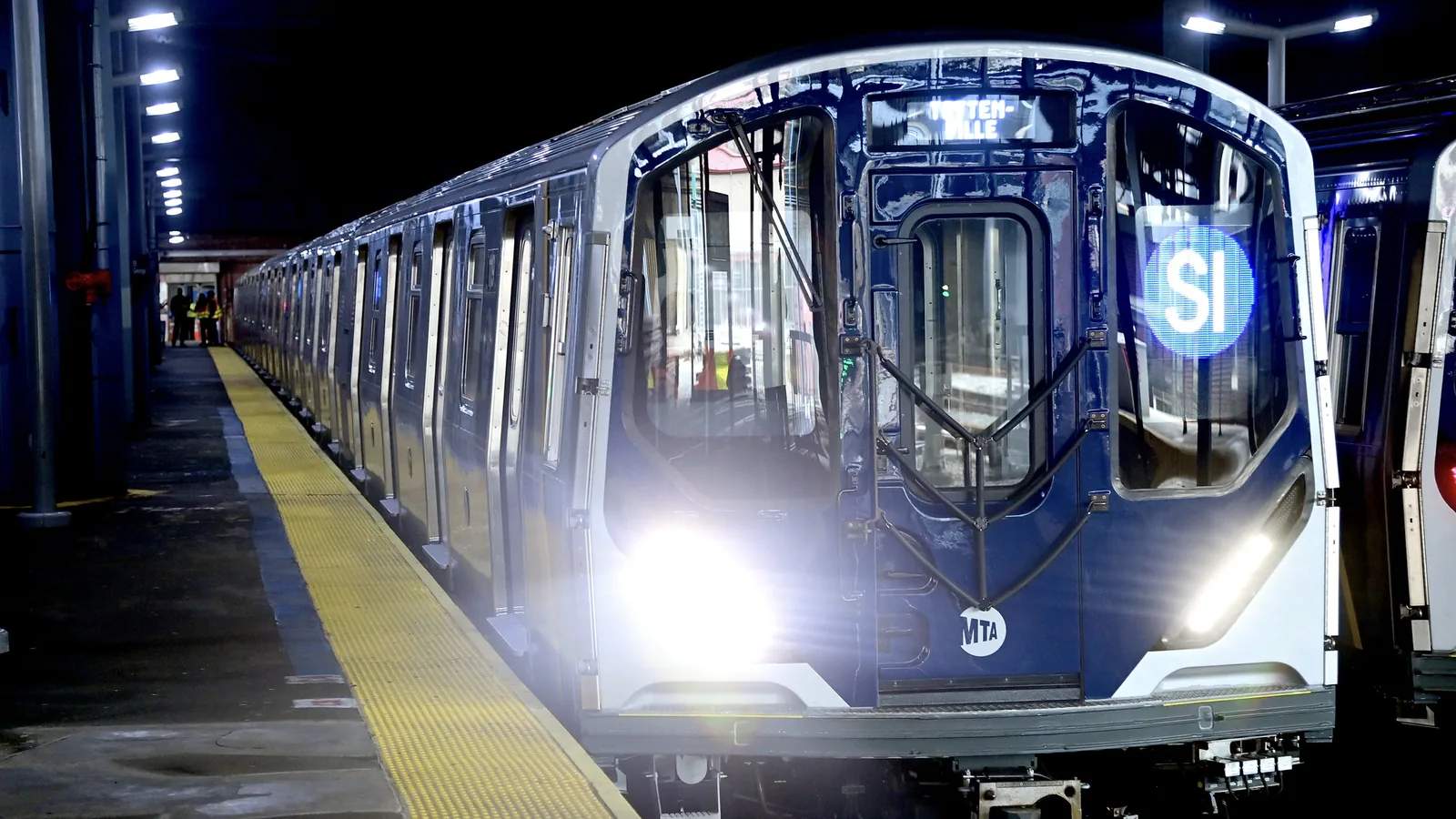 An MTA R211S train at a Staten Island Railway platform. Photo: Marc A. Hermann / MTA
Jessie Lazarus, chief of the MTA’s Rolling Stock Program, presented the estimate to the MTA board on September 30, 2026. After the presentation, New York Governor Kathy Hochul wrote to Commerce Secretary Howard Lutnick and US Trade Representative Jamieson Greer. She asked that components used in Buy America-compliant vehicle contracts be exempted from the duties.
Why Buy America vehicles still carry tariffs
Federally funded trains and buses must meet Buy America rules. The MTA presentation summarizes them as 70% US-made parts and domestic assembly. That still leaves up to 30% of the components in a new train or bus sourced abroad, and the agency says all of them are subject to tariffs.
Buy America minimum domestic content for FTA-funded rolling stock
Fiscal year of scheduled first production vehicle delivery
Minimum domestic content
2016–2017
More than 60%
2018–2019
More than 65%
2020 onward
More than 70%
The current minimum of more than 70% applies when the first production vehicle is scheduled for delivery in fiscal 2020 or later. The FAST Act raised the threshold in two steps from 60%, the first rise since 1991, according to the Federal Transit Administration.
The governor’s office said that more than 75% of the components in the R211, the MTA’s newest generation of subway cars, were made in the US. Final assembly takes place in Nebraska and Yonkers. Modern railcars nonetheless need some imported parts that American manufacturers do not offer, it added. The presentation names the groups whose tariff rates keep changing: vehicle frame parts, wheels and axles, motors and compressors, and modern signals, electronics and controls.
The MTA told the board that material costs for building each subway car have risen by nearly 30% since January 2025, a rise it attributes to tariffs. Across the industry, it pointed to destabilized supply chains, delayed manufacturing, reduced competition and less cost visibility.
What the MTA says $1 billion could buy
To show the scale, the presentation compared the estimate with purchases the same money could fund. The list covers most of the Metro-North coach replacement, 150 M9A cars that would ease crowding on Long Island Rail Road trains, nearly 1,000 buses, or almost 300 subway cars for the 1, 2, 3, 4, 5 and 6 lines. The governor’s release gives the subway car figure as more than 250.
Hochul’s letter describes the $1 billion as extra costs the MTA had not anticipated. They are spread over subway car, bus and commuter rail purchases, both under way and planned. The letter adds that the MTA’s update to its board also warned that manufacturing ties with Canadian companies have been destabilized. It notes that the state approved and funded in full the MTA’s $68.4 billion capital program for 2025–2029. That program includes replacing railcars and buses, some of them in service since the early 1980s.
Timeline of the R262 subway car order
Among the purchases ahead is the R262, the biggest subway car contract in the MTA’s history, according to the governor’s office. In March, the MTA invited manufacturers to submit proposals for a base order of 1,140 cars to retire the R62 and R62A fleets on the 1, 3 and 6 lines. An option covers 1,250 more cars to replace the R142 and R142A fleets on the 2, 4 and 5 lines. The request set September 8, 2026, as the deadline for proposals, and the MTA expects to award the contract by early 2028.
How the MTA plans to contain the cost
Besides seeking the exemption, the MTA told its board it is adopting a new commercial approach for its contracts. The approach is designed to minimize the “risk premium” while giving vendors an incentive to contain their own exposure to tariffs.
Hochul’s letter describes the MTA as the largest single buyer of new railcars and buses nationwide. Its purchases support jobs in New York communities such as Hornell, Yonkers and Plattsburgh, the letter says. Neither the letter nor the governor’s release sets out a timeline for a federal decision on the exemption.