
The Mayor’s Office has designated five community districts in Queens as affordable housing fast-track districts, which, effective Jan. 1, 2027, will greatly shorten the approval process for applicable building projects.
The targeted ares are CD 4 (Corona and Elmhurst; CD 5 (Ridgewood, Maspeth and Middle Village); CD 10 (South Ozone Park and Howard Beach) CD 11 (Auburndale, Bayside and Douglaston); and CD 13 (Queens Village, Bellerose and Rosedale).
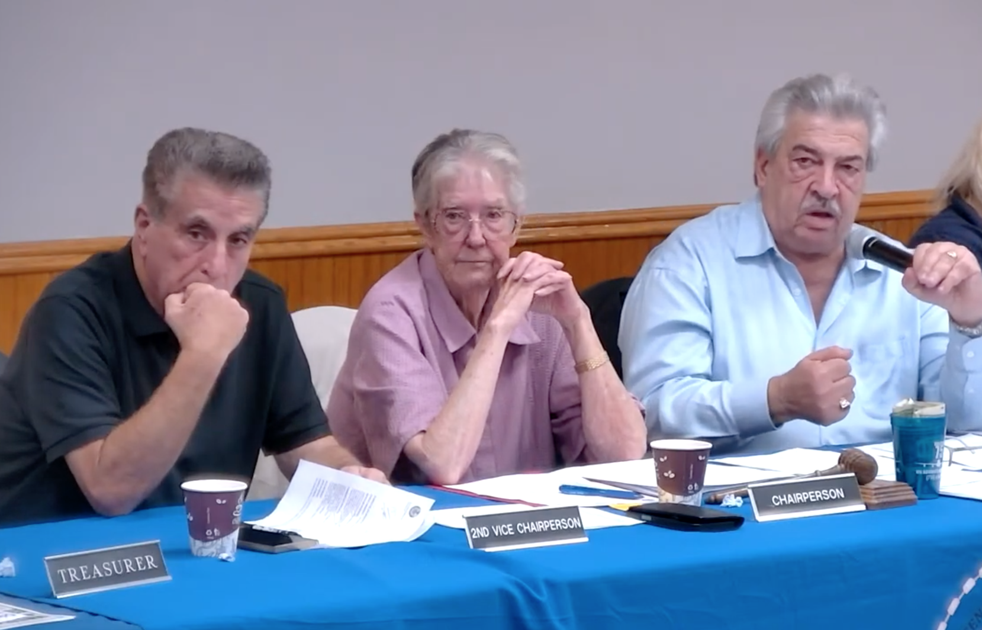
“Instead of six months or eight or 12 or 14 months, it will be 90 days,” said John Calcagnile, first vice chair and Land Use Committee chairman of Community Board 10 last Thursday evening, less than 10 hours after the plans were announced [see separate story in some editions or qchron.com].
Calcagnile said for the selected districts, a City Council vote will not be necessary after review by the community board, Borough President’s Office and City Planning Commission. But he also said that leaves far less time for board review, and to negotiate things such as project changes or community benefits.
Mayor Mamdani was unapologetic in his Oct. 1 press release.
“New York’s housing crisis is not going to be solved by asking the same neighborhoods to do all the building,” Mamdani said. “Every New Yorker deserves a home they can afford, and every neighborhood must be part of delivering it. The Affordable Housing Fast Track gives us a new tool to cut through red tape and make sure our housing growth is shared more fairly across all five boroughs. We are going to build — block by block, neighborhood by neighborhood — at the scale this crisis demands.”
He said the 12 districts will be recalculated every five years.
Reactions received by the Chronicle ranged from unenthusiastic to highly critical.
Councilman Phil Wong (D-Maspeth) said in an email that City Planning did not seek any input from him or his office before determining the list.
Wong noted that under the City Charter amendment approved by voters in 2025, the 12 community districts with the lowest rate of affordable housing production are placed into a new expedited review process for qualifying projects. Community boards and borough presidents retain an advisory review, but qualifying applications then proceed to the City Planning Commission for a final decision without the traditional City Council land-use review.
“My biggest problem is that nobody from City Planning sought any input from my office until this afternoon, literally the day before the announcement,” said Wong. “You cannot call something community planning when the local communities and their elected representatives are brought into the conversation only after the decisions have essentially been made.”
Wong also said the change is a direct result of Charter changes approved by voters.
“We also have to be honest about how we got here. New Yorkers voted for these Charter changes, whether everyone fully understood what they were voting for or not, and unfortunately this is one of the consequences,” he said. “City of Yes followed by these Charter amendments has steadily taken land use authority away from local communities and the Council, and I continue to believe that is the wrong direction.”
The other districts outside of Queens are 10, 12 and 18 in Brooklyn; 7 and 8 in Manhattan; and 2 and 3 in Staten Island.
Corey Bearak, chair of the new Affordable Housing Fast Track Subcommittee of the Land Use Committee at CB 13, had equal disdain for how the referendum process worked.
“I believe the whole thing is totally unnecessary and it shows a general lack of knowledge or appreciation for what makes the city sync, in the sense that New York City needs to have multitudes of different kinds of housing and living opportunities for people to locate here rather than elsewhere,” Bearak said in an interview
Bearak said it might be needed in theory if there ware few or no private homes except the wealthy, privileged types, “as opposed to most of the much more affordable kinds of homes on smaller lots that exist in much of Community Board 13.”
He said that allowed people who might otherwise want to locate or relocate to Nassau, Suffolk or Westchester counties to stay in Queens even at the cost of a smaller backyard.
Board 10 Chair Betty Braton was matter-of-fact in an interview on Friday.
“That’s what was voted on by the voters of the City of New York,” Braton said. “If you take a look at the livestream from our board last night — and granted, we just received recent notice of this yesterday — it’s something that is concerning.”
Braton said her biggest concern is the fast-tracking, which would give less time than normal for the impacted boards’ land use committees to do their jobs — a tough enough task for volunteer board members even without a sped-up procedure.
“There are reasons why the function of bureaucracies is slow,” Braton said. “And we must have adequate time to review all kinds of things. Sometimes this is difficult.
“It’s the mayor’s prerogative to institute what he’s instituting. We may not like it. Time will tell whether it works.”
Bearak, like Wong, said people tend to vote yes on referendum items that are grouped together, good or bad, in this case not fully understanding what that would unleash.
“And it seems that the people who did this with that scheme — I don’t want to use the word plan; I’m intentionally using the word scheme — did not have an appreciation for what I consider to be very important,” Bearak said. “The city offers a multitude of living arrangements with a number of opportunities, including areas that are akin to living in the suburbs.
“And there’s nothing wrong with that.”