
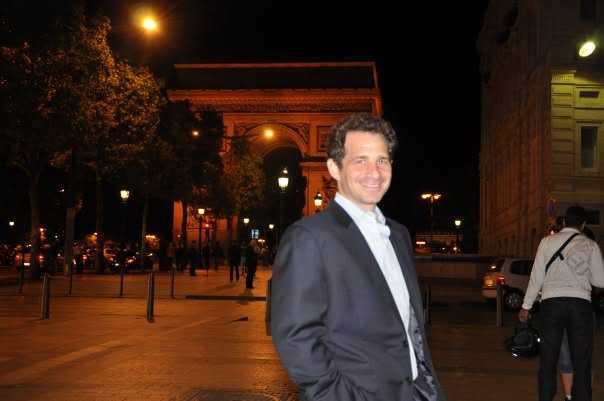
David Lesch’s family firm has spent decades getting Bronxites money after they’ve been injured. Now the managing parnter of Lesch Law, Lesch says he’s motivated every day to continue the work his family started in 1966 because he knows it’s changing people’s lives.
“I’m getting people money who didn’t have money,” Lesch said of the settlements and verdicts he gets injured clients. “That changes people’s lives. This isn’t like Manhattan or the other boroughs. This is the Bronx … My clients have gone from food stamps and EBT to all of a sudden having hundreds of thousands of dollars.”
“Don’t get me wrong; they were injured and they deserved it,” Lesch added. “My clients would rather not be injured and not have to take money for their injury.”
Since joining his family’s firm in 1992 after working as a court attorney for a few years, he’s spent nearly 35 years fighting hard for Bronxites to be able to take the money they deserve for their injuries, both in court and outside of it. He said he knew this is what he wanted to pour his energy into almost immidately after he joined the fights his family’s firm was taking on.
“I always knew I was drawn to the law in this way,” Lesch said. “I started trying my first case within two weeks at my family’s firm, and I never looked back. I eventually took over the firm.”
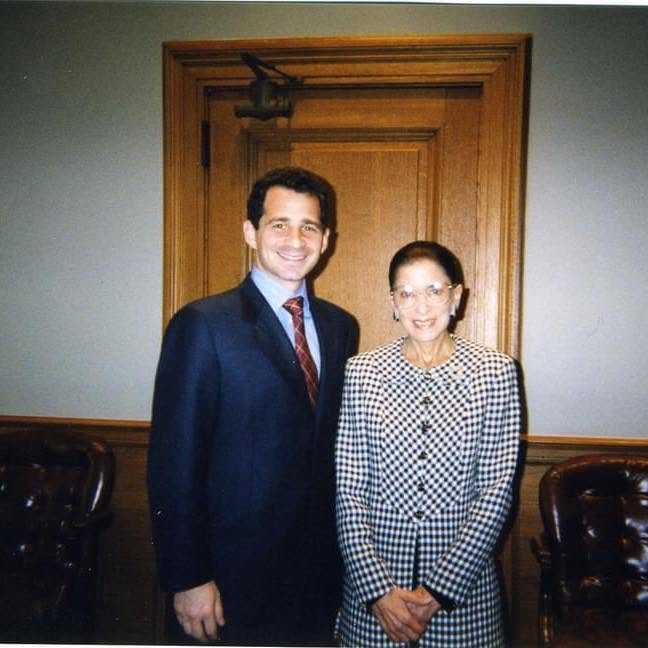 David Lesch stands with former U.S. Supreme Court Justice Ruth Bader Ginsburg.
Though he grew up in Queens, Lesch’s family has always had a strong connection the Bronx. His dad grew up there and his grandfather had an auto body shop there. After his father, Solomon Lesch graduated law school, his dad started auto body clients who’d gotten into car wrecks his way so Solomon Lesch could file personal injury suits on their behalf. As more and more injured Bronxites were sent his way, he decided to put his firm’s roots down in the Bronx, where he’d grown up.
“Whenever there was a crash or a wreck, my grandfather started referring my father some cases to represent people,” Lesch said. “My father very well after law school, but he ended up at a white-shoe firm, and he just didn’t like working for other people; he just wanted to work for himself. So, he established a place in the Bronx as my grandfather started sending him cases.”
Lesch Law prides itself on guardianship work
Lesch Law got its start representing people who had been in car crashes and found themselves facing other injuries they believed weren’t their fault, but the firm was also just getting its footing during the Bronx’s decade of constant fires, allowing it to fill a significant need in the community.
The firm also has a strong guardianship practice with Lesch himself serving as the legal guardian for over half a dozen people, all of whom he sat with through hospice and helped bury. Lesch and his team help serve as court evaluators and support families in choosing the right person to be legally liable for and to make decisions on behalf of relatives who have become mentally or physically incapacitated, such as those struggling with dementia.
“Guardianship work is extremely rewarding,” Lesch said. “People are just lonely, and they can’t manage their money. I can help them. That’s why I like guardianship work.”
Though Lesch and his firm focus primarily on their core of personal injury and guardianship legal services now, Lesch has and continues to work across a slew of other fields, including family law, helping people get divorces, and real estate law, helping people with transactions and even serving as a receiver, or legal administrator, for properties.
While many attorneys focus on one field, having this wide breadth of knowledge across different practice areas is something Lesch feels passionately about and has always come naturally to him. At just seven years old, he’d accompany his mother to St. John’s Law School – which he eventually attended – as she sought her juris doctorate, sitting in the back of her lectures and listening.
“I was sitting in the back of the classes. I enjoyed being there, and I actually had some of the same professors she had ten years later,” Lesch said. “I always knew I was going to follow in my parents’ footsteps. I had a great deal of respect for them and always wanted to be a part of what they were doing.”
Hitting the airwaves
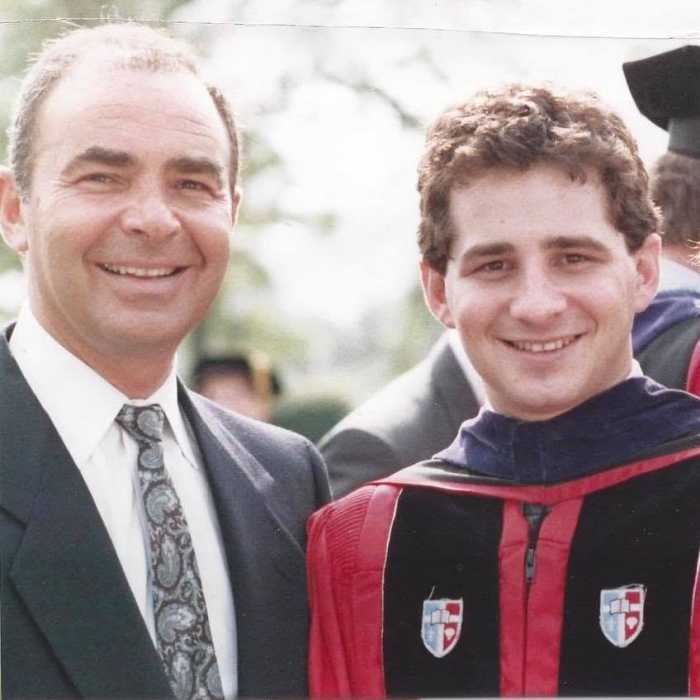 Lesch stands with his son, who also attended St. John’s Law School.
His orientation toward learning and sharing that knowledge has served him well in his double life as a television correspondent for legal news shows on BronxNet, where he hosts programs that provide people with free, accessible legal advice on a variety of topics ranging from his personal injury specialty to immigration, landlord-tenant and civil rights issues.
“I’ve been doing this for 36 years. I know my way around,” Lesch said. “I tend to know a lot about a lot of different things, whether it’s false arrest or driving while intoxicated, or landlord-tenant issues – so many different things that I don’t necessarily do, but I know about because I’ve been doing this for so long and because I worked for a judge who did a lot of these things.”
“I realized I could either become a professor, or I could start giving I could give my my advice on television, so more people can see,” Lesch said. “I chose to do that.”
Providing strong legal advice to a large Bronx audience is important, Lesch said, because it helps make critical knowledge of the law available to people who wouldn’t otherwise have easy access to it. He said he responds to every call he gets from members of the public who saw his number on the show and are phoning in a question.
“I get a lot of calls, even for work I don’t do. I give it out to the lawyers who do it,” Lesch said. “For example, I recorded a segment about what you should do if ICE knocks on your door, or pulls you over in a car, or they stop you on the street. They’re all different scenarios in terms of how you should behave and what you should say, and what your legal rights are. When it airs, I’ll get a lot of calls about ICE, and I’ll refer them to an immigration attorney.”
While some of Lesch’s segments simply involve him talking to the camera and providing people with advice on navigating legal issues they might be caught in, he also hosts and interviews experts and politicians to provide his community with additional information on a subject. The information they share on camera is informative and helpful to his community, Lesch said, but he’s also able to leverage his relationships and time with them to ensure his clients are getting the help they need if he believes they have an issue an elected official he’s talking to can solve.
“Sometimes they represent my district right here, and I can say, ‘Look, I have a client who has had bed bugs in her apartment for the last six months. Is there a way you can get the city’s Department of Housing Preservation and Development involved or do something?’ That’s what I like.’”
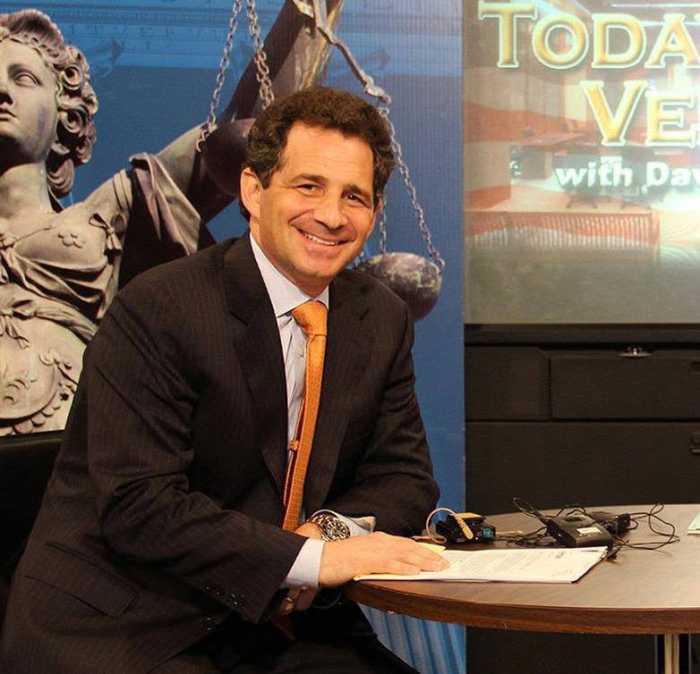 Lesch at BronxNet.
Those connections and knowledge Lesch fosters through his show help him better serve his clients, he said. It’s also opened the door for Bronxites to come to him with questions about all sorts of legal and legally adjacent issues – even when they’re not explicitly connected to a personal injury or guardianship case he’s working on for them.
“I give legal advice to my clients all the time that has nothing to do with the kind of work I do,” Lesch said. “If you tell me something that happened with you or your family, I can probably tell you what to do. And if I don’t know exactly what you should do, I can get you to the right lawyer who can tell you what to do.”
“It could be issues with a teacher who’s not treating their child correctly, and it’s not a lawsuit, but nobody hears them, nobody listens to them, so they come in to talk to me,” Lesch elaborated. “I always say to them, ‘If you’ve got a problem, come to me, I’ll give you some time.’”
Doing that is important to Lesch because he sees serving his Bronx community as critical, and something his law degree makes him uniquely positioned to do effectively. He’s taken the responsibility of being present in and in service to the community so seriously that strangers say hello to him on the street because they recognize him, and he’s had to dismiss people from juries on cases he works on because they say they’ve seen him around, watched his show, or know him.
“People recognize me a lot of times. I’ll be walking around areas in the Bronx, and they’ll say, ‘Oh, I just saw you. You just did a segment on ICE and protections.’ And the next thing I know, they’re in the jury room, and they’re on my jury panel,” Lesch said with a laugh.
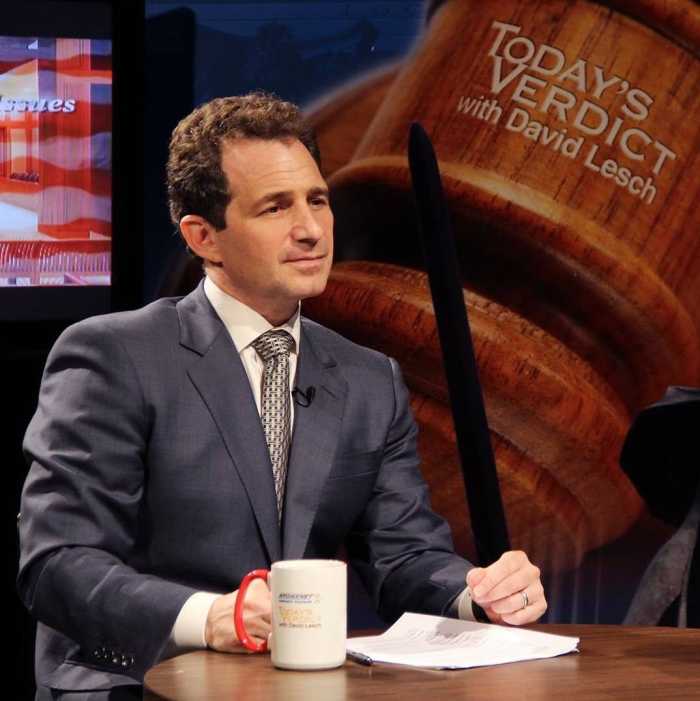 Lesch photographed while hosting his show, “Today’s Verdict.”
Lesch takes great pride in that, he says, and that the relationships he forms with his clients and community are what allow him to provide them with the best service possible. For example, when he wins clients monetary settlements, they have a high enough degree of trust in him that he’s able to provide them with assistance and advice about how to most securely place the money in bank account, and has a strong relationship with the banks in the area that he’s able to advocate for them in that office as well.
“Clients are like family here,” Lesch said. “They’re not your regular clients. They come to us not because we’re the biggest law firm, like Morgan and Morgan. They come to us because we treat them like family and yhey have issues that nobody wants to talk to them about. They come back because they always know that I’ll be there for them for anything.”
Carrying forward that philosophy continues to keep him in the legal profession more than anything else.
“The honest truth is that I don’t really do this for the money anymore,” Lesch said. “I don’t. I’m at the point where I could retire if I wanted. I do this just because I enjoy it.”