
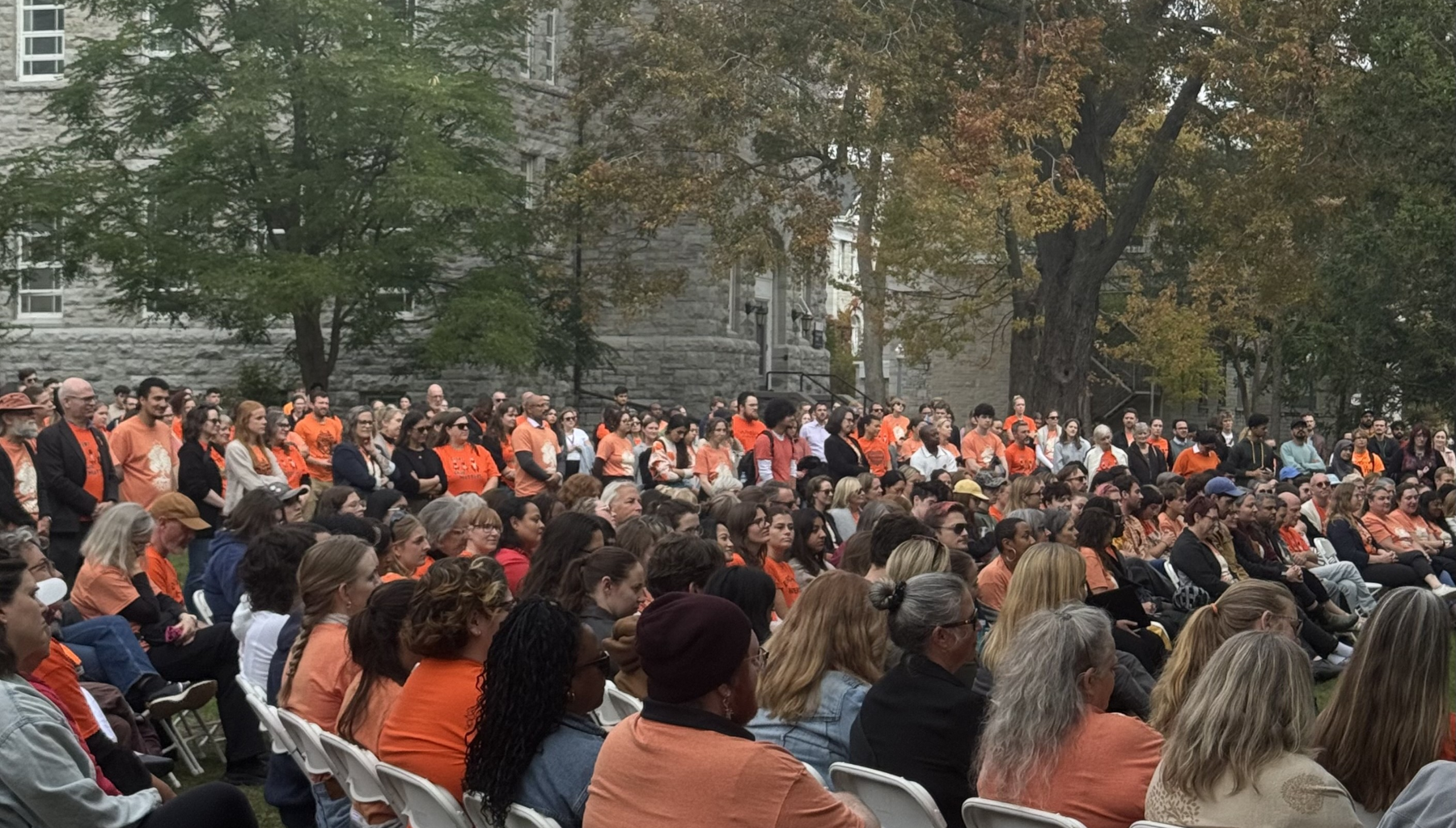
Corinna Fitzgerald, Vice-Provost (Student Affairs), emphasized that advancing reconciliation is a responsibility shared by everyone in the Queen’s community.
“Indigenous students should not carry the responsibility of educating their friends, their classmates, and our campus about Indigenous cultures, histories, and experiences,” she said. “All members of the Queen’s community must take the initiative to learn, ask thoughtful questions, and engage with Indigenous perspectives in meaningful ways.”
Lisa Maracle, Associate Vice-Principal (Indigenous Initiatives) spoke about feelings of loss that extend beyond the day for survivors and families whose loved ones never returned. She emphasized the need for ongoing efforts to build relationships between Indigenous and non-Indigenous people.
“This is more than one day’s work,” she said. “This work requires an ongoing commitment, and sustained action is necessary. It means working to build understanding that the actions of the past created the conditions that changed the world for Indigenous people, and making sure this never happens again. We must always consider the generations to come.”
Members of the Queen’s community can continue that learning through resources, events, and reports from the national and university Truth and Reconciliation committees available on the Office of Indigenous Initiatives website.
Campus observances of the National Day for Truth and Reconciliation continue at Union Gallery, where Holding Our Breath: Visiting Artist Exhibition by Cree Métis artist Lara Felsing runs until November 21. The Fifth Annual Indigenous Art Exhibition also recently ran at the gallery.