
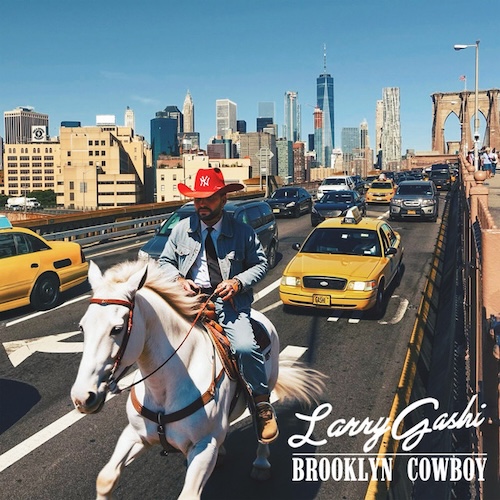
My relationship with country music is complicated. Where I grew up it was the predominant music on the radio, to the point you could be bullied for showing an interest in anything else. The first time I heard “Friends in Low Places” I genuinely thought it was a parody OF country music by Weird Al Yankovic. That didn’t help my cause. I’m not a rebel by nature and seldom put up a fight but I refused to be told what I should read, what I should listen to, or what I should wear. Being bullied for not liking or having any interest in country didn’t make me conform. It had the opposite effect. It made me dislike everything about or related to country for the longest time.
The irony is that if I grew up like my peers, liking the things they did, GASHI’s “Brooklyn Cowboy” would probably resonate with me more. It has become fashionable for rap and R&B artists to dabble in country music. You only need to see the success Jelly Roll and Beyoncé have had doing it as the proof of this trend. If anybody asks for justification (not that it’s necessary because artists can do whatever they want) it’s noted how many times white people took black music and put a white face to it, figuratively and literally culture jacking, often to immense fame and fortune. Turnabout is fair play, they say. It may even be true. It makes me smile to see Ron Killings top the Billboard charts for country music.
There’s just one problem — I still don’t like country music that much. Age has softened my position on it from revulsion to indifference. Even though I don’t hate it, I don’t seek it out. If I turn on a radio station with a slogan like “where rap and R&B lives” and I hear too much singing, country or otherwise, I’m out like shout (ooh ah ooh ah). That’s why streaming exists. I can put on any rapper who actually raps any time I like and beam it by Bluetooth to my headphones or car stereo. If it’s unfair that I’d rather listen to Slick Rick or Kendrick Lamar then I have no problem with being unfair. I learned in my pre-teen years to not apologize for what I like or be forced to listen to what I don’t.
I spent a full hour giving GASHI the benefit of the doubt on “Brooklyn Cowboy.” He honestly has the kind of backstory that I love to read. He was born in Libya, moved around constantly in his youth, and when he wound up in Brooklyn at ten years old rap music helped him learn English and adapt to a new culture. Wonderful! A+. Do I fault him for doing country music when so many other rappers and producers have done the same? Not really. GASHI may be going a little bit further though with his denim tuxedo and cowboy hat, walking across desert landscapes with the kind of tall skinny cacti you might see in a Western. If he’s cosplaying it’s either too late or too early for Halloween. I don’t think he is. I think Labinot Gashi has decided this is who he is now.
There might be a little bit of pitch correction to song like “Good Old Days,” but even traditional country artists are embracing elements from rap production, so this is indistinguishable from what I know as country music. Even the lyrical narrative is straight up country — wistful reminiscing about the good old days and wishing things could go back to those times. Dare I say it’s a bit MAGA? Assuming the past was better, even the bad parts of it, and wanting to regress back to those times warts and all. If GASHI was making country music with a rapper or R&B singer’s perspective I could get behind it. Beyoncé was bold and brash. This is complacent and cloying.
GASHI :: Brooklyn Cowboy
4Overall Score