
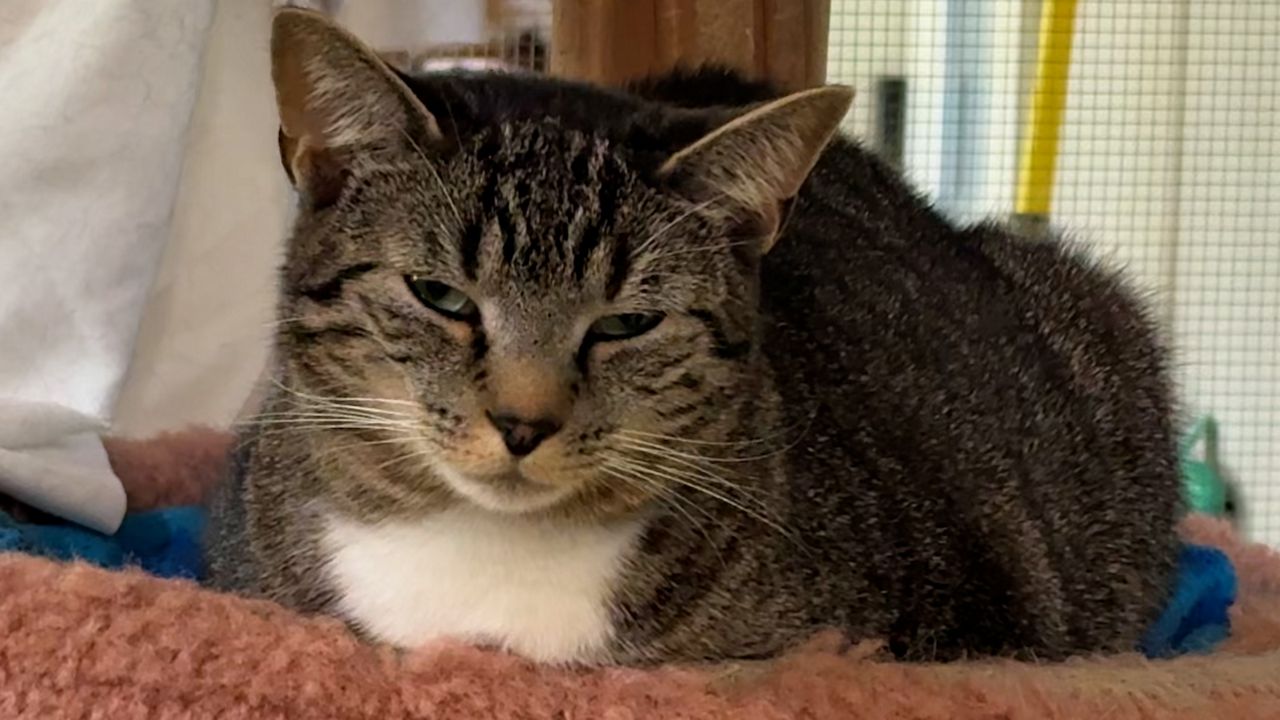
Animal shelters across New York are increasingly reporting they’re at maximum capacity.
“I’ve been in animal welfare now almost 40 years and I can tell you that this is about the worst I’ve seen it in our community,” said Dawn Hayman, co-founder and director of Spring Farm CARES.
Spring Farm CARES is an animal and nature sanctuary that cares for more than 200 animals.
“A lot of mouths to feed. All of our animals have special needs. They’re not up for adoption because they’re actually unadoptable,” Hayman said.
Like many other rescues, their hands are full, but people keep dropping animals off on or near their property. Abandoning an animal, or leaving it to die in a street or public place, is illegal in New York state.
“It is beyond sad and pathetic when you see a creature that’s just starved to death. We have found them that way, just emaciated,” Hayman said.
“As things get harder for people, things get harder for animals. All of these things are interrelated,” said Jessica Reed, director of Maddie’s Shelter & Community Medicine.
Reed said her organization and other shelters practice “intake diversion” to help keep animals out of shelters in the first place.
“People are not dumping animals because they feel like they have other options,” Reed said. “It’s usually a last resort and they’re sending animals or leaving them at shelters because they’re desperate. So if we can create a space where there is a way in otherwise, that’s a better alternative.”
The spaces meant to assist now need help themselves. High numbers of unfixed strays, high costs for spay and neuter surgeries and a shortage of veterinarians are all factors contributing to the larger problem inside the facilities: overcrowding.
“There’s not a factor in this that would solve the problem,” Hayman said. “You could have veterinarians suddenly be able to lower their prices. That’s not going to solve the problem. You can’t have veterinary hospitals going out of business either, because they can’t make ends meet. Liability costs and insurance costs are skyrocketing just to keep a clinic open.”
“Most shelters don’t have the resources that they need, financially or otherwise. So a lot of shelters depend on volunteers,” Reed said. “Most of them, if not all of them, just need help.”
Industry experts say a commitment from the community, whether giving time or money, could make a world of difference at smaller shelters across the state.
New shelter management protocols also took effect for animal shelters statewide last December. Many shelter managers tell Spectrum News 1 that these regulations are forcing expensive changes that may limit how many animals they can care for.