
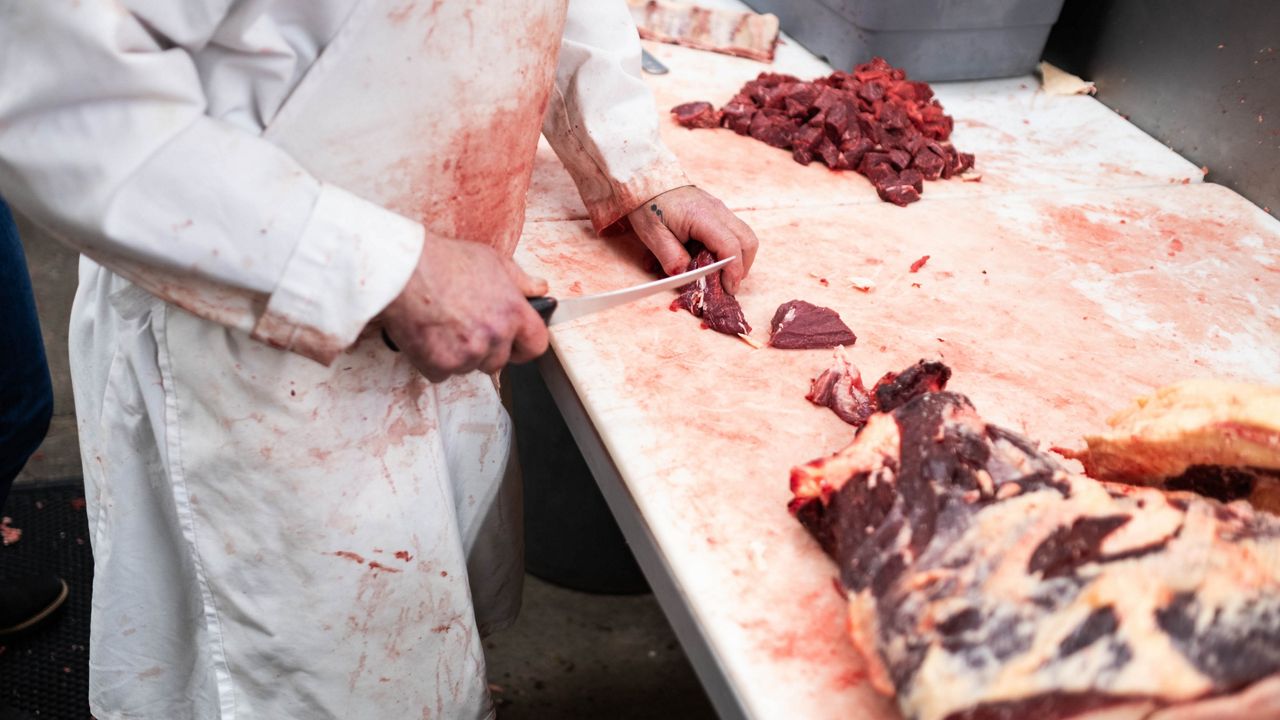
While it may be intimidating to purchase 100 pounds of meat at once, a Cornell University expert says it can actually make it more affordable for consumers.
“We buy a quarter of a cow, half a pig and a whole lamb every year, and that all comes cut and packaged in a way you’re familiar with, but what you’re really gaining is a little price advantage as opposed to buying all that by the piece because you’re committing to the full array of cuts when you make a purchase,” said Matt LeRoux, an extension associate with the agriculture marketing resource program at Cornell University.
Some farmers in New York sell their products directly to consumers, which offers them the ability to purchase a quarter, half or whole animal, which is processed by a butcher into cuts that they would buy in a grocery store, LeRoux said. The university even developed an online tool called MeatSuite where consumers can plug in their zip code and see what meat is available for purchase near them and what the price would be.
“A quarter of a cow is typically around 100 pounds, and that would be about four cubic feet in the freezer,” he said. “You generally can expect to get about one-third of the weight that you receive will be ground beef; about one third will be in steaks or cuts that you can cook on high heat; and about one third will be roasts or cuts that you have to do slower cooking with.”
With the national cattle herd at the lowest number it has been in history, beef prices are at a high, according to data from the U.S. Department of Agriculture. Beef prices were 5.9% higher in August 2026 than they were in August 2025, and they’re predicted to rise an additional 9.4% in 2026, the USDA said. Pork and poultry prices are also expected to increase.
Kienan Gridley, owner of Gridley’s Cold Spring Beef in Fayetteville, said farmers have experienced high input costs such as fertilizer and diesel prices, which have increased prices for consumers. He said he had to raise his own prices.
“We hate to do it. I look through our store and I’m like, ‘man, that just seems crazy, but our margins are so thin.’ We might have to raise them again,” Gridley said.
However, if consumers purchase a whole, half or quarter cow, the price per pound for Gridley’s beef is $6.25 compared to the national average, which is $7.13, according to an analysis from the American Farm Bureau Federation.
Additionally, if consumers get in touch with farmers early, Gridley said they can customize what they get for cuts.
“People have a great deal of discretion. For example, the chuck is the forward shoulder. There’s a lot of different cuts that can come out of that. If you like slow cooking and you want your chuck roasts, you can select that. If you really like grill cuts, you can have it broken down into flat irons and Denver steaks, chuck eyes,” Gridley said.
The Trump administration announced last month they would allow in 300,000 metric tons of beef from other countries without a tariff to lower beef prices for consumers.
“Our demand for our beef has just been going up and up and up over the past couple of years, and I think the decision from the federal government to bring in this foreign beef, I think it’s just one more thing that people just don’t quite feel comfortable about,” Gridley said.
LeRoux said supporting local agriculture makes it stronger.
“The more we use it, the stronger it gets. As farms find more customer interest, which they’re seeing right now, then they might consider upping their production. We had a lot of our meat processers increase their processing capacity during COVID times in response to market demand, and so it’s important to keep exercising that demand in our local food systems,” LeRoux said.