
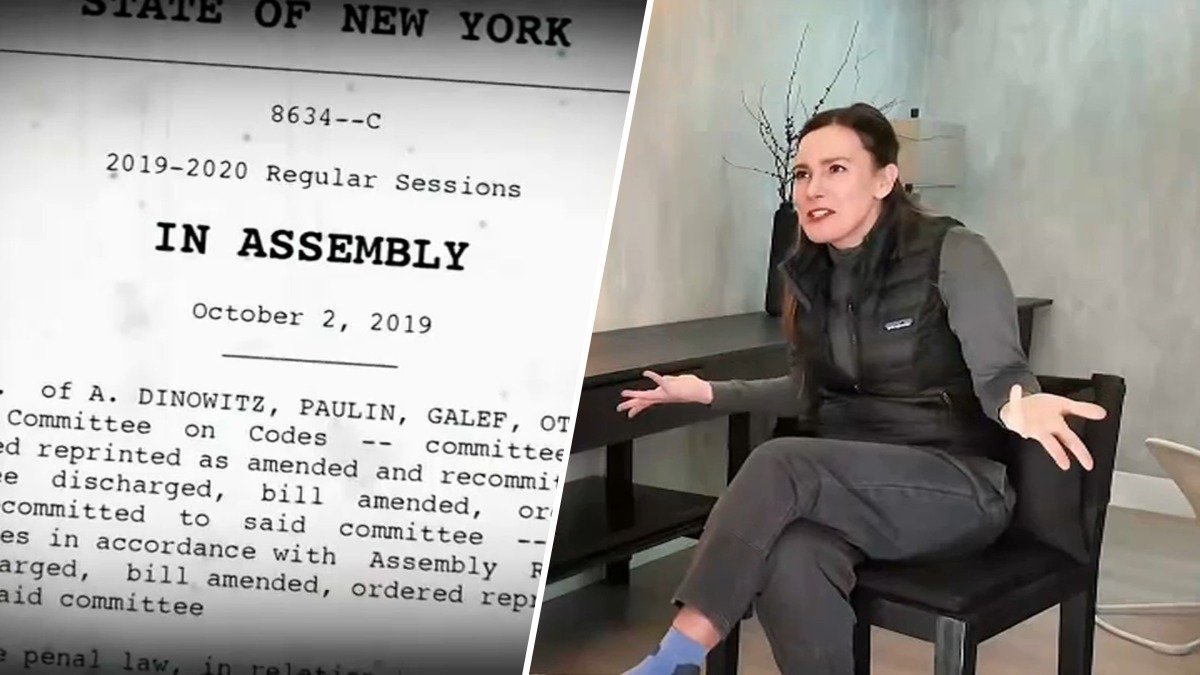
When Alessandra Biaggi heard upstate New York prosecutors had declined to file criminal charges against the Cornell fraternity brothers, now accused of sexual assault, she says was furious. And she still is.
“I feel extremely outraged and incensed,” Biaggi said.
Back in 2019, Biaggi, a former state senator, had tried to strengthen New York’s rape statute after seeing an NBC New York I-Team story about a Manhattan club-goer who said her rape claim was dismissed by prosecutors because she voluntarily drank alcohol to the point of severe intoxication.
“I mean I thought it was so obvious that if somebody goes out to have a drink and is sexually assaulted, the law would protect them,” Biaggi said.
But the I-Team story revealed a gap in New York’s sex crime law. The story was first to uncover a letter authored by Cy Vance, then the Manhattan DA, in which he argued state law made his staff unable to charge sex crimes when victims voluntarily drink alcohol – like the underage club-goer did – even if a reasonable person would consider the complainant too drunk to consent.
At the time, Biaggi said she drafted a bill to close the so-called “voluntary intoxication loophole” within 24 hours of seeing the I-Team story.
But, as fast as the bill was drafted, it was quickly bogged down in legislative committees. For the following seven years, that same bill sat stagnant in Albany.
Now the legislation is garnering new and intense attention from those who criticize the way Cornell’s “Jane Doe” was treated after she reported being the victim of sexual violence while severely impaired by drugs and alcohol inside the Chi Phi fraternity house in 2024.
Governor Hochul has now appointed Attorney General Letitia James to take over the criminal investigation from Tompkins County prosecutors. And Hochul has also publicly vowed to close the voluntary intoxication loophole. Activists on the Cornell campus are also calling for the bill’s passage.
“If this law was on the books,” said Biaggi, “I think it would have been really hard for prosecutors to ignore the case and it probably would have protected her.”
None of the accused fraternity brothers has been charged with a crime and they have yet to respond in court to a civil lawsuit filed by Jane Doe.
Since Biaggi left public service in 2023, there have been fits and starts of energy behind the rape reform bill. But the legislation has repeatedly passed in the New York State Senate only to stall out in the State Assembly.
Last week, Carl Heastie, the powerful Assembly Speaker, said he was troubled by the events at Cornell, but he suggested seven years of debate on Biaggi’s bill have not been enough to generate a critical mass of support among Assembly Democrats.
“The Assembly Majority conferenced this bill twice,” the speaker said. “We did not have enough votes within the Majority conference to pass the bill.”
But Heastie’s comment did not acknowledge there are also Republicans who support closing the voluntary intoxication loophole. According to New York’s legislative website, the bill had more than 90 Assembly sponsors last year, a number of votes that would be more than enough to pass the 150-member chamber.
Heastie has not made it known if he has any personal objection to the rape reform bill, but some defense lawyers have argued that removing voluntary intoxication as an affirmative defense in rape cases, could result in false accusations from complainants who sober up and don’t remember giving affirmative, enthusiastic consent for sexual activity.
Heastie has now convened a working group to “resolve issues with this bill and to look for additional ways to strengthen New York’s sexual assault laws.”
Biaggi said she’s encouraged Heastie has organized the working group, but she said there is no excuse for his failure to bring her bill to a vote during the last seven years — if for no other reason than to help voters know where their elected leaders stand.
“It’s morally reprehensible,” Biaggi said. “I, fortunately, think this Cornell case is going to push the legislature to do the right thing.”