
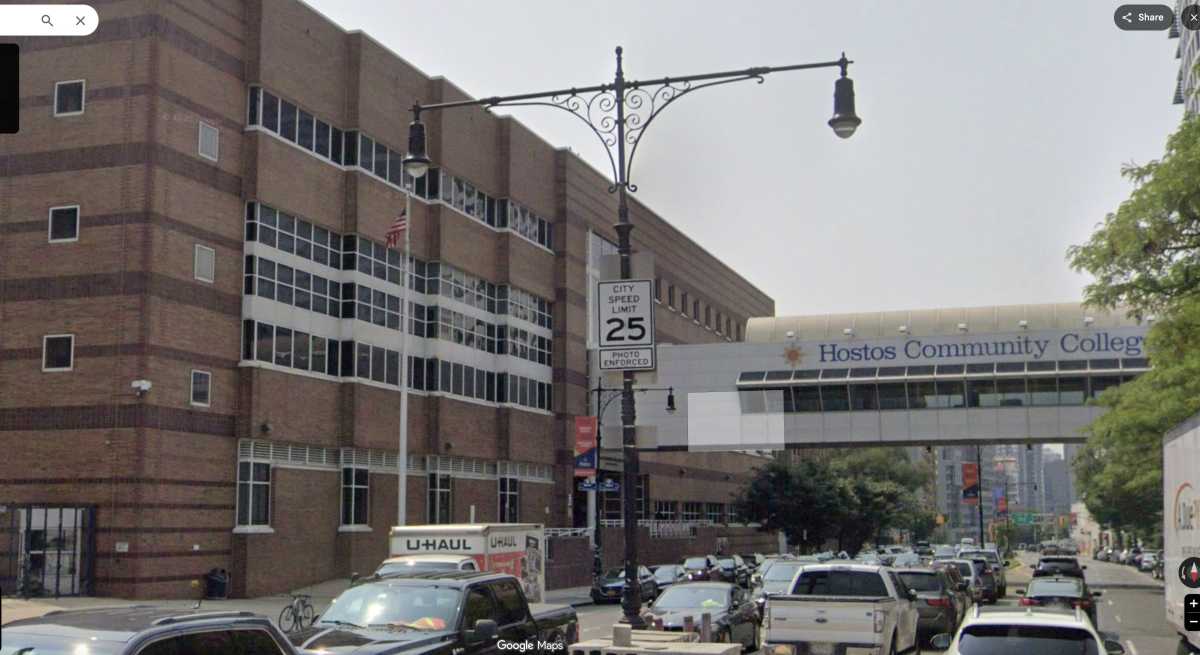
National and local immigrant rights organizations are defending New York tuition laws for undocumented students in federal court, according to an amicus curiae brief they said was filed in the U.S. District Court for the Northern District of New York on Thursday. It pertains to the case, United States of America v. State of New York.
Immigrant advocacy groups including LatinoJustice PRLDEF, the New York Immigration Coalition, Rural and Migrant Ministry, and Hispanic Federation are urging the federal court to reject the Trump administration’s effort to overturn New York laws that they say allow eligible undocumented students to access certain higher education benefits.
Representatives from the groups explained that the brief was filed in response to the federal government’s ongoing legal effort, which includes lawsuits against individual states, to invalidate state laws that allow access to discounted college tuition to undocumented students.
The States’ argument
The brief says that states are responsible for shaping their public education systems. It argues that New York can set its own tuition policies and decide how best to serve its residents.
“New York has the authority to decide how best to educate the people who live in its communities,” Francisca Fajana, director of racial justice strategy at LatinoJustice PRLDEF, said. “Denying undocumented students in-state tuition would make college less affordable for young people who have called New York home for most or all their lives and limit their chance to build a future in the state and contribute to its economy.”
The brief also describes the potential economic benefits of expanding access to higher education by highlighting that New York already receives an estimated $3 billion in annual tax revenue from undocumented residents.
“New York’s decision to expand access to in-state tuition for undocumented students reflected a fundamental belief that every young person deserves the opportunity to pursue higher education and contribute to our state’s future,” Jessica Orozco Guttlein, senior vice president of policy and communications at Hispanic Federation, said.
The DOJ’s argument
In complaints filed against multiple states, including New York, the Department of Justice said in-state tuition benefits and financial assistance for undocumented students “discriminate against U.S. citizens” who are not eligible for the same reduced rates.
“This is a simple matter of federal law. Colleges cannot provide benefits to illegal aliens that they do not provide to U.S. citizens,” said Assistant Attorney General Brett Shumate of the Justice Department’s civil division. “This Department of Justice [DOJ] will not tolerate American students being treated like second-class citizens in their own country.”
The University of Delaware is one of the newest colleges to feel the feds’ wrath. It made headlines on Oct. 1 when the DOJ sued the school and its board of trustees over a policy that gives undocumented immigrants the in-state tuition rate of $15,740 per year, while out-of-state American citizens are still charged the full $42,470 per year.
The University of Delaware became one of 26 lawsuits that the Trump administration has filed challenging state programs that support higher education access for undocumented students.
Policy and immigrant rights experts weigh in
Miriam Feldblum, president and CEO of the Presidents’ Alliance on Higher Education and Immigration, has been vocal about the implications of the ongoing lawsuits against the states’ tuition policies.
“For more than two decades, states across the country have adopted tuition equity policies, reflecting bipartisan recognition of their educational and economic value,” she said. “Today, that progress faces an unprecedented, coordinated challenge that threatens students’ ability to afford college and institutions’ ability to retain students they have recruited, taught, and advised.”
Murad Awawdeh, president and CEO of the New York Immigration Coalition, said that in-state tuition is a critical lifeline for undocumented students because it allows them to continue their education and become part of the local workforce.
“But now, instead of making higher education more affordable and accessible, the Trump administration wants to put higher education further out of reach of low-income families simply based on immigration status,” he said. “The state must uphold its own local laws against the federal government’s interference to protect access to in-state tuition for all New York students and New York’s future.”
Juana Cortes de Torres, director of the Rural and Migrant Ministry’s immigrant legal rights project, said that supporting the state in the case “gives voice” to students who, due to their immigration status, may be denied in-state tuition.
“Joining this litigation as amici reinforces our belief in the transformative power of higher education for students pursuing their professional dreams, and affirms that higher education develops leaders who benefit every aspect of society,” she said.