
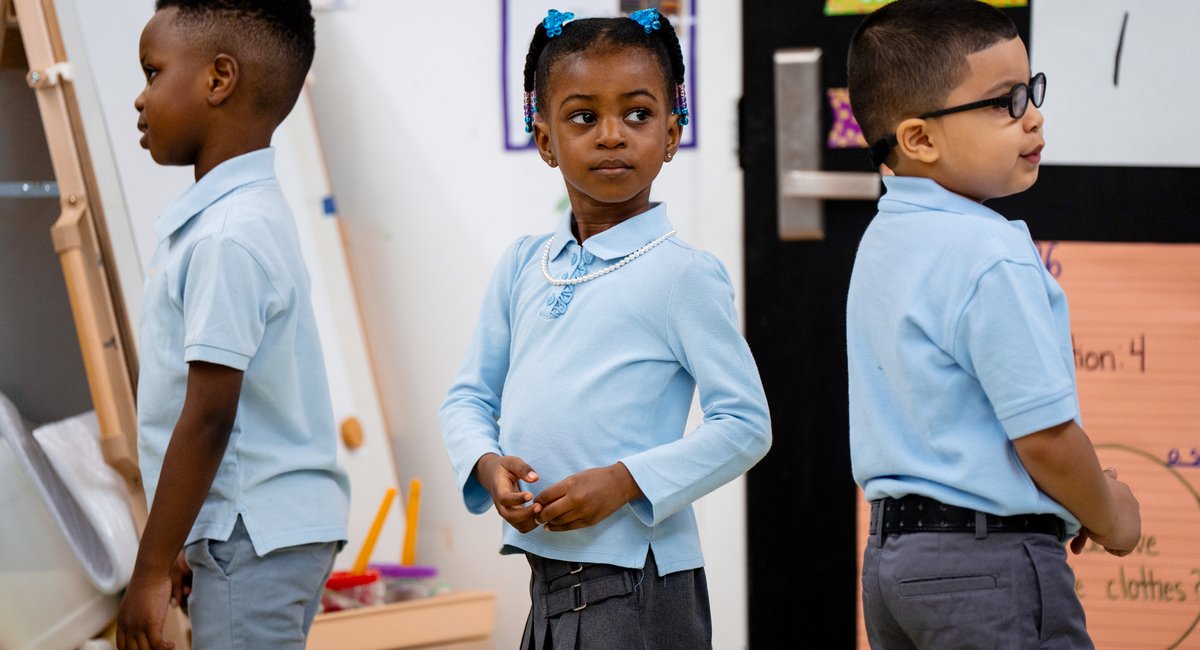
More parents in higher-income neighborhoods in or near Manhattan prefer formal preschool programs for their 2-year-olds than parents in lower-income areas in the Bronx and parts of Queens.
Working parents need more childcare options on the weekends.
And most parents want to be the primary caregiver for their child in the first year.
These are some of the findings of a new citywide survey of families with young children released by the liberal think tank New America and the anti-poverty group Robin Hood, in partnership with the city. It offers a clearer picture of the kind of childcare options New York families want and how current arrangements are falling short. The Mamdani administration launched the survey earlier this year as part of its effort to build a universal childcare system.
The results signal demand for the city’s free 2-K program, but also shows those needs could be “uneven” as the city adds another 10,000 seats next fall. It also shows nearly half the parents surveyed are not getting the childcare they want — and that cost is the biggest hurdle.
“ The data from this survey has been absolutely critical in helping us…to think about how 2-K rollout may need to look different in different parts of the city based on families’ preferences and their different childcare needs,” said Emmy Liss, executive director of the Mayor’s Office of Child Care.
The survey, which included responses from more than 4,300 parents with children younger than 6, found that currently, childcare provided by relatives is the most common arrangement, followed by care in a center-based program. A majority said making childcare more affordable would help them the most, followed by providing programs with more flexible hours.
Parents who work irregular hours or who are below the federal poverty level reported the highest level of unmet childcare needs.
About 40% of parents are using care during nontraditional hours on weekends, nights and after 5 p.m. Those parents are more likely to rely on friends and family for help, the survey showed.
Tara Dawson McGuinness, executive director at the New Practice Lab at New America, said the gaps in childcare show “ there is no one-size-fits-all solution.”
“Parents envision their children in many different types of settings, and their preferences, even in the same family, shift depending on the age of their child,” she added.
The data shows that parents’ preferences for the type of care changes as kids age. Most parents prefer parental care for the first year of a child’s life. By age 2, about half want a formal daycare setting, while the other half prefer to care for the child themselves or use a relative as a caregiver.
Higher-income parents are more likely to rely on center-based care, while lower-income families lean more on relatives, the numbers show.
About 40% of Hispanic parents rely on a relative for childcare. In the Bronx and on Staten Island, roughly 40% of families also lean on a relative. Meanwhile, white parents and families in Brooklyn have higher rates of using center-based childcare.
Alyson Silkowski, senior policy adviser at New Practice Lab at New America, said the survey didn’t address the reasons for those different preferences, but added that some low-income families may have had bad experiences with caregivers and mistrust the system.
“It could be a lack of awareness. As you look at the district-level neighborhood patterns of demand, you can see that some of the pockets of the city where there seems to be less interest are also some of the areas of the city that have historically just had fewer licensed centers,” she said.
Across different neighborhoods, family preferences for having their 2-year-olds in formal care settings varied from a 33% demand in East New York to a 69% demand in Bushwick, the numbers show. Overall, 92% of parents want or would be open to a childcare program at some point before their child turns 4.
“Some of the specific details around what families look for when they choose a care setting will directly inform how we talk to families, how we think about our outreach, and what we look for when we partner with providers and support them to continuously improve their quality,” Liss said.
The report also recommends the city make parental leave part of the universal childcare plan as many parents reported wanting parental leave of six months or more.