
On the third anniversary of the Oct. 7 Hamas massacre, Mayor Mamdani had an opportunity to tell Jewish New Yorkers something simple: Your grief deserves a day of mourning. Instead, he used our day of pain to issue yet another indictment of Israel.
He began by noting that Hamas killed and abducted Israelis. But soon pivoted to accusing Israel of an “ongoing genocide,” targeting journalists with drones, and denying food aid to Gaza. This was not a statement meant to soothe a community devastated by the biggest massacre of Jews since the Holocaust.
As a faith leader, I am often called to sit with my congregants whose lives have been shattered by loss. I know that mourning requires remaining present to someone else’s pain without redirecting the conversation to any other purpose. Jewish New Yorkers deserved that same respect from their mayor.
Palestinian grief deserves equal compassion, and Palestinians deserve a future beyond this devastation. But acknowledging Palestinian suffering does not require speaking over Jewish pain.
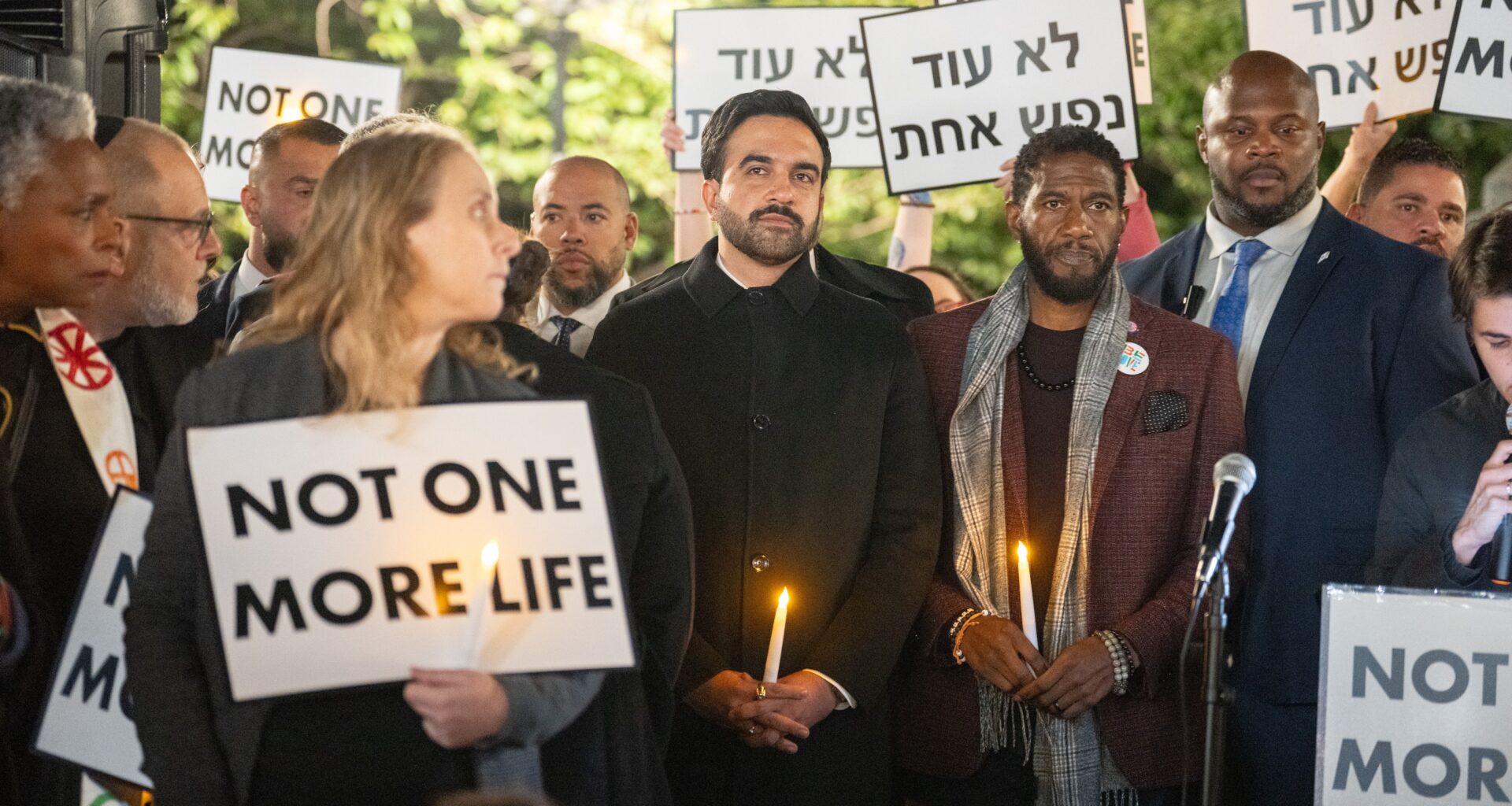
On Wednesday, Mamdani personally experienced the impact of redirecting someone else’s grief. That night, he attended a vigil organized by Israelis for Peace NYC, where participants mourned Israeli and Palestinian dead. As the program proceeded, demonstrators showed up to disrupt the vigil. They chanted “Zohran, you can’t hide, we charge you with genocide.”
The day had come full circle. In the morning, Mamdani accused Israel of genocide, and by evening activists directed that same accusation at him. The absurdity is unmistakable. To the demonstrators, his presence at a gathering to mourn the dead became evidence of complicity in their deaths. Association was enough.
This is precisely the danger of the ever-expanding guilt-by-association complex. Once association is defined as complicity, then entering a synagogue, supporting Israel’s existence or refusing to renounce the Jewish connection to Israel can become grounds for any accusation.
Mamdani’s statement on Oct. 7 did not create this movement, but when a political leader declares Israel guilty of genocide and refuses to condemn calls to globalize the intifada he helps sustain a permission structure he should now understand. A grave accusation becomes a license to intimidate.
And while Mamdani had a NYPD security detail on Wednesday, most Jewish New Yorkers do not. On a daily basis Jews navigate this hostility without anyone standing between them and the people calling them criminals. That is why so many New York Jews had been anticipating the rollout of Mamdani’s antisemitism strategy. But while that strategy includes welcome investments in security and education, it fails to address the targeting of Jewish institutions and gatherings in Israel’s name.
The results are clear. Through August, the NYPD recorded 229 confirmed anti-Jewish hate crimes, approximately 54% of all confirmed hate crimes citywide. These are the highest numbers ever recorded. This is a manifestation of the globalized intifada that Mamdani refuses to condemn.
He must do better. He should finally condemn calls to “globalize the intifada” and make clear that disagreement with Israeli policy is never a license for intimidation or acts of violence. Until he does so, extremists will perceive a wink and a nod and continue to harass, intimidate and attack Jews throughout the city.
As we turn the page from this third anniversary of the Oct. 7 attacks, New Yorkers should remember that mourning is a sacred act that deserves respect. We should not have to defend, denounce or debate Israel to mourn our dead. Our grief is not conditional on our politics.
Ingber is the founder and senior rabbi of Romemu in New York City and senior director of the Bronfman Center for Jewish Life and rabbi of 92Y.