
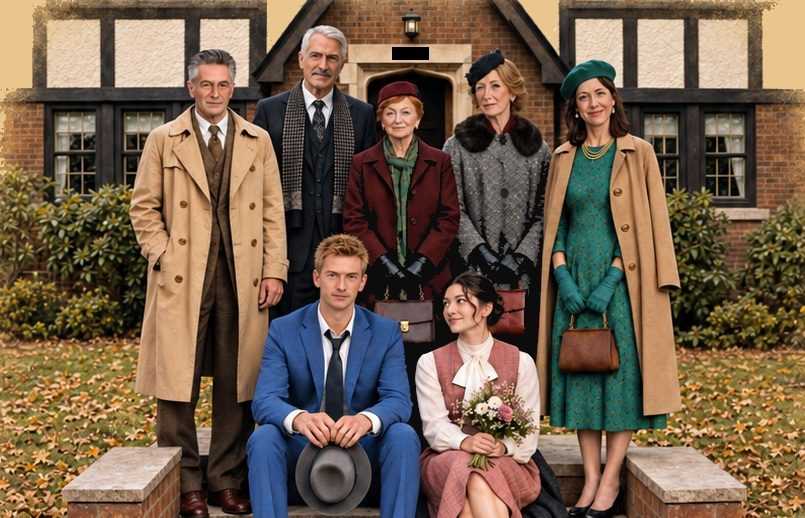
I’m an Astoria resident, but the latest play I wrote is set in Forest Hills, where I lived briefly as a child and where my mother grew up. As a playwright, I provide a script and typically let the actors and director take it from there. I go to an occasional rehearsal and get a sense of what a show will be. But a few weeks ago, I didn’t feel like I was watching a show as I sat alone in the audience at a rehearsal of this play set in Queens.
I felt like I was seeing people come back to life: my grandparents (Alfred and Isa), my mother (Renee) and others back in Forest Hills decades ago. Theater for the New City’s Executive Artistic Director Crystal Field is presenting “The Flowers of Forest Hills” Nov. 5-22, with Jay Patel providing additional financial and creative support.
 The Theater for the New City logo. Photo courtesy of Claude Solnik
The actors were rehearsing “The Flowers of Forest Hills,” a play I wrote about my mother and her family emigrating from Austria to Forest Hills as World War II started. As I watched Doriana Schoner in rehearsal playing my mother as a young woman, I relived, remembered and regretted that many of these people were gone.
The past is back
Doriana looked a lot like the photos of my mother at that age. “She’s even got my sweater!,” my mother said when I showed her a photo. Gail Merzer Behrens and Jon Lonoff, without knowing it, seemed to channel the past in sound and look, speaking with accents that seemed authentic because, it turns out, they are rooted in their own families.
Carolyn Seiff looked like my grandmother reincarnated. Mike Cesarano captured the friendly feel of his character and Kareen Freer provides comic relief and much more. Noah Frankenfield portrays my father as a young man.
I reacted emotionally, not to the performance, but as if people had been reborn and were walking on the Earth once again. When I talked with Patricia Magno, the director, she told me cast members were reacting emotionally as well.
“Some of their families went through their own things in World War II,” she said. “You learn things in rehearsal.”
History is here
Theater can be therapeutic, but is not, and I believe should not be, therapy. But at its best it is more than entertainment. In everything, there is a part of the playwright. This play is about what happened and how it could have been managed. I had seen my mother struggle when she learned that she had lived with a lie in her family. While the play uses a lot of facts, it rearranges some. Descriptions of “escapes” from Germany and Austria are based on real events, but I moved them around to different people.
I mixed in stories, trying to stay true to my parents’ relationship and reimagined their meeting, based on another story. Watching Doriana Schoner and Noan Frankenfield portray my parents, as young people, was “Back to the Future.” Their souls were on stage. I had the privilege to watch this cast turn the past into the present while things happened outside of rehearsal as well.
The family house
When I drove near Forest Hills, I decided to stop by the family house, but couldn’t remember the address. After a half hour of wandering, I found it, timeless and largely the same.
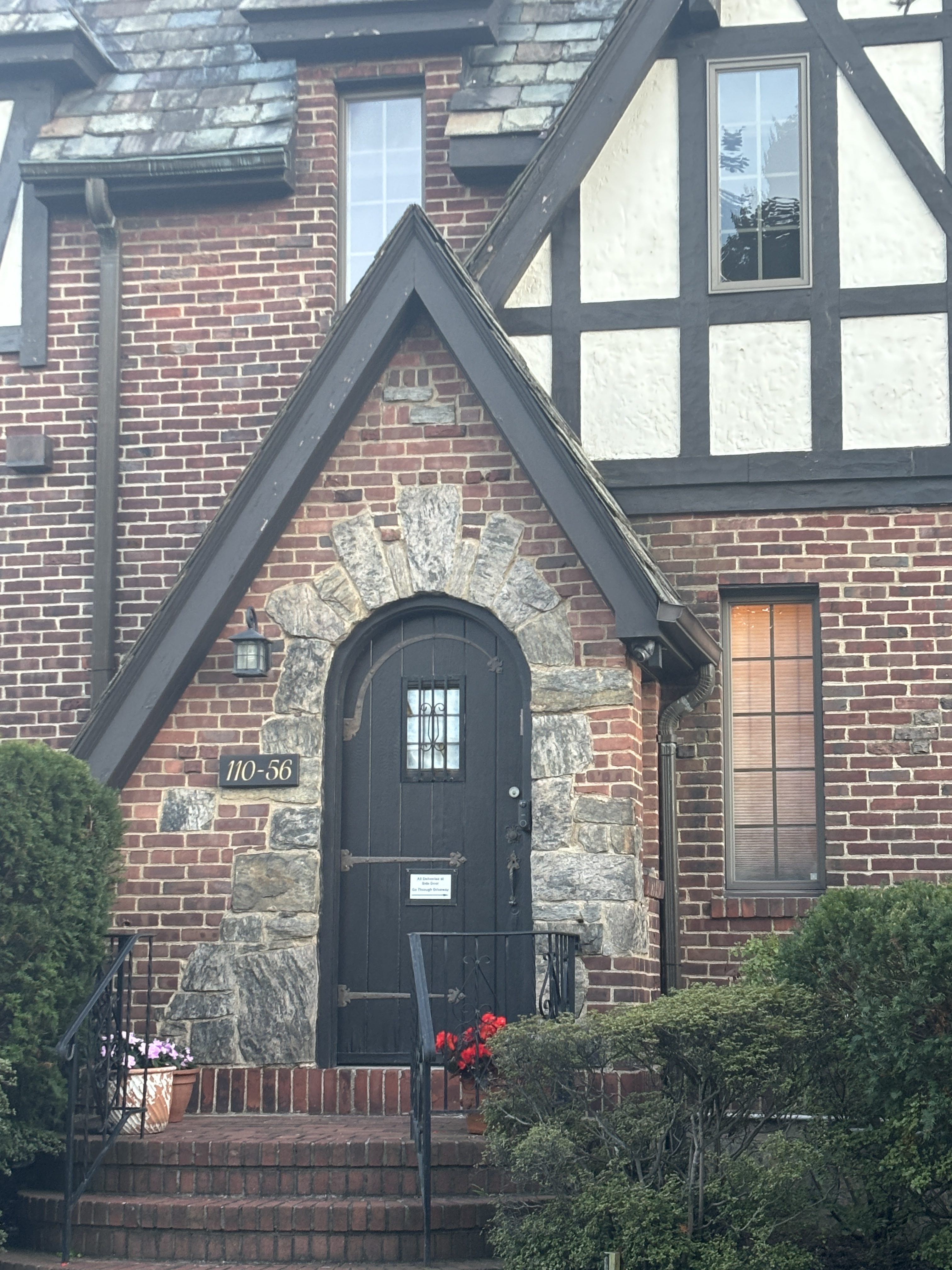 The former Solnik family house. Photo courtesy of Claude Solnik
I remembered walking in the East Village, when I saw my grandparents’ living room in a store window. That store bought the furniture in an estate sale and kept it together. I photographed the exterior as I stood there and then rang the doorbell, as the past came to life.
Nobody answered, but I talked with the neighbor, as a retired dentist emerged from the house. I told him why I was there and he told me they bought the house, which had no backyard but he called “the tallest” house in Forest Hills (at the time), from our family as his wife joined him.
“We negotiated with your father,” she said. “He was a tough negotiator.”
I thought of my father as someone gentle, but was proud to hear that side of him. I said I would invite them to the show and I will.
Time passes
When I told my mother we were rehearsing a play about her, she laughed. She later showed me keepsakes, including a sheet of paper a relative used to prepare for the citizenship test. She told me even more stories, which I included in the script.
“Maybe it was good for me,” she said of a lie that she had long felt robbed her of part of her life.
Now in her late 80s and living in Virginia, “I’d love to go,” she said. “But I just can’t.”
I was disappointed, but thought we could figure out a way to show her the performance, even if only via video. Doriana asked for photos of her. Jon found pictures and information about Éclair, a place my mother loved. It turns out Éclair was feet from an apartment on 72nd Street where I spend a lot of time. We found the hotel Ernst leaves New York City to manage in the play. I called, finding out the hotel had closed, but the owner said its bar was open and she hoped to renovate it.
Jon used AI to make a poster that, we all felt, captured the sense of family. Patsy’s husband Phil designed a beautiful program. It was as if the director, assistant director and cast were becoming a kind of temporary family.
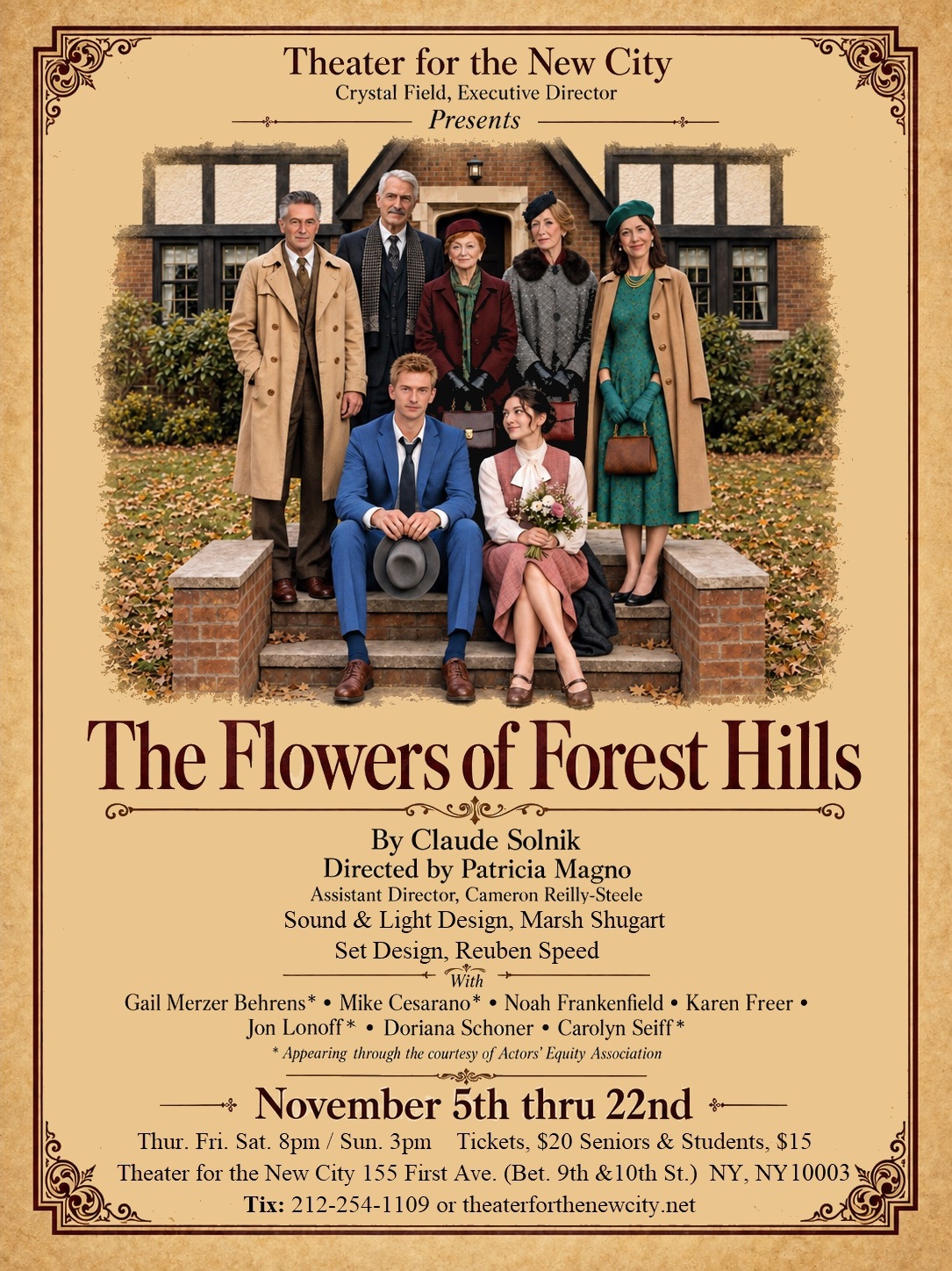 The poster for “The Flowers of Forest Hills.” Photo courtesy of Claude Solnik
And then my mother said she would come to New York, if only to see the show and return the following night.
There’s a Woody Allen scene where, after experiencing sorrow, he sits in a rehearsal, smiling as characters say words he wants. I don’t think events were twisted to be therapeutic, but this show does show how people might have managed past events. I wonder if my mother will react the way I did when I saw the rehearsal, amazed as if the people returned briefly, refusing to vanish, which, to me, is a big part of what theater, and life, is all about.