
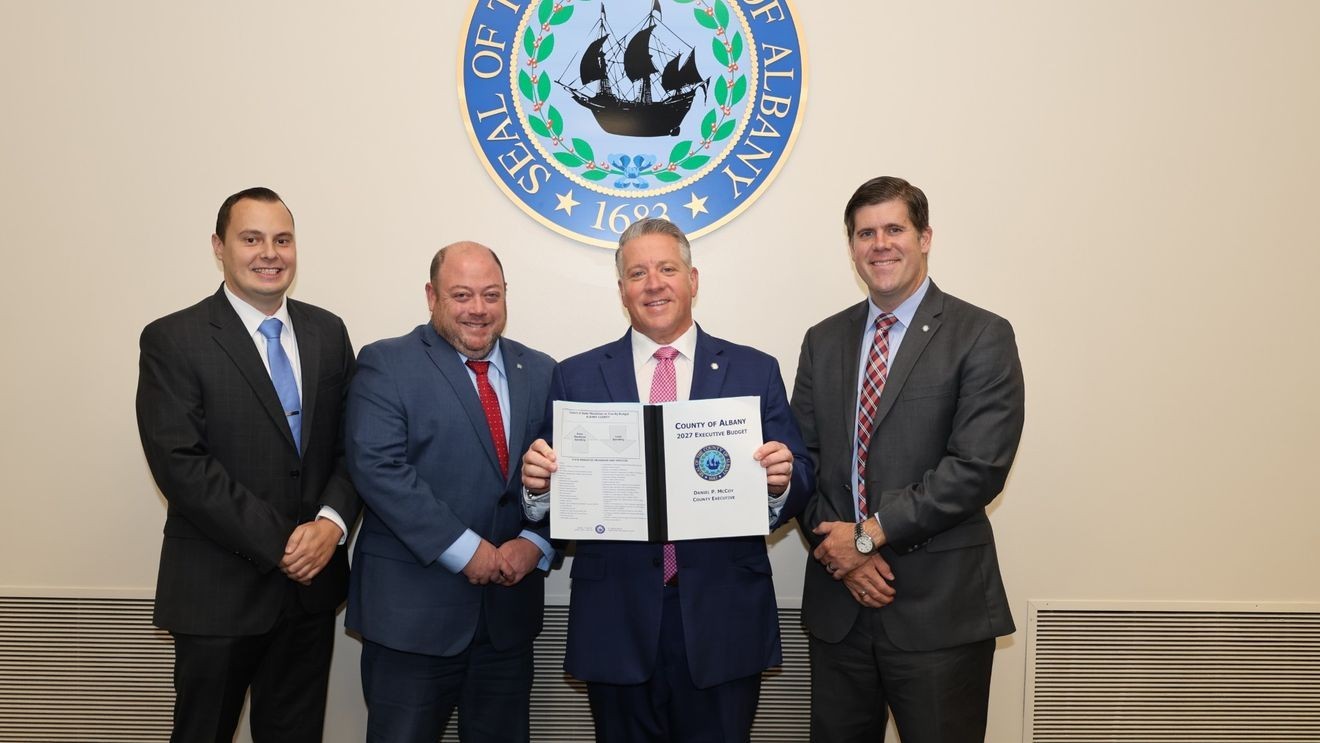
Albany, NY (WRGB) — Albany County Executive Daniel P. McCoy released a $950 million executive budget for fiscal year 2027 that he says keeps the county under the tax cap while cutting the property tax rate for the 13th consecutive year, even as Albany County faces rising mandated costs and uncertainty at the federal level.
The balanced spending plan totals $950 million, a 5.32% increase over the 2026 adopted budget of $902 million. McCoy said it is the fourth year the county has not had to bond for capital projects.
In the proposal, the effective property tax rate would drop to $2.48 per $1,000 in assessed property value, down from $2.56 per $1,000 this year and from $3.95 in 2014. The county said that amounts to a more than 37.22% reduction since 2014.
McCoy said,
This executive budget was a tough one to put together with the fiscal stresses being passed on by the state and federal governments. And much of that continues to remain unknown even now. This budget is stable because we have built a strong foundation since I came into office. We prepared for a rainy day and it has arrived as a major storm. Despite that, we have been able to stay below the tax cap; the tax rate has again gone down; and we are preserving programs and services.
Among the budget’s highlights is the redevelopment of the former College of Saint Rose campus in partnership with the Albany County Pine Hills Land Authority. The authority is fully funded, and the county said more than half of the $40 million bonded to acquire the property has already been paid, with outside interest continuing in further development.
The county also pointed to a sharp reduction in outstanding debt. In 2019, Albany County had $378.5 million in bonds outstanding. By 2026, that figure had dropped to $167.4 million, a 55.77% reduction, or $211.1 million in payments. The county said sales tax revenue grew by 3%, and refinancing efforts, with help from the county comptroller, saved about $1.5 million.
At the same time, Albany County said it continues to absorb rising unfunded mandates from the state and federal governments, with those costs increasing by $22.69 million over last year.
Medicaid remains the largest local mandated expense at $74 million a year. The county said federal changes to SNAP disbursements and a lack of state support will require Albany County to pay an additional $3 million a year for SNAP administration. Starting in October 2027, the county said it will also pay another $875,000 a month, more than $10 million a year, to the federal government because New York state has not reduced its error rate.
Other mandated costs outlined in the budget include the Safety Net program, where New York state increased the county share from 50% to 71% in 2011; the county said costs have since grown to more than $10 million a year. The county also said a 2021 state change made counties 100% responsible for restoring mentally ill individuals to competence to stand trial, with costs rising from $750,000 to more than $6 million a year.
Programming in the Department for Children, Youth and Families, including foster care, early intervention, youth detention and pre-school education programs, totals $45 million, according to the county. Probation services cost more than $10 million a year. The county said indigent burial costs exceed $500,000 a year, with no increase in state contributions in more than 20 years. Mandated increases in the hourly rate for the Assigned Counsel program now cost up to $1.5 million a year with administrative costs. Changes to the county Department of Health Lead Paint Standards in Dwellings program increased costs by more than $350,000 for employees, lab fees and equipment.
The budget also emphasizes investments in the county workforce, including fair and equitable compensation, subsidized childcare at Shaker Place and competitive benefits. While the county said many employers are seeing 20% to 30% increases in health insurance costs, Albany County’s growth rate has been “much more reasonable,” and the county said it has received millions of dollars in prescription drug rebates through its partnership with Health Insurance Solutions Inc. Since 2023, Albany County has received nearly $15.5 million in rebates and is projected to receive another $4.5 million in 2027.
The county also reported pension costs of $31 million a year, with additional pressure from changes to Tier 6 expected to cost $1 million this year. The county said future increases will be difficult to predict because they depend on market performance and the state comptroller’s ability to fund the program through investment.
To see more of the 2027 Executive Budget, click here