
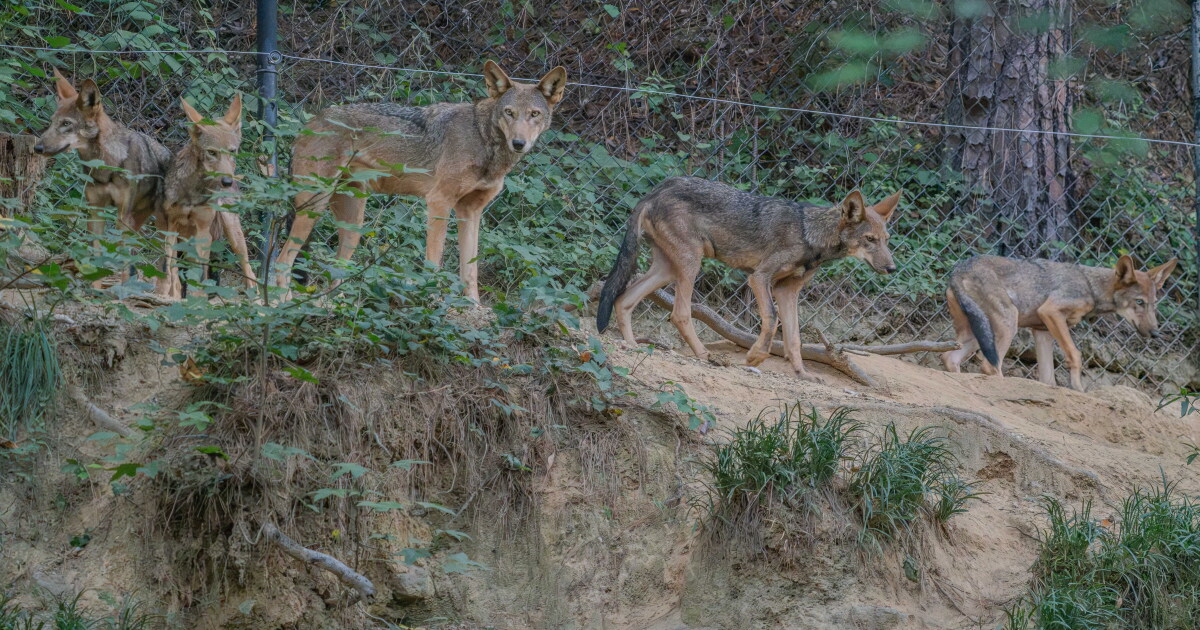
Seven critically endangered red wolves on Tuesday are moving from the Museum of Life and Science in Durham to a conservation center in New York.
The initiative is part of the Association of Aquariums and Zoos’ SAFE (Saving Animals From Extinction) American Red Wolf program, an ongoing national effort to support the conservation and genetic diversity of the species, according to a release from the Museum of Life and Science.
The U.S. Fish and Wildlife Service estimates that there around 30 endangered red wolves left in the wild and are all located in eastern North Carolina. Just under 300 of them live in captive breeding facilities.
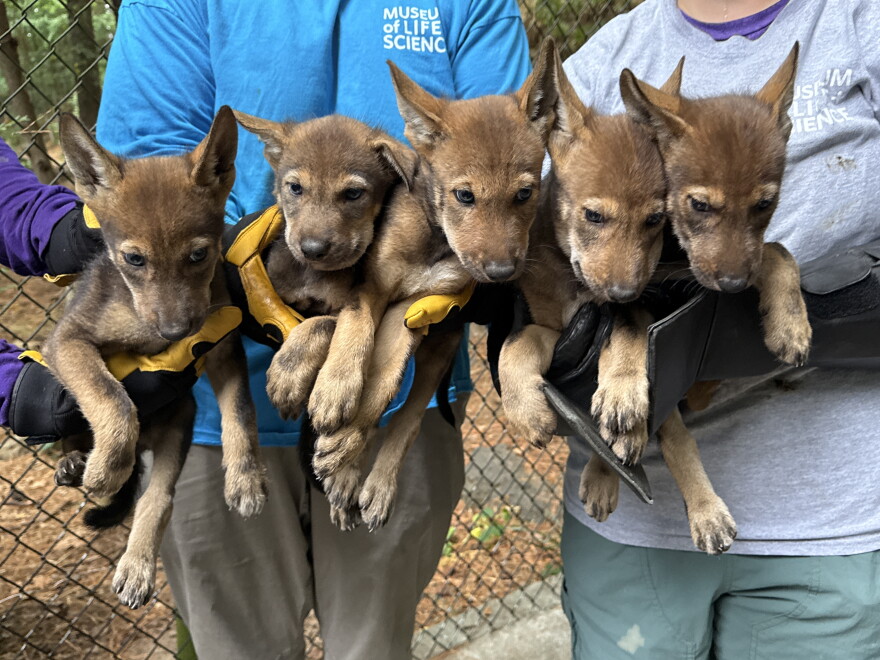
Courtesy of Museum of Life and Science in Durham
Five red wolf pups named Cane, Champ, Puck, Stormy, and Whaler — in recognition of the Carolina Hurricanes’ 2026 Stanley Cup championship — will be going with their parents to the Wolf Conservation Center in South Salem, New York.
As first-time parents, two red wolves, Carolina and Jacques, will head to the Wolf Conservation Center in South Salem, New York with the five pups they had this past May. The pups were named Cane, Champ, Puck, Stormy, and Whaler in recognition of the Carolina Hurricanes’ 2026 Stanley Cup championship. Researchers believe Carolina and Jacques could have more pups in 2027.
“Every red wolf transfer is guided by what will have the greatest benefit for the species and for the individual animals,” Sherry Samuels, Senior Director of Animal Care at the Museum of Life and Science, said in a press release. “For Carolina and Jacques, that means allowing them to raise another litter while providing their growing family with more room. We’re grateful to be part of a program where institutions work together toward that shared goal.”
In exchange, the Durham museum will receive a male and female red wolf, Sabine and Mac Tíre, from the center in New York to continue its role in the species’ conservation program.
Digital producer Eli Chen contributed to this report.