
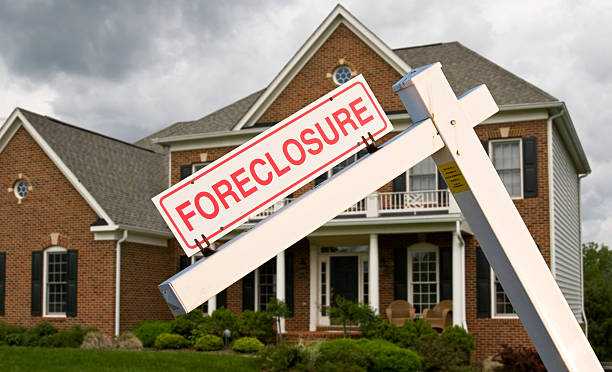
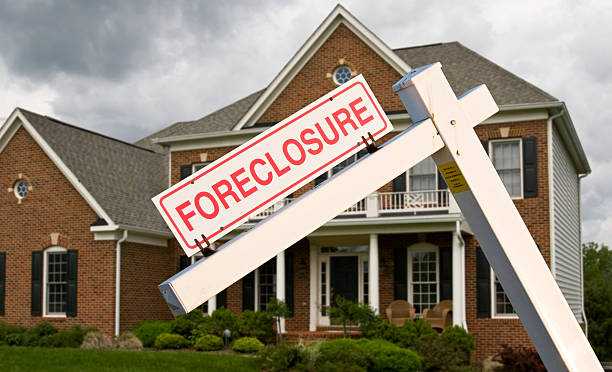
Queens ranked second to the Bronx in foreclosure risk score among 60 counties in New York State.
Photo via Getty Images
Queens had the second-highest score in 2026, at 60.4, in a foreclosure risk index that observed 60 counties across New York State, created by the real estate investment and data company NestCash.
The foreclosure scores were calculated based on a blend of four public signals, which were weighted based on how directly they bear on a mortgaged homeowner. The four signals were market softness, which was the share of active listings with a price cut and the median days a home sits on the market, accounting for 35% of the score, mortgage cost burden, which was the share of owners with a mortgage who spend over 30% of their income on housing, accounting for 30%, 90-day mortgage delinquency, which factored into 20%, and unemployment, which made up the last 15%.
Each county’s signal was normalized on a scale of 0 to 1, with 0 representing the lowest value in a set and 1 the highest value. The weights were then applied and multiplied by 100, resulting in a relative score that ranks the counties against one another.
Source: The 2026 New York Foreclosure Risk Index by NestCash
One of the main contributing factors to Queens’ elevated foreclosure risk score of 60.4 was a heavy cost burden. Approximately 48.3% of mortgaged owners in the borough spent more than 30% of their income on housing, which was the highest among all the counties in the study.
Price cuts are also very rare in Queens, accounting for just 9.4% of its listings, heavily impacting market softness.
Homes in Queens took a median of over 70 days to be sold.
Queens was one of six counties to record an elevated foreclosure risk score, which was defined as being at least 50. Other counties to reach this level included Richmond County, also known as Staten Island, at 51.4, Orange County at 53.5, Rockland County at 53.8, Kings County, also known as Brooklyn, at 58.7, and the Bronx, which recorded the highest score at 73.9. These six counties were found to hold approximately 35.1% of the homes in New York State.