
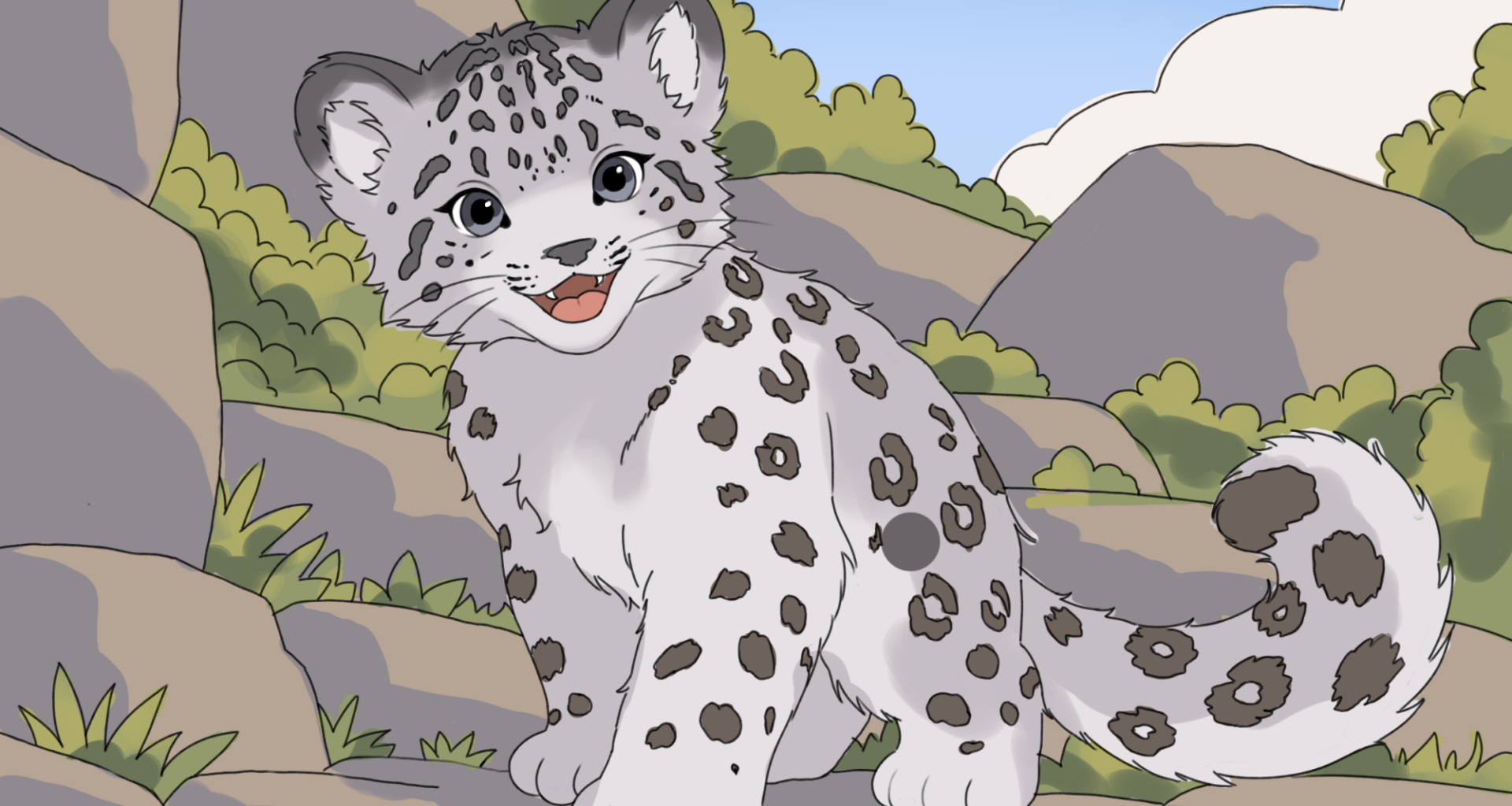
Snow leopards are one of nature’s most elusive species, and people who share their mountainous landscapes can go their whole lives without seeing one, according to the Snow Leopard Trust. In the Bronx, all it takes is a single ticket to the zoo.
On Sept. 30, the Bronx Zoo introduced Sarka, a female snow leopard cub born May 31 to parents Dari and Moutig. After passing her health exams and receiving her routine vaccinations, she is now exploring the zoo’s Himalayan Highlands habitat. This latest addition brings the snow leopard count to eight, according to the Wildlife Conservation Society, which runs the zoo. Sarka’s debut puts a spotlight on a species that scientists still struggle to count.
The International Union for Conservation of Nature considers the snow leopard a vulnerable species, and the WCS estimates 5,000 to 7,000 left across Asia’s mountains. However, this estimate rests on shaky ground.
Snow leopards live in low-density environments, at about one to three per 100 square kilometers, and a single male may roam over 1,000 square kilometers in his lifetime, according to the Snow Leopard Trust. Early surveys often focused on prey-rich, well-protected valleys and applied those numbers across entire regions.
In Pakistan, early estimates put the population at 300 to 420, the trust said. Further study using camera traps and genetic sampling put the real estimate closer to 80 to 120, a sharp downward correction.
The countries where snow leopards live now use a shared counting standard that samples from poor habitats alongside prime territories, quadrupling survey coverage across High Asia from 2% to 8%. With that shift, “we are finally replacing guesswork with reliable, replicable science,” Koustubh Sharma, the Trust’s science and conservation director, said.
The threats are clearer. A 2016 study study estimated that 221 to 450 snow leopards had been poached each year since 2008, 55% in retaliation for attacks on livestock. Habitat degradation and dwindling prey add to the pressure, according to the WCS.
Climate change could make matters worse. A 2025 Stanford-led study found that no big cat has less genetic diversity than the snow leopard, leaving it little room to adapt. Because their habitat is so harsh, “human population growth didn’t really affect snow leopards very much, but climate change will,” Stanford biologist Dmitri Petrov said.
That genetic picture complicates the role of zoos. The Bronx Zoo began exhibiting snow leopards in 1903, before any other zoo in the U.S., and has recorded more than 80 births. The zoo also participates in the Association of Zoos and Aquariums’ Snow Leopard Species Survival Plan, a cooperative breeding program that aims to keep captive populations genetically viable.
Yet the Stanford study found that North American zoo snow leopards carry mostly Kyrgyzstan-region ancestry and represent a small slice of wild diversity. That population cannot serve as a genetic backup for the species.
Zoos’ stronger role may lie in the field. The WCS also works in Mongolia and Afghanistan, where it tracks snow leopards using camera traps and satellite collars, partners with local communities and fights poaching and trafficking.
Sarka offers New Yorkers a rare opportunity to see an animal many would miss. But whether her relatives in the wild remain a sight for future generations to behold will be decided far from the Bronx.