
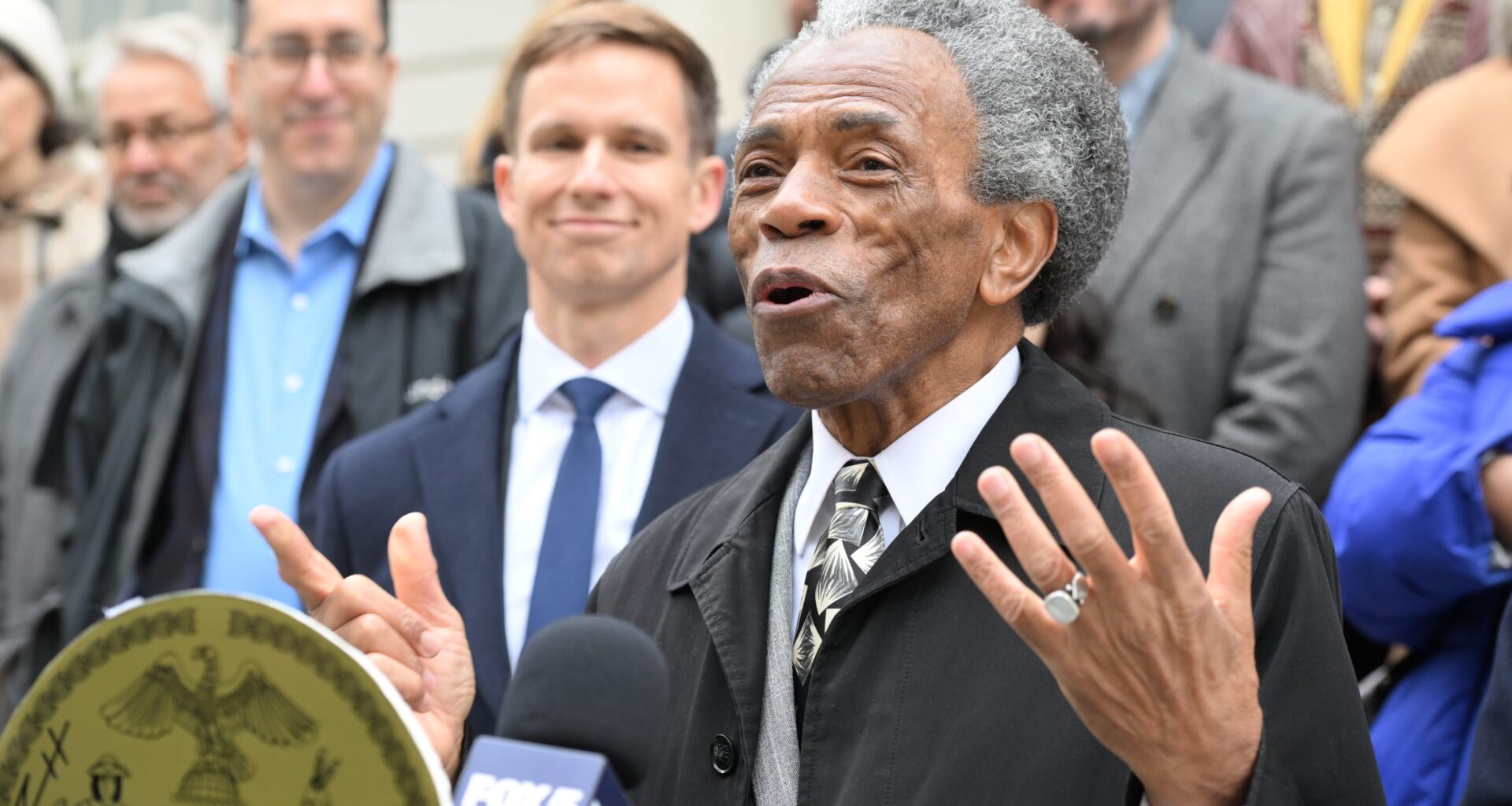
On a cold Wednesday morning on the steps of City Hall, Manhattan Plaza resident and Broadway legend André De Shields stood before a crowd of union leaders, arts workers and elected officials — and reminded New York why the city’s cultural engine can’t survive without the people who power it.
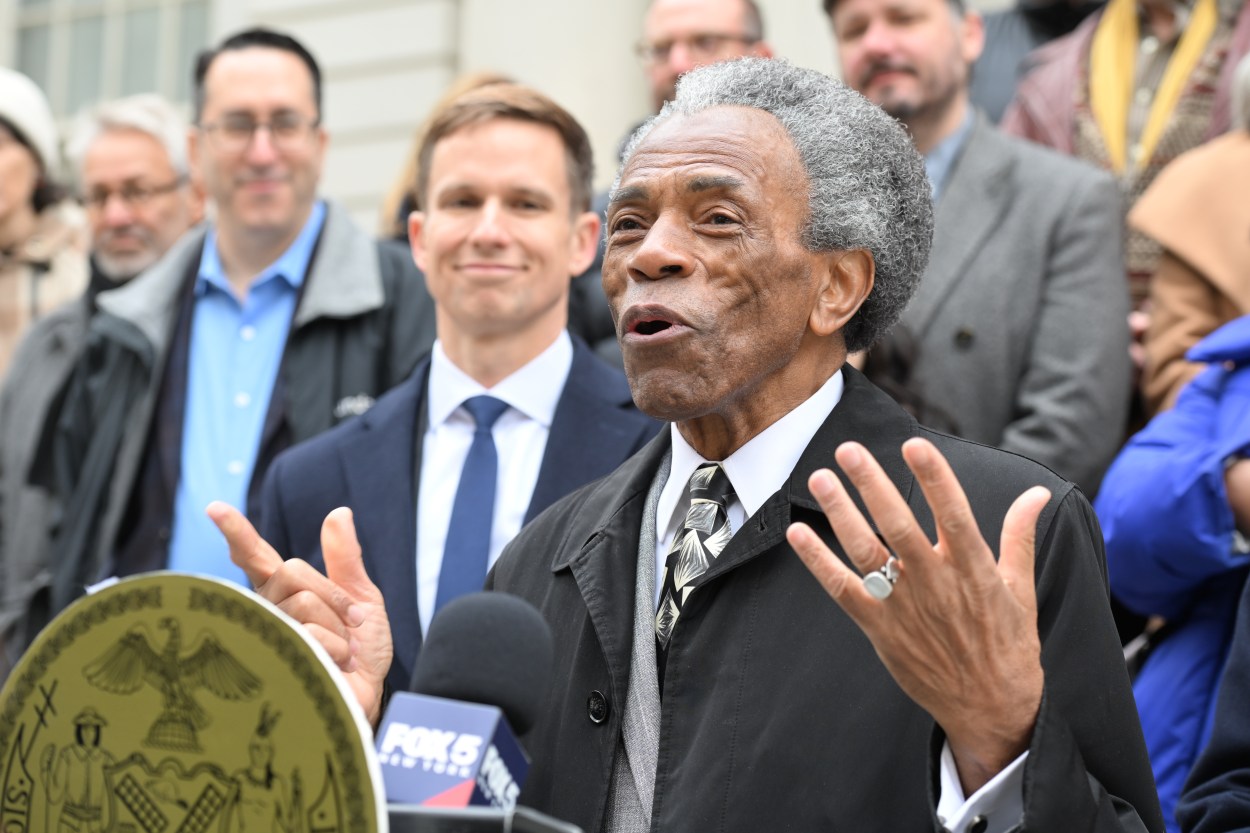 Emmy, Grammy and Tony Award-winning actor André De Shields speaks on the steps of City Hall. Photo: Phil O’Brien
Councilmembers Erik Bottcher and Keith Powers announced new legislation to fix what they called an “untenable technicality” in the city’s human rights law — a barrier that currently prevents new affordable housing developments from offering an artist preference, even when those projects are intended specifically for arts workers. “We cannot create new housing with an artist’s preference,” Bottcher said, calling it one of the “big, big, big problems” the bill solves. “What is New York City without artists? We don’t live here for the great weather or the spacious apartments — we live here because we have the best arts and culture on planet Earth.”
Powers added that the legislation is essential if the city wants to keep the workers who made neighborhoods like Hell’s Kitchen cultural magnets for generations. “Those folks have been pushed out by increasing costs,” he said. “This is a bold step to protect our art, culture and theater community.”
Much of the morning’s speeches circled back to Manhattan Plaza, the federally subsidized Hell’s Kitchen complex that has, for nearly 50 years, served as the rare example of affordable housing designed for performing artists. For Emmy, Grammy and Tony Award-winning actor De Shields — who moved to New York in 1973 — it was more than a place to live. “If I did not live in Manhattan Plaza, I would not be able to be an artist in New York,” he said.
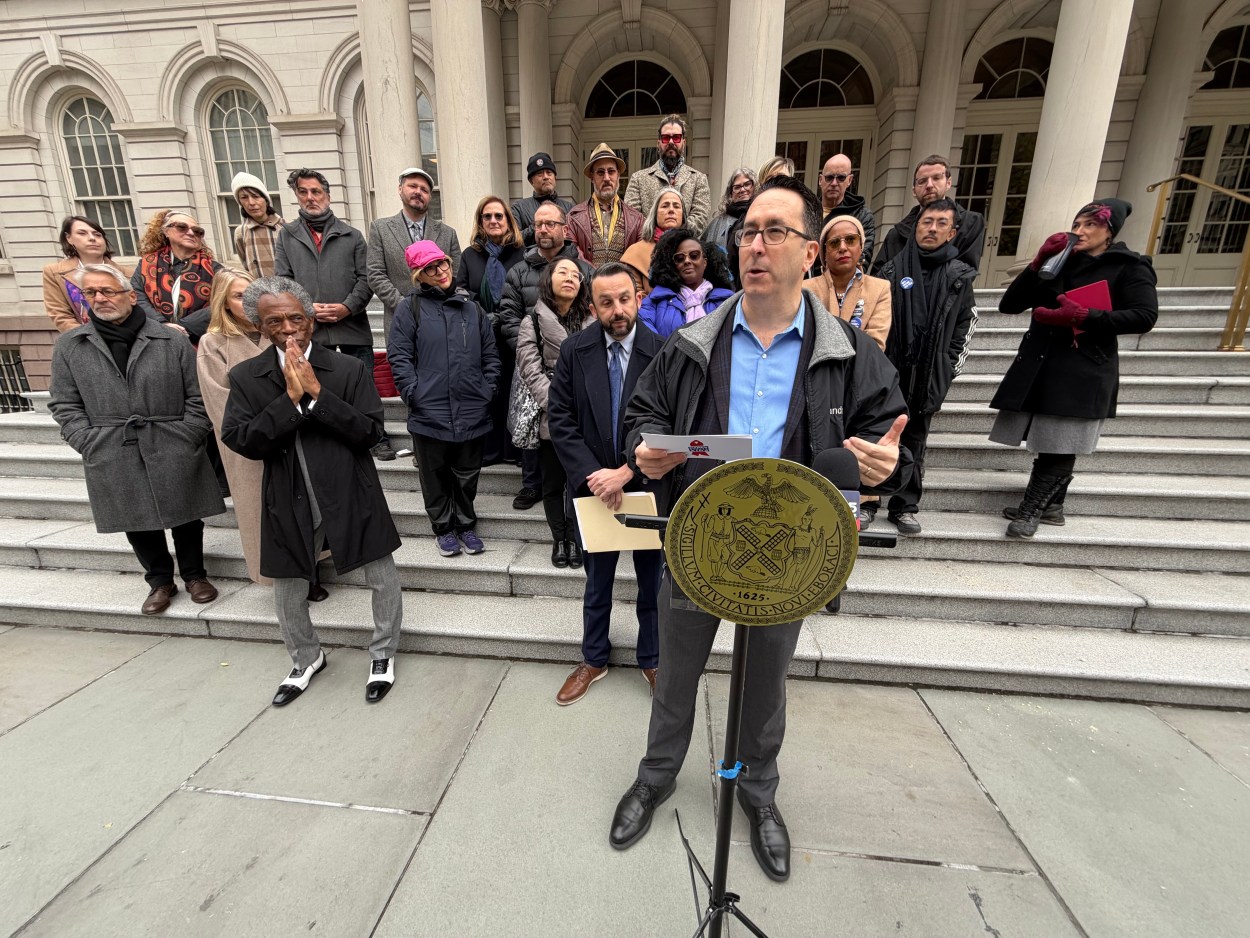 Danny Whitman, of Broadway Cares/Equity Fights AIDS speaks at City Hall. Photo: Phil O’Brien
Danny Whitman, of Broadway Cares/Equity Fights AIDS — and a longtime Manhattan Plaza resident — spoke emotionally about young actors making it work in cramped apartments simply so they could stay in the city. “Without affordable housing for artists, we stifle a new generation,” he said. “The next Elphaba, Simba or Hamilton — they can’t afford to move here. If they do, they’re soon forced to leave.”
The building came up again and again — as a lifeline, a launchpad and a creative ecosystem. Charles Flateman of The Shubert Organization reminded the crowd that Alicia Keys’ hit musical Hell’s Kitchen is rooted in her childhood at Manhattan Plaza, which he called “arguably the most iconic artist housing in the world — a thriving community that nurtures talent, creativity and ambition.”
Union leaders added that the crisis is hitting families as hard as it hits early-career performers. Patricia White, president of Local 764 (Theatrical Wardrobe), said many of her members are single parents who must live close to both their theaters and their children’s schools. “We need to keep arts workers close to the places where they work,” she said. “It’s critical not just because they work nontraditional hours, but because so many are raising kids.”
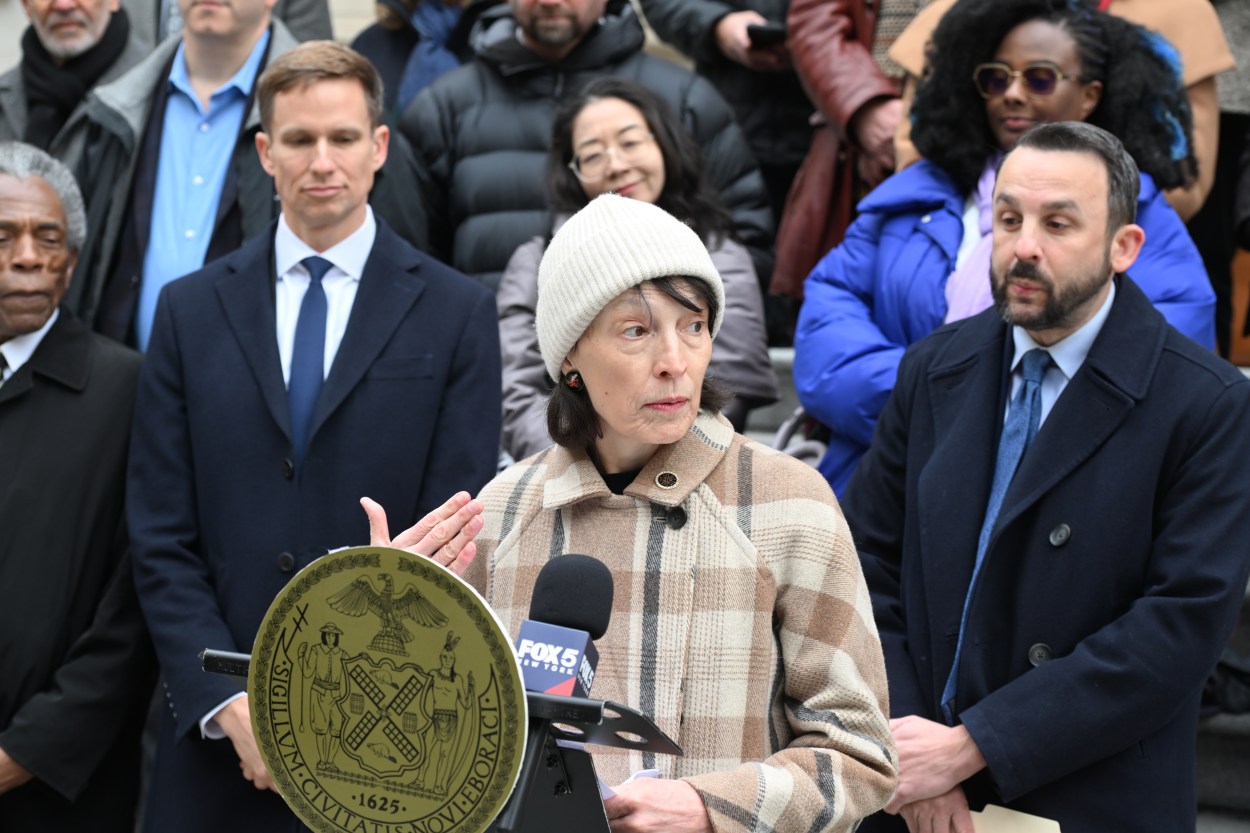 Patricia White, president of Local 764 (Theatrical Wardrobe) talked about the need for housing for families. Photo: Phil O’Brien
Others described long commutes, four-job weeks and impossible rent requirements in a gig-based profession. “We live in a city that celebrates creativity but rarely sustains the creators,” said Sade Lythcott of the National Black Theatre. “Artists are not an accessory to the city’s greatness — we are the architects.”
Bottcher acknowledged the legal tension head-on: the city’s human rights law currently bars developments from giving preference to artists, even if the building is explicitly meant for them. “We’re told it can’t be done,” he said. “Because of the way the human rights law is drafted. And that ain’t right.”
His argument framed artist housing not as exclusion, but as a fix that recognizes cultural workers’ outsized economic impact: “New York’s cultural workers contribute 13% of this city’s economy. We can’t let our neighborhoods become enclaves for the wealthy.”
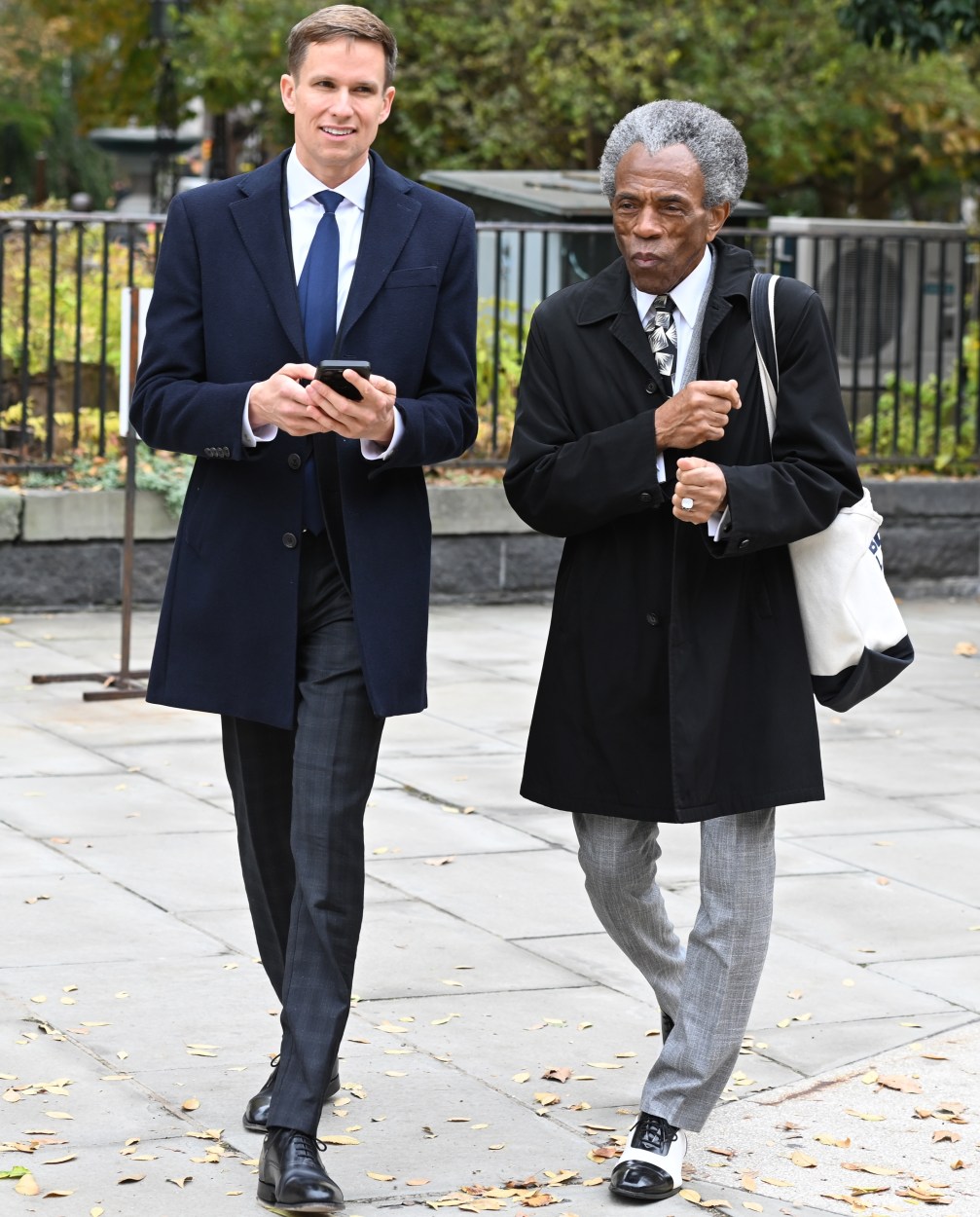 Councilmember Erik Botcher and André De Shields arrive at City Hall. Photo: Phil O’Brien
After the press conference, W42ST asked De Shields — currently starring on Broadway in Cats: The Jellicle Ball — to expand on why Manhattan Plaza mattered so deeply to his career. His answer was simple — and pure Hell’s Kitchen. “One of the most important ingredients of being a successful actor is being able to walk to work,” he said. “I can walk to my theater in 15 minutes, and late at night, 15 minutes home. Hell’s Kitchen — where Manhattan Plaza exists — is the bedroom of Broadway.”
* Additional reporting by Brennan LaBrie