
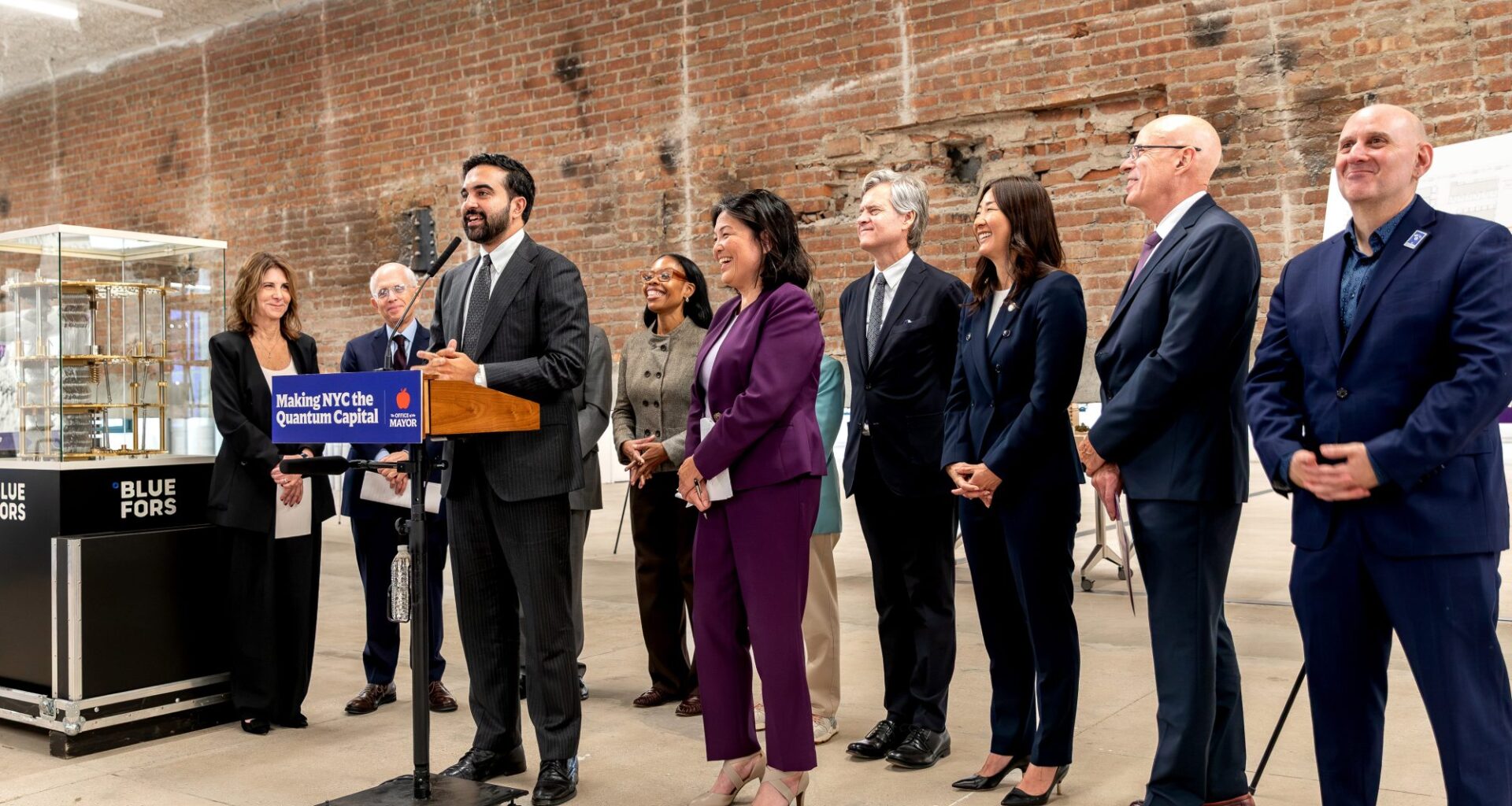
NYU scored a $29.2 million deal with New York City to build a quantum technology lab that supports both the city and university, Mayor Zohran Mamdani announced Wednesday.
In exchange for its investment, New York City will take 15% of proceeds from intellectual property developed at NYU’s Quantum Fabrication Facility, called QFab, that is slated to open in 2030. The university also invested $255 million for the technology lab’s first decade of operation.
City Hall spokesperson Cassio Mendoza told WSN that NYU secured the $29 million grant through an open request for proposal, in which bidders apply for a competitive contract with the city’s Economic Development Corporation. New York City officials also said that the QFab could reach more than 35,000 people over 10 years, via educational programs and support for startups.
“NYU was selected as the top respondent to this RFP because of its demonstrated leadership in the quantum space combined with the project’s ability to leverage private and public funding to create a truly accessible resource for New Yorkers,” Mendoza said in a statement.
The 23,000-square-foot lab will be located at 770 Broadway, which already houses NYU’s Quantum Institute. At the QFab, the university is set to host programming for both undergraduate and graduate students, aiming to advance cutting-edge quantum technology. Administrators will also develop summer courses for New York City public school students and a certificate program for those studying quantum technology at the City University of New York.
President Linda Mills announced the upcoming lab in a Wednesday night email to the NYU community, after The New York Times reported the news a few hours prior. In her email, Mills thanked Tandon Executive Vice President Juan de Pablo and NYU’s Office of Global Science and Technology for their help in securing the partnership.
“770 Broadway will be the catalyst for new discoveries that propel us to the next level,” Mills said in a press release. “This is going to be the launchpad for an entire new industry with enormous opportunities for New Yorkers.”
NYU is expected to create over 15 new faculty positions to support the QFab, which will also serve as an incubator for up-and-coming quantum tech startups. City officials will also get three seats on the NYU lab’s executive advisory board, as well as a cut of the payouts if a lab-produced product goes public or merges with another company.
The Mamdani administration’s deal with NYU is the first time New York City has captured an equity stake in a private entity. Julie Su, the city’s deputy mayor for economic justice, told The New York Times that the collaboration is based on similar deals under foreign democratic socialist governments.
After NYU launched its Quantum Institute last year, administrators received $1 million in congressional funding for quantum research in February. The Wednesday announcement cited a projection that advancing quantum computing could create up to $2.7 trillion in economic value by 2035, after having already produced $1 billion worldwide in 2025.
“Quantum won’t be built by any one institution working alone,” de Pablo said in the press release. “This is our chance to make sure that as the quantum industry takes shape, it takes shape here, so the NYU and CUNY students training in our labs today can forge careers right here in New York, tomorrow.”
Contact Zachary Karp at [email protected].