
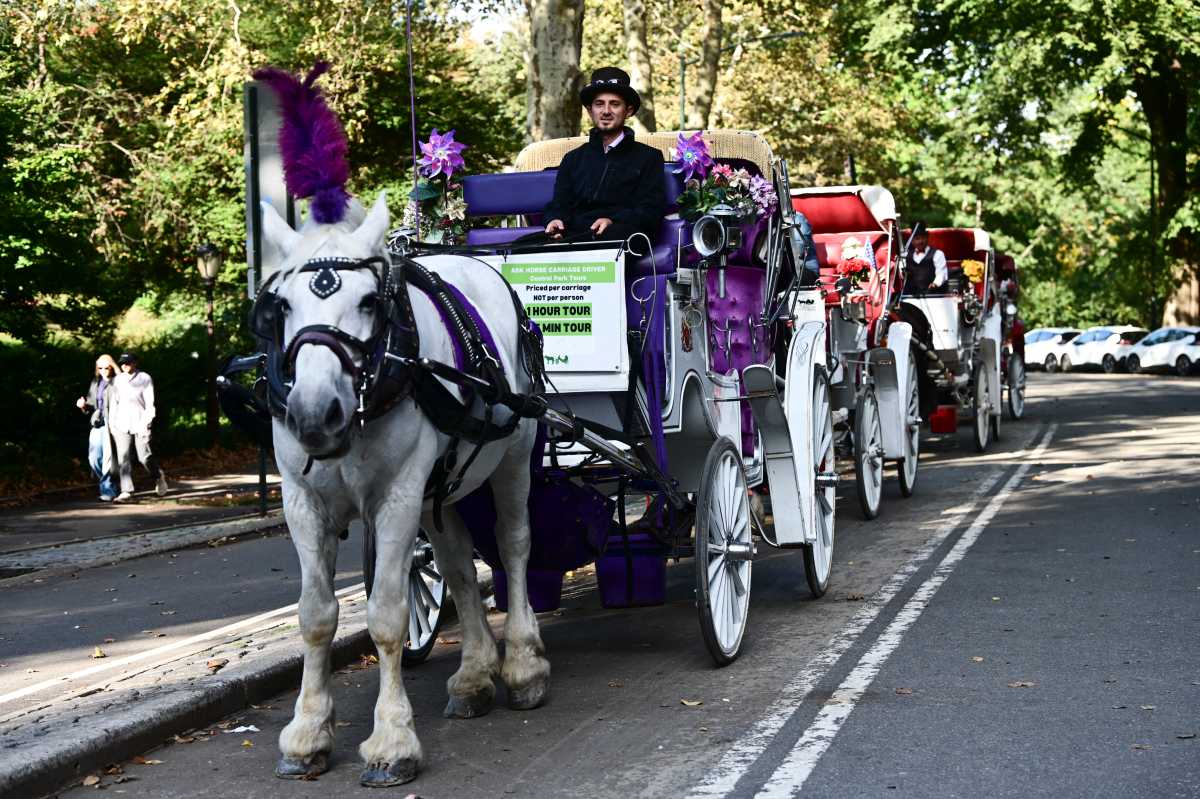
The winds of change against the horse carriage industry had been blowing hard against it for years, as the sight of equine bolting or collapsing on the job began to anger the public and evoke greater opposition against it.
Then came the June 17 death of Romanch Mahajan, a 17-year-old tourist from India, killed after being hurled from a carriage he and his family were riding in when the horse pulling it suddenly bolted. It was the first recorded human death involving a horse-carriage passenger in Central Park — and, as it turned out, the true beginning of the end of the horse-carriage industry in New York.
City Council Speaker Julie Menin said it was time to outlaw it. The Transport Workers Union (TWU) Local 100, which represents the drivers and others involved in the industry, tried to offer a compromise by supporting a bill from City Council Member James Gennaro of Queens outlining additional reforms. A July hearing on the industry evoked strong emotions from both sides of the debate, but did not move the needle in helping the horse-carriage industry survive.
Then on Tuesday, Menin announced that the City Council would vote next week on “Romanch’s Law,” legislation named for the tourist who died in June, that will formally begin phasing out the horse-carriage industry. It will include guidelines for the city to provide job retraining and other programs for those who will lose their jobs as a result, and ensure that the horses are sold to responsible groups who will care for them.
Menin, a shrewd elected official, likely would not have agreed to bring Romanch’s Law up to a vote without knowing that she had enough members to support its passage. Later on Tuesday, Mayor Zohran Mamdani also signaled his support of the bill, meaning he will likely sign it into law. In other words, it’s almost a certainty the horse-carriage industry is finished.
The compromise bill the union supported never had a chance; the head of TWU International, John Samuelson, blasted the move to pass Romanch’s Law as “disgraceful political opportunism” and said the speaker had “used” Mahajan’s death to “contrive a public safety crisis.”
The truth, however, is that this “crisis” had been in existence for years as carriage horses collapsed on duty or bolted into traffic. It sparked a years-long debate over whether this industry ought to continue. Whether abolishing the horse-carriage industry in New York will have a positive or negative effect now depends on what comes next.
Samuelson is right to note that the bill’s language is not strong enough in providing assurances that those who will be out of work as a result of the industry’s phase-out will get the help they need. There must be clear provisions offering job training and placement, and even something of a publicly funded severance package for drivers, blacksmiths, and other workers impacted.
Menin and Mamdani must clearly spell those provisions out and not break their promise to those employed by this industry. The city is set to take their livelihoods away; it cannot just leave them without a path forward to a better future.