
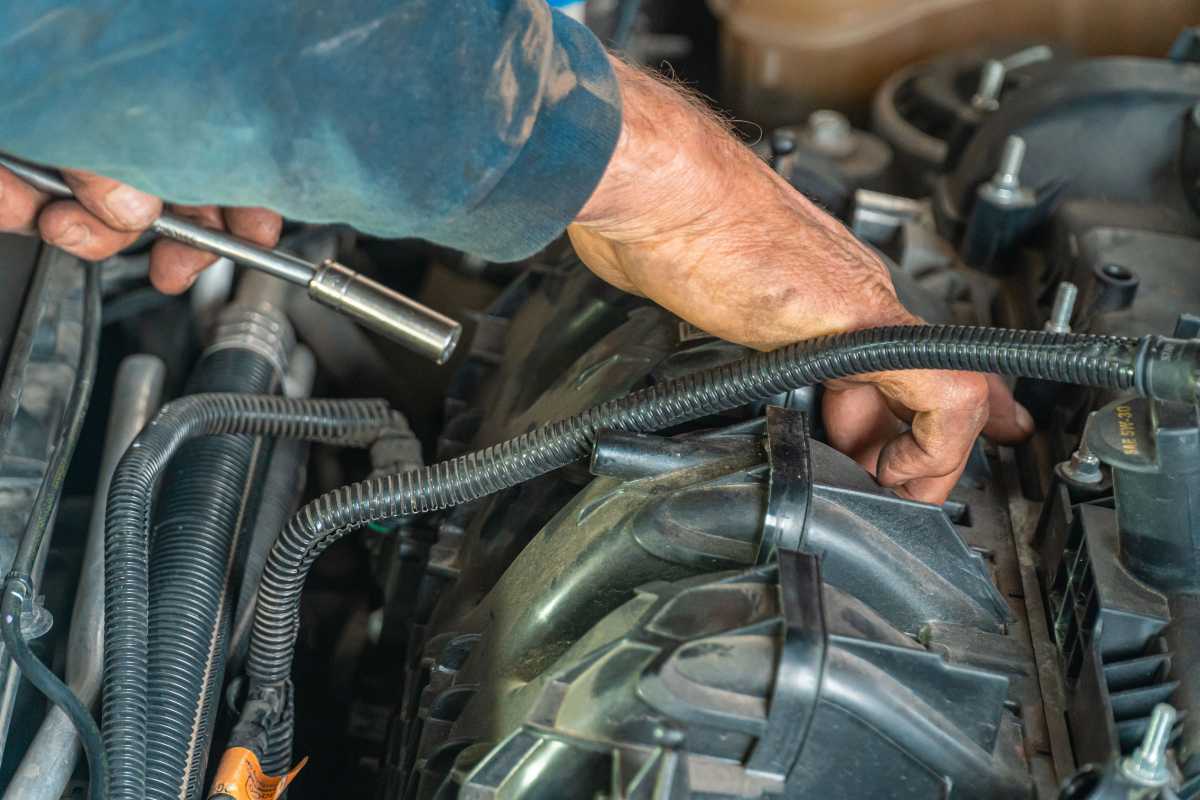
New York has been part of my story for almost my entire life. My family emigrated from Ukraine when I was six years old, and then I grew up in Brooklyn. I went to school here, started working here and eventually followed my father into the automotive business, originally in the yellow cab industry. We operated a fleet of taxis in Manhattan for years, but when that business declined, we moved into automotive repair. Today, my father and I own and operate a repair shop in Red Hook, Brooklyn.
Like a lot of small businesses in New York, ours has had to evolve with the city around us.
When Amazon opened a distribution center near our shop, my uncle, who was one of the first delivery service partners, or DSPs, in Brooklyn, told us there was a need for local businesses that could service delivery vans.
We started working with a few DSPs and built our business from there. There are other repair shops nearby, but our customers kept coming back because they trusted us and knew we did good work. Over time, those relationships became an important part of our business. It’s also become a hefty chunk of our income.
That’s why I’m concerned about the Delivery Protection Act and what it could mean for businesses like mine.
When people hear “last mile delivery,” they probably think about companies like Amazon and Fed-Ex and the vans they see driving through their neighborhoods. What they don’t see is the system behind those vans that keeps them moving. And as I see it, my job is to keep New York City moving. If the vans are dispatched from outside of the city, the work they create for businesses like mine goes out of the city with them. That is true for everything from where the employees live to where they pick up dinner from restaurants on the way home. Everything goes hand in hand.
Delivery vans spend all day on New York City streets. They need mechanical repairs, body work and regular maintenance. Keeping those vehicles on the road is steady work for my team and an important part of what keeps our small business running.
It’s also helping my mechanics prepare for where the automotive industry is headed. We’re now servicing electric delivery vans, giving my team the chance to learn new technology and develop skills we might not otherwise have the opportunity to build.
That’s the part of this debate that is being overlooked. The delivery industry doesn’t exist in isolation. One van on the road employs a driver, but it also supports the mechanics who maintain it, the businesses that service it and the families relying on all of those paychecks.
For us, DSP work could make a mediocre week into a good week if one or two vans come in. It gives us an opportunity to produce, and it gives my employees an opportunity to take home a salary.
It definitely feeds a lot of mouths. I’m a father of three and currently the primary breadwinner for my family, and my employees have families and responsibilities of my own. That’s what can get lost in this debate: when work disappears for a small business like mine, the impact extends far beyond the business itself.
The City Council should understand that changing this industry doesn’t just affect a single corporation or a delivery company. There’s a ripple effect across small businesses like mine who are intertwined with the last mile delivery ecosystem.
I encourage the City Council to look beyond the packages arriving at people’s doorsteps and understand how many New Yorkers depend on the vast system that helps get them there.
Mike Gokhfeld is the owner of Chelsea Auto Repair in Red Hook, Brooklyn.