
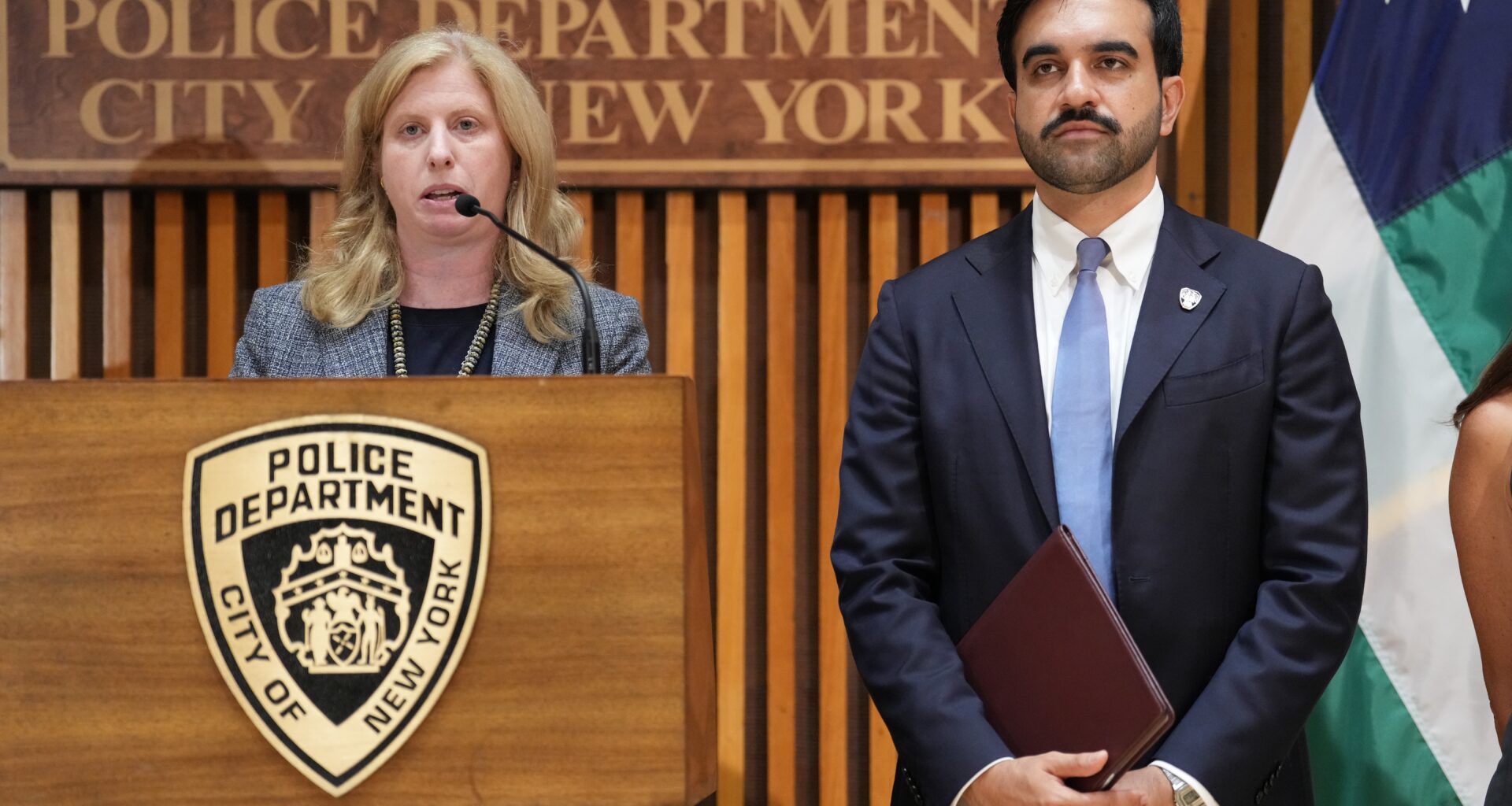
This week, Mayor Mamdani rejected the call to remove NYPD Commissioner Jessica Tisch. He justified his decision to keep Tisch by pointing to New York City’s historic gains in public safety and crediting her leadership for the progress. Though many moderates were relieved, many on the left were dismayed by this return to police exceptionalism and the intimation that only policing is behind the recent crime decline.
As a candidate, Mamdani championed a public safety approach supported by decades of evidence: effective and accountable policing partnered with community-based investments in crime prevention. Police should focus on serious crime and not be called upon for every type of crisis. A Department of Community Safety should be the primary response for mental health, homelessness, and quality-of-life incidents.
It was front-page news when candidate Mamdani committed to retaining Tisch as police commissioner in the weeks before the election — while also promising to move forward with policing reform.
Mamdani’s recent actions, including taking no action to address the surge of low-level arrests on his watch, suggest a surrender to politics instead of standing firm on good policy and a mandate from New Yorkers for a new approach to public safety.
Attributing the crime decline solely to the NYPD ignores the success of initiatives like New York City’s Crisis Management System, which research shows prevented more than 1,500 shootings from 2012 to 2024. It misses the impact of the Summer Youth Employment Program that provided 100,000 New York City youth with paid jobs and is associated with a 23% reduction in felony arrests.
Other cities have shown it is possible to own both the politics of crime and adopt good policy to make communities safer.
Baltimore Mayor Brandon Scott talks about safety in town halls, at street fairs, when visiting neighborhood centers and schools. In press conferences, he is flanked by not only his police commissioner, but also local leaders and community safety experts.
Beyond the political optics, Baltimore’s policies are achieving results. After violent crime peaked in 2022, it dropped by 26% by the end of 2023, 32% in 2024, and again by 24% in 2025. Homicides are at historic six-decade lows.
Under Mayor Scott, the city invested $50 million in crime prevention, including the lauded Safe Streets program, $7.5 million into youth engagement, and launched a multi-million dollar Group Violence Reduction Strategy plan. To be clear, police have been a critical part of the story of progress. More effective, accountable policing by the Baltimore Police Department improved the city’s homicide clearance rates, including increased arrests for serious violent crimes, without raising the overall arrest rate.
We’re in an age of such polarization that there is little consensus on anything. Yet, when it comes to safety, experts and researchers ranging from conservatives at the Manhattan Institute to progressives at Rutgers University and John Jay College of Criminal Justice agree that community violence intervention and other civilian programs have meaningfully contributed to the recent crime declines nationwide — well beyond just New York City and Baltimore.
The conversation about safety should not be a zero-sum choice between rival factions of New York’s political flanks. Nor should it rest on the antiquated notion that police solve all problems. Effective, accountable policing alongside comprehensive crime prevention was a cornerstone of Mamdani’s campaign. It must remain the guiding principle of his administration.
As in Baltimore, the infrastructure in New York is already there. Mamdani just needs the political will.
Rahman is president and director of the Vera Institute of Justice and Menos is the director of Vera’s Redefining Public Safety initiative.