
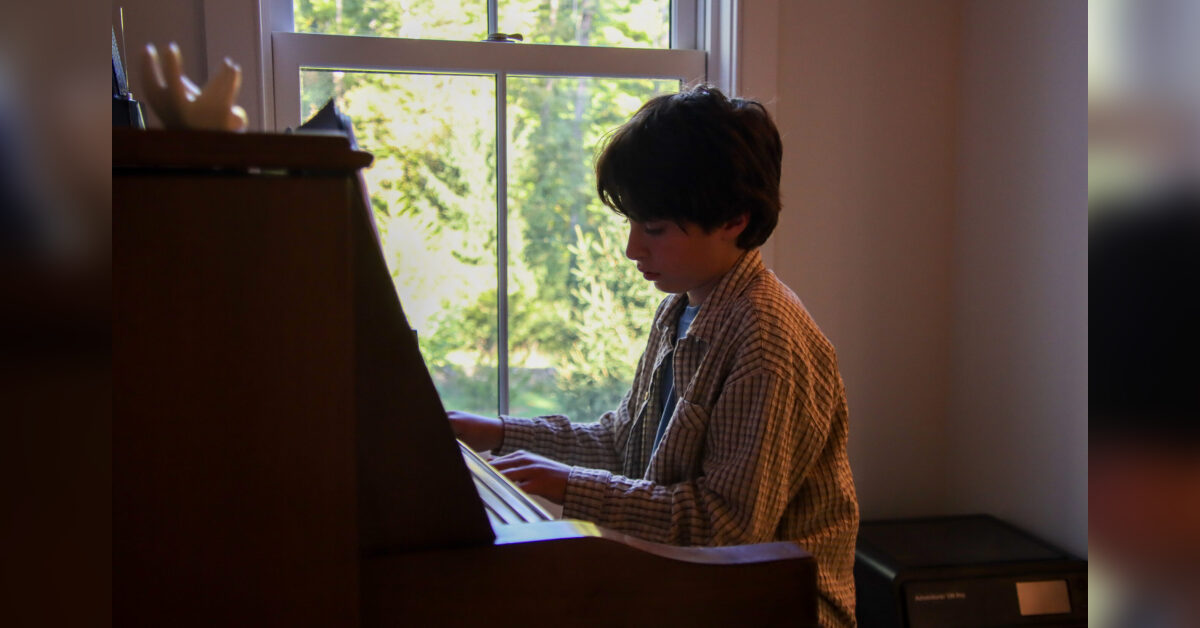
There are milestones that divide a musician’s life into before and after. Carnegie Hall is one of them. For Eli Limotte, an 11-year-old pianist from Rhinebeck, that moment arrived on Sunday.
 On Saturday, Eli Limotte, an 11-year-old pianist from Rhinebeck, made his Carnegie Hall debut, performing “Flight of the Bumblebee,” the famously fast-paced composition by Nikolai Rimsky-Korsakov. (Photo by Claire Greenburger)
On the stage of Weill Recital Hall, Eli performed “Flight of the Bumblebee,” the famously fast-paced composition by Nikolai Rimsky-Korsakov. He was one of 31 young musicians from across the country and beyond whose achievements in international music competitions earned them invitations to perform at the famed music hall.
It has been a rapid ascent for a boy who began piano lessons at age 5, with no ambitions beyond learning an instrument he enjoyed playing. He only started entering competitions about a year ago, but his unexpected success has opened doors that neither Eli nor his parents anticipated.
“Once you play Carnegie Hall at 11 years old, it’s kind of a question of what is the next mountain,” said Theodore Gresler, one of Eli’s two piano instructors, who has taught him since he was 5.
Gresler, who teaches at the Rhinebeck School of Music, and Eli’s other piano teacher, Sohyun Ahn, of the Bard College Conservatory of Music Preparatory Division, both believe he has the talent to pursue music professionally. But Eli is still figuring out what he wants from music.
Practicing, which he does for at least 30 minutes a day, in addition to his three weekly lessons, isn’t his favorite part, he acknowledged. But “noodling, making my own song, that’s really fun,” he said.
Recently, he figured out how to play a song from the movie “Up” simply by listening to it. He also likes music “with, like, words.”
Eli has a mop of dark hair that falls past his eyebrows and over his ears, a dimpled smile, and a faint smattering of freckles across his cheeks. He is nearly the height of his mom but still much smaller than his dad.
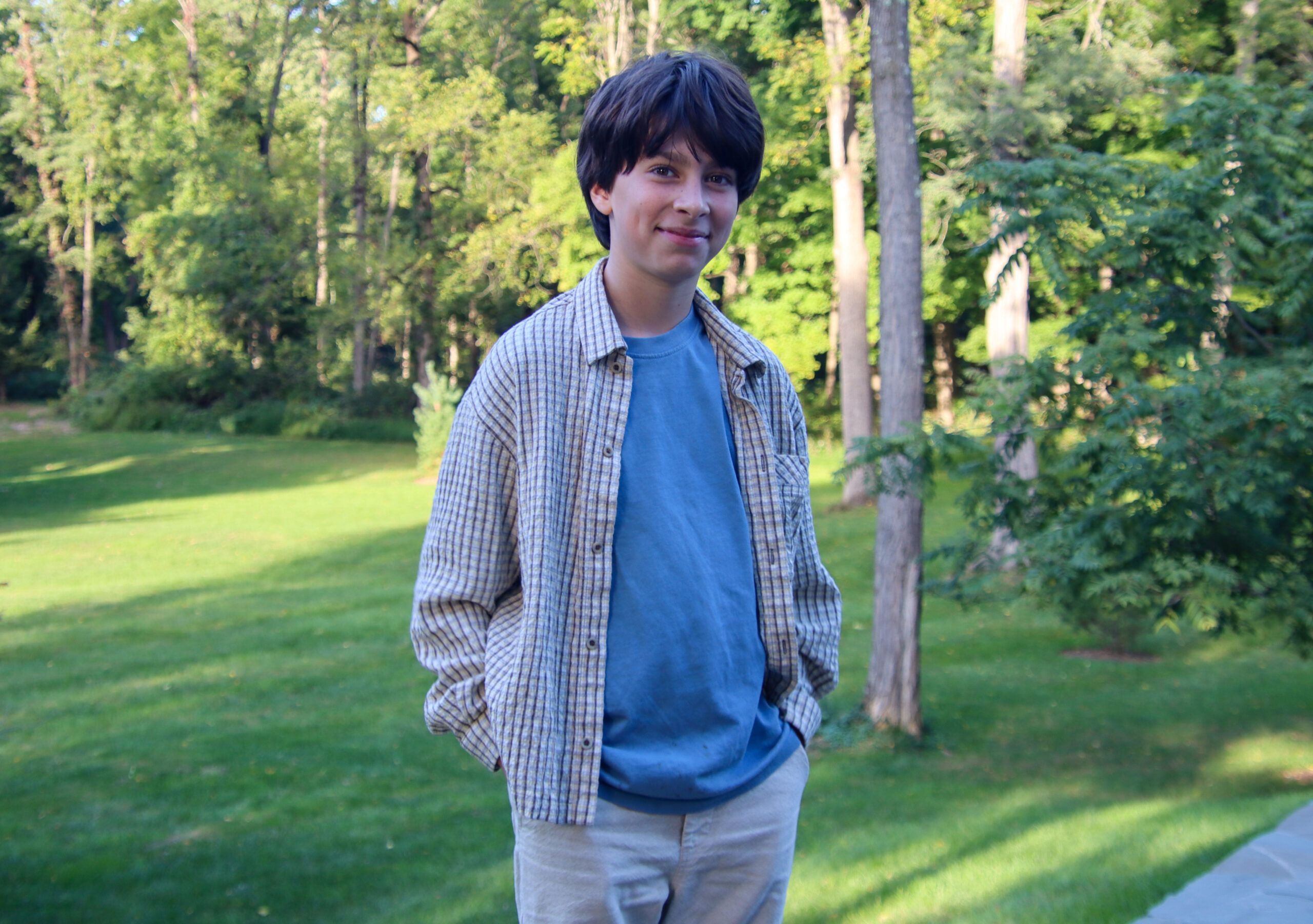 Eli began taking piano lessons at age 5, with no ambitions beyond learning to play an instrument. (Photo by Claire Greenburger)
Two weeks before his Carnegie Hall performance, Eli said he was feeling a mixture of nerves and excitement, and preparing with plenty of “practice, practice, practice.” Still, he has grown accustomed to performing. He can’t actually remember his first recital, he said, noting that he must have been around age seven.
As he talked, he wiggled restlessly on his seat in his family’s Rhinebeck home, shifting between stretching his legs straight out in front of him and sitting perfectly upright, legs crisscrossed.
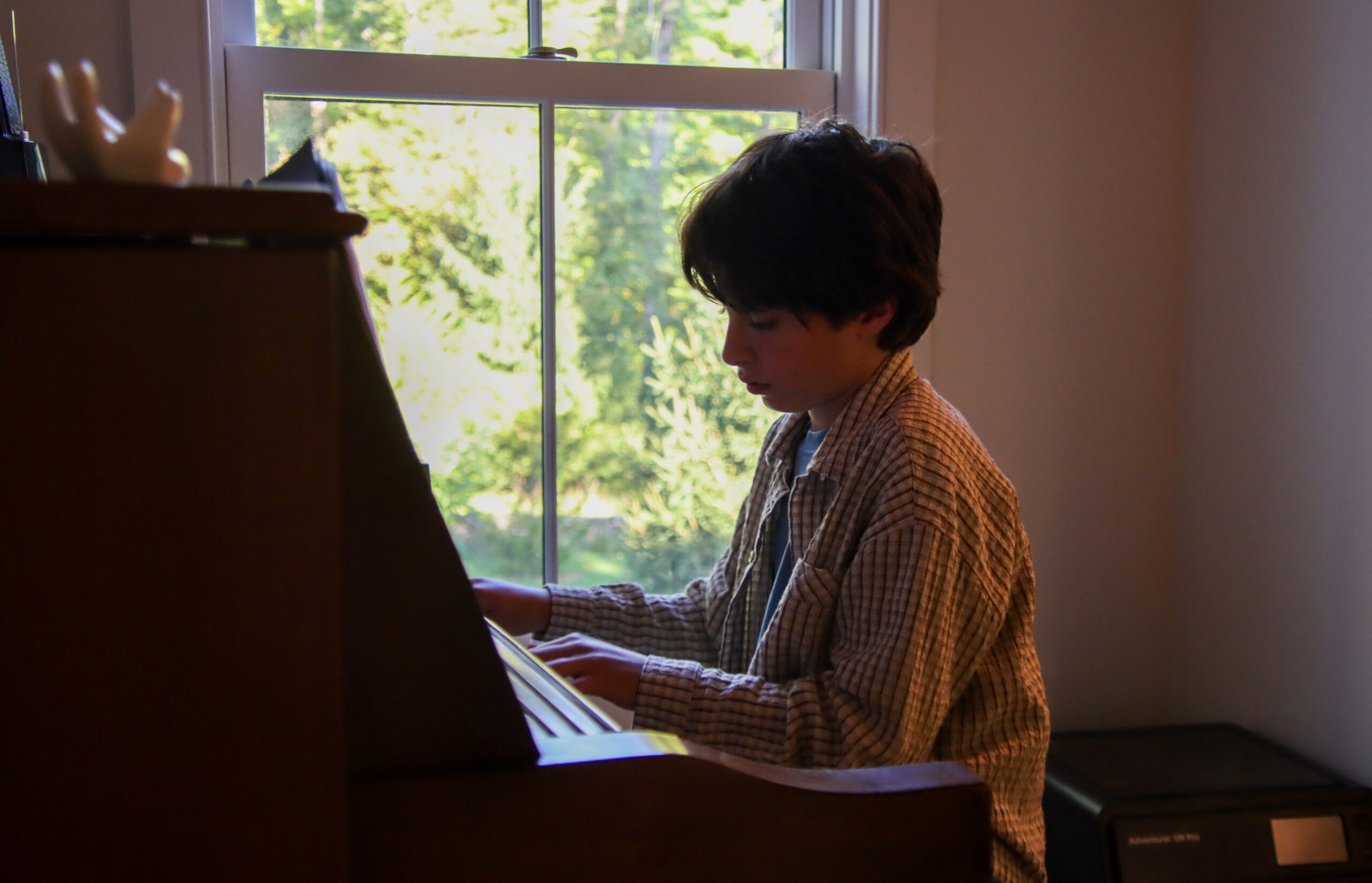
But when he sat down at the family’s upright Sohmer & Co. piano in the dining room, his body grew still. With no sheet music in front of him, his eyes followed his fingers as they flew across the keys, dancing and twisting through the rises and falls of “Flight of the Bumblebee.”
Eli was born in Brooklyn and moved with his family to Rhinebeck during the pandemic, when he was four. His father, John Limotte, runs a creative agency, and his mother, Tabitha Limotte, is a psychotherapist. Neither considers themselves particularly musical.
They simply thought music would be a good thing for their son to learn, and liked the idea, John said, of him having “something he could be good at.” Besides, “he was never particularly sporty,” his father said.
At age 5, Eli began taking ukulele lessons with Gresler at the Rhinebeck School of Music, but soon gravitated toward the piano. “Two instruments felt like too much at that age,” John said, so they decided to focus on the piano.
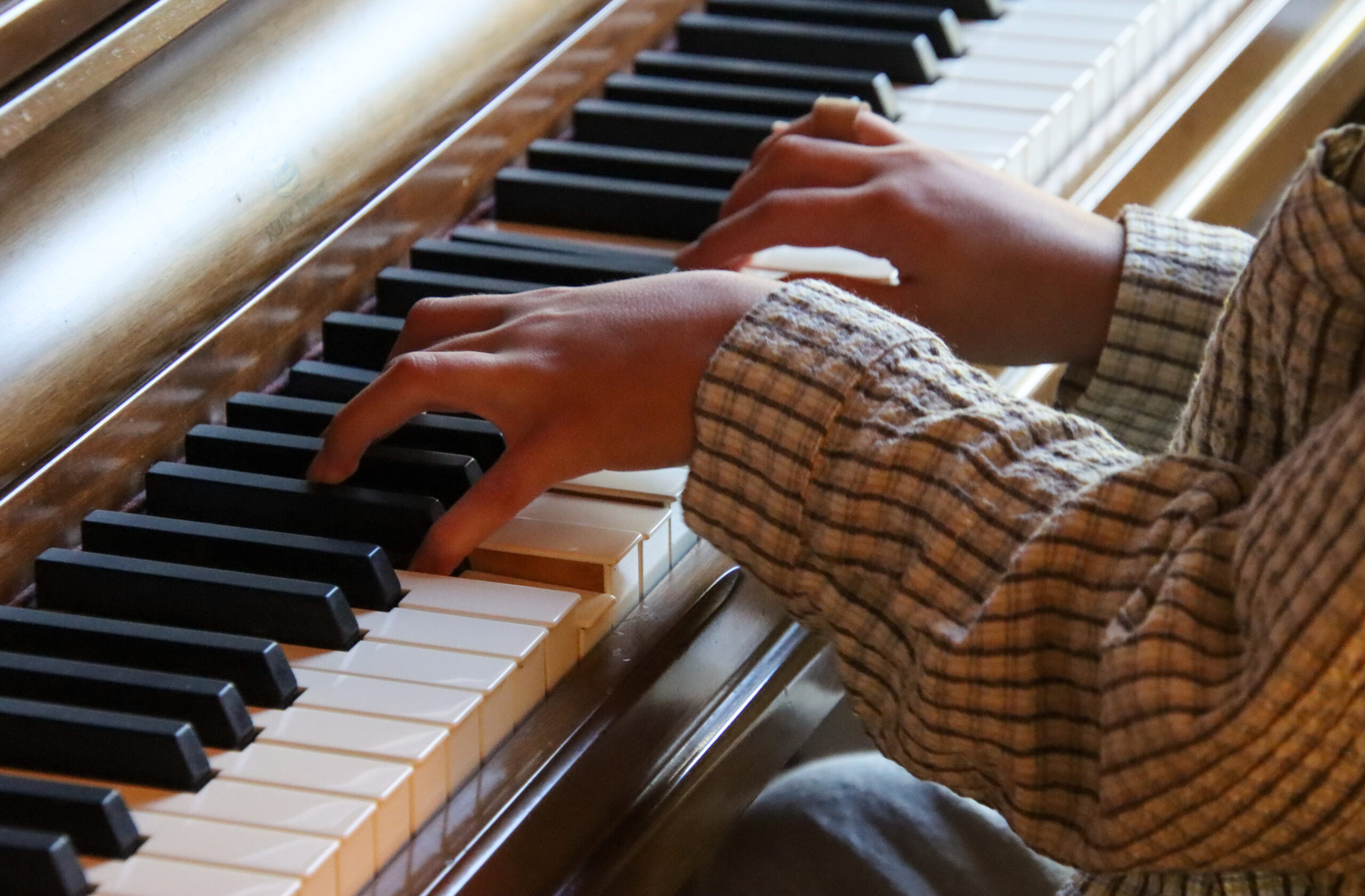 Eli’s family and piano teacher quickly recognized his natural aptitude for music and his “good ear.” (Photo by Claire Greenburger)
Gresler remembers a young student with a lively imagination and an eagerness to explore whatever captured his interest. After learning basic musical notation and working through introductory piano books, Eli began tackling classical pieces and pop standards. He was a “very steady and consistent practicer, which is probably the greatest contributing variable to his rapid succession,” Gresler said.
By age 6, Eli had demonstrated a natural aptitude for music and a “good ear,” his father said. But the pleasure of playing wasn’t always enough to motivate him. What Eli did love was playing something well and seeing how people responded. Sometimes, John recalled, Eli seemed more interested in watching his audience as he performed than in watching the keys, eager to register their enjoyment.
Eli’s passion, too, has “always seemed to be in music more broadly,” his father said, sitting at the family’s dining room table. As he talked about his son’s interest in instruments beyond the piano, including drums, clarinet, bass clarinet, and guitar, Eli, who had been listening unseen from the top of the stairs, poked his head into view and flashed an approving thumbs-up through the banister.
About two years ago, Eli’s parents, recognizing their son’s growing musical abilities, enrolled him in the Bard College Conservatory of Music Preparatory Division, a program that provides music education, including theory and performance training, to students ages 3 to 18. There, he began studying with Ahn, a classically trained pianist with more than two decades of concert performance experience.
Ahn offered a contrast to Gresler, whom John described as “wonderfully sweet,” “extremely good with kids,” “very empathetic,” and “funny.” Ahn, by comparison, took a more serious, disciplined approach, emphasizing technique and musical precision.
As Eli put it, Gresler “eases in, nice, slow,” while Ahn is more “get it done.” He has grown fond of both teachers, whose contrasting approaches have helped him develop different sides of his musicianship.
And his parents believe the combination has been essential to his progress. “Too much of just ‘get down to business’ [and] maybe he would burn out,” Tabitha said.
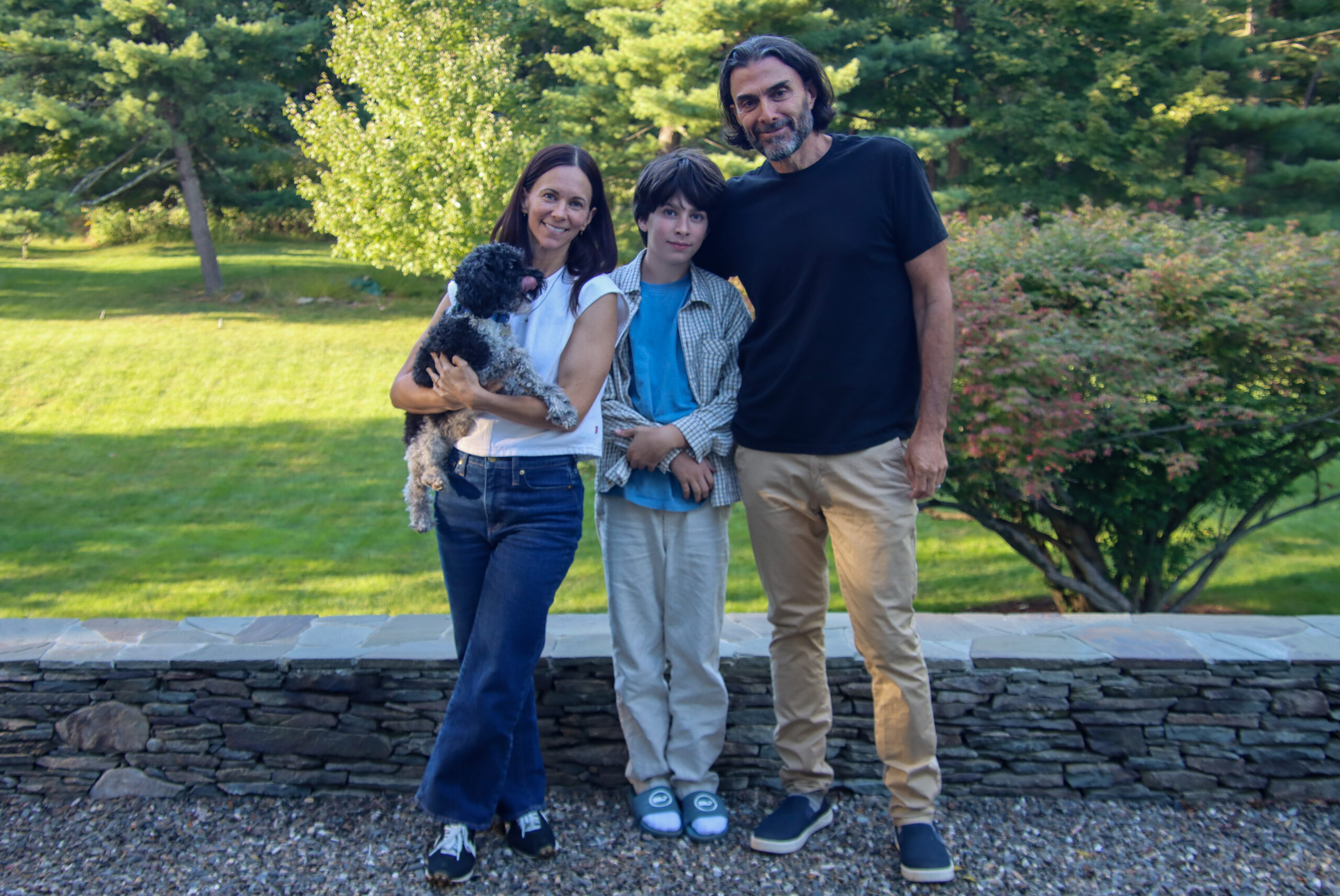 Born in Brooklyn, Eli moved with his family to Rhinebeck during the pandemic, when he was 4 years old. (Photo by Claire Greenburger)
Ahn, who began teaching Eli about two years ago, remembers meeting a boy who was eager to show off the music he could already play but had little interest in pursuing particular achievements. “He was just enjoying and sharing his music,” she recalled.
She began introducing more demanding classical pieces, encouraging him to think not only about playing the correct notes but also about what he wanted to communicate through the music. A song, she explained, is like “a story.”
“It has to come from the performer,” she said.
As Eli’s technique improved, Ahn pushed him further, assigning increasingly challenging pieces, some requiring him to memorize eight to 10 pages of music and execute long passages at extraordinary speed. She also began asking him to send recordings of his practice sessions, which he dutifully did.
About a year ago, at Ahn’s encouragement, Eli began entering piano competitions, submitting videos of his performances for judges to evaluate.
He placed fourth in his first competition, then first in another and second in a third, he recalled, interrupting his father as John tried to reconstruct the results.
“He came in third,” John began.
“No, no,” Eli corrected. “The first one came in fourth. Second one came in first. Third one came in second.”
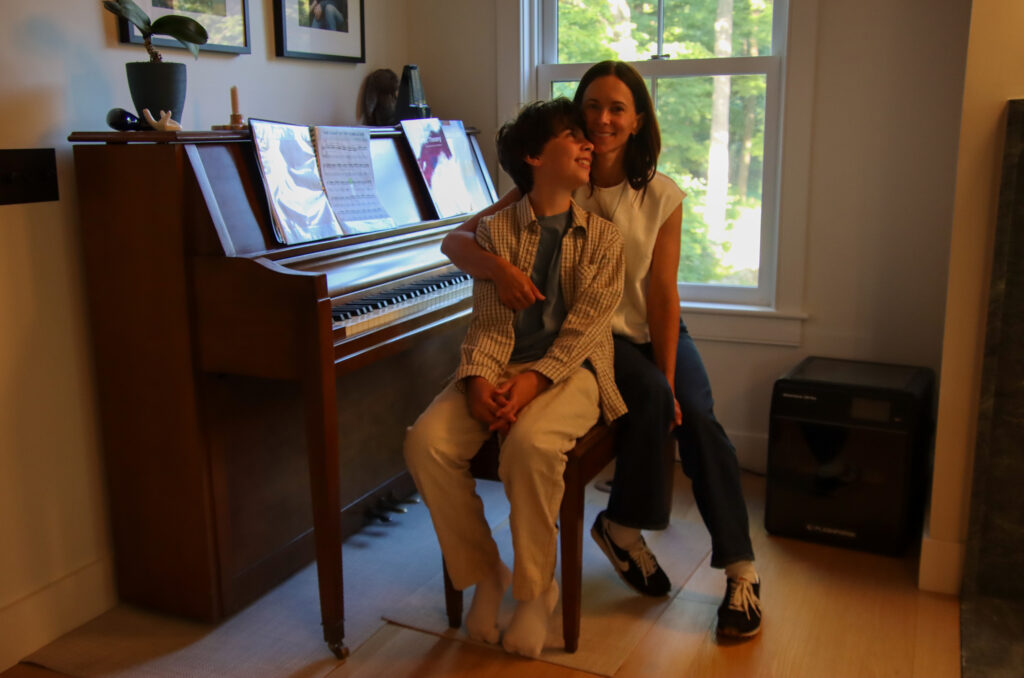 Eli’s mother, Tabitha Limotte (right), emphasized that despite his musical accomplishments, her son is still, above all, a kid who enjoys playing the piano and having fun. (Photo by Claire Greenburger)
Eli said his success made him want to take piano more seriously.
This summer, when his parents arrived to pick him up from sleepaway camp, they had some big news to share: Eli’s third-place finish in a recent piano competition had earned him an invitation to perform at Carnegie Hall.
The news was “kind of crazy,” Eli recalled. He wanted to rush to tell his friends, but decided to “keep it low.”
“I don’t want to brag,” he explained.
After months of practice—which his parents said still required their prodding—Eli walked onto the stage of Carnegie Hall’s Weill Recital Hall, an intimate, 268-seat auditorium, on Sunday. Wearing a khaki suit, he was the seventh of 31 young musicians scheduled to perform that evening, which, in addition to pianists, included a violinist, a cellist, and a harpist. The youngest performer was just 4 years old.
“Pretty good overall,” Eli said of his performance afterward. Was it one of his best? “Probably, yeah.”
Afterward, he received a glass apple engraved with Carnegie Hall, a memento he plans to display on a trophy shelf.
But one of the most memorable parts of the evening, Eli said, was meeting another young pianist named Joe, who performed immediately after him. The two struck up a friendship and, when the musicians returned to the stage at the end of the recital, they were giggling and goofing around together.
“As much as it was like a very serious thing,” his mother said, “Eli’s still mostly in a stage of just having fun and playing.” The family ended the night with ice cream.
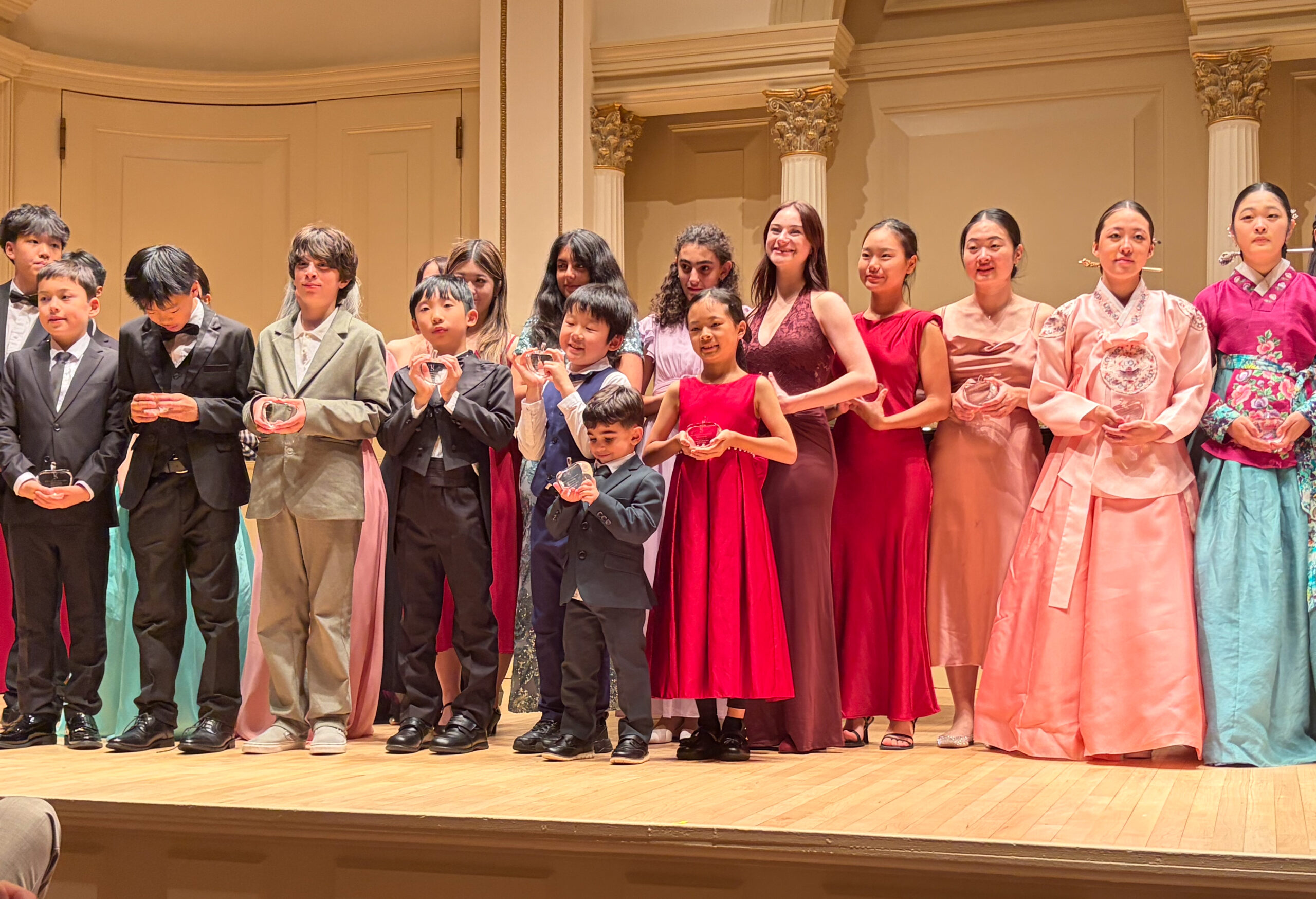 Eli was among 31 young musicians from across the country and beyond invited to perform at Carnegie Hall on Saturday after winning international music competitions, each receiving a glass apple engraved with Carnegie Hall as a memento. (Photo courtesy of John Limotte)
His teachers, too, are reluctant to prescribe a future for him.
Ahn believes Eli has the ability to pursue serious classical study, perhaps eventually attending a conservatory. But she hopes that, whatever path he chooses, music will remain a meaningful part of his life.
“Hopefully, music can be [his] best friend in his life,” she said, something he can turn to in both happy and difficult times.
Gresler, too, sees his ultimate goal as helping Eli not only succeed musically, but also develop a lasting love for what he does. Eli’s musical curiosity and interest in different instruments, he said, suggest that his future might extend well beyond classical piano.
First things first, though. On Saturday, Eli is scheduled to perform “Flight of the Bumblebee” once more, this time in Cambridge, at Harvard University.
After that, he’s looking forward to taking a week off from piano, a break he specifically requested, and, when he returns, playing something other than “Flight of the Bumblebee.”
