
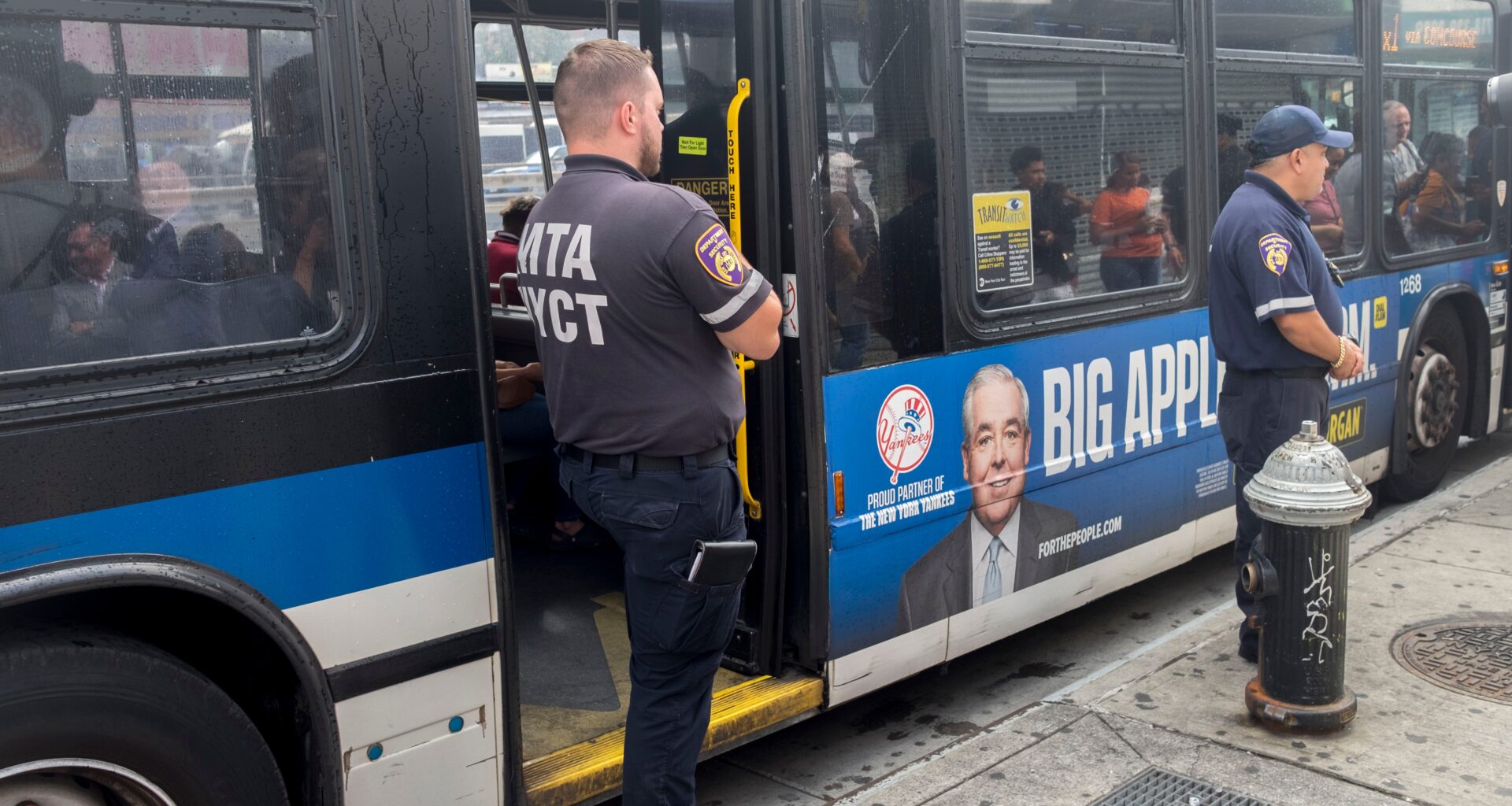
Less than a week after ICE agents shot Oscar Belgal, MTA workers tackled Kyle Taylor, slammed him into a bus shelter, and wrestled him to the ground, over a free transfer to the B14.
Belgal was driving. Taylor was riding a bus. Belgal was born in the Dominican Republic. More than half of New York City bus riders are immigrants. Overwhelmingly low-income New Yorkers of color, bus riders are vulnerable not just to ICE but to fare enforcement agents too.
As egregious as it was, what happened to Taylor was not the isolated mischief of a few bad apples. The expansion of the MTA’s bizarrely named EAGLE (Evasion and Graffiti Lawlessness Eradication) teams can’t be divorced from the federal reality.
Even when protocol is followed, buses being stopped and boarded by officials asking for proof of payment can be hard to distinguish from someone demanding your immigration papers.
EAGLE teams are inciting fear in communities already under siege by ICE.
This was hard felt over the summer as many Haitian bus riders navigated fear and targeting following the termination of their Temporary Protected Status. Scaring riders and breaking trust undermines support for the public transit service we need.
As organizers, we hear every day that the very presence and hostile actions of these teams are harming every rider and slowing service for all. This is not the way to stop fare evasion. Simply put, these teams must end now.
It’s no secret that the bus fare is unreliable as revenue for our transportation network. Poor service, making the bus a last resort, means many riders are poor, struggle to afford the fare, and think twice before paying. Squeezing riders is in turn a growing expense for the agency.
If other sources of MTA funding worked as poorly as the bus fare, the service wouldn’t run at all. Without more support, both the MTA and riders are in a tough position. On paper, bus fares still make up an important part of the operating budget. And compared with other expenses, the $3 fare, half that for those who qualify for discounts, doesn’t sound like a lot.
Regardless, the fare remains unaffordable to many, many fares go uncollected, and fare enforcement has growing fiscal and human costs.
It doesn’t have to be this way. Mayor Mamdani won office on a promise of fast and free buses, worth paying for but provided at no cost — a proposal borne of his own experience riding buses. Gov. Hochul has shown New York can support the city and the transit system that drive the state’s economy. Bus riders need a financial plan to make the MTA whole.
While brutal enforcement tactics won’t fix the bus, fast, free, and (importantly) funded service will do wonders for riders, transit operations, and the city and state that rely on riders showing up to work, shop, and take care of one another. With more than one million daily riders, America’s slowest buses are still a lifeline.
So much becomes possible when the bus works for all New Yorkers. Amid an affordability crisis begun before President Trump’s Iran war drove up gas prices, saving households the expense of a first, second, or third car or carfare is a gamechanger in neighborhoods far from the subway.
We know too well how it looks when a vengeful government attacks people for who they are. New York must provide a better model, starting at the bus stop. With the most pro-transit leadership in our city and state’s history, we are certain that it’s possible to get this right.
Plum is executive director of Riders Alliance. Awawdeh is president and CEO of the New York Immigration Coalition.