
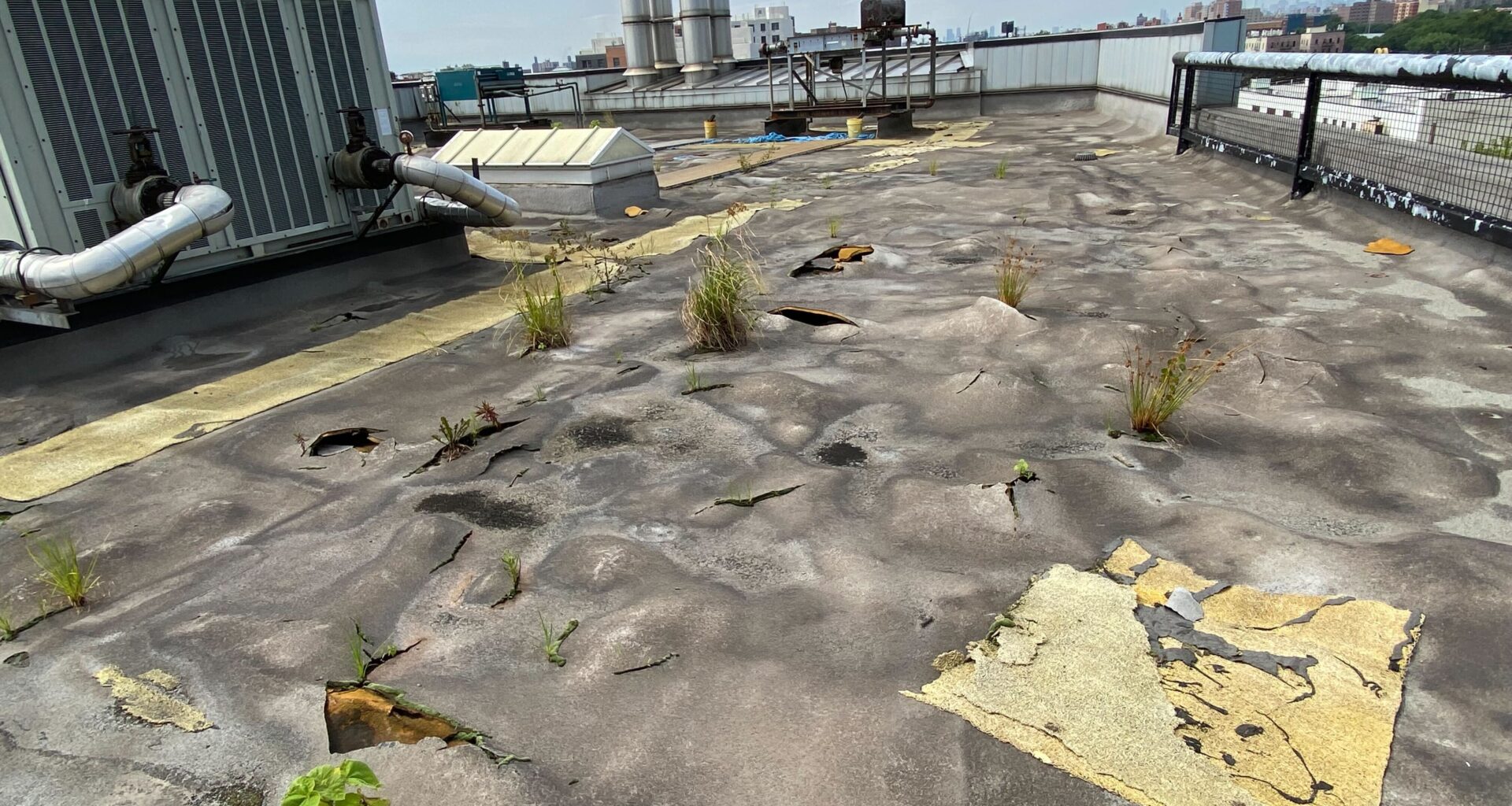
Years of inaction left at least two subway maintenance facilities with dangerously compromised roofs, the MTA’s Inspector General said in a report released Monday.
The two Bronx maintenance shops — one at the E. 180th St. Yard and one at the 240th St. Yard — were found to have leaks and structural damage that posed a danger to workers and equipment.
“It is unacceptable that these roofs have been allowed to deteriorate so severely that vegetation is growing and major cracks are visible, despite years of requests for critical repairs,” MTA Inspector General Daniel Cort said in a statement.
The report states that emergency repairs are already underway and the MTA has agreed to implement several of the IG’s recommendations.
“Our audit recommends more comprehensive evaluations of facilities and better reporting of defects, and we commend NYC Transit for taking steps to correct these issues,” Cort said.
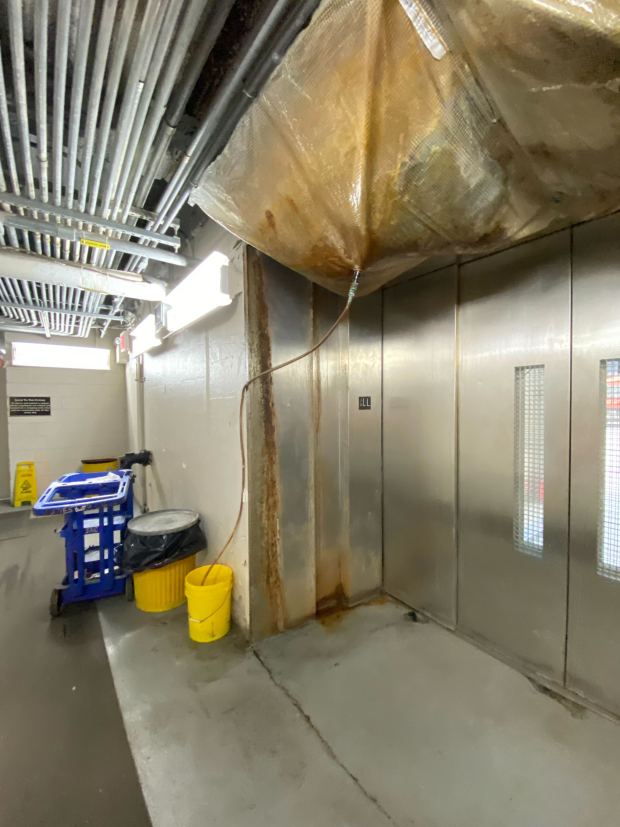 Damage to the roof of the E. 180th St maintenance shop in the Bronx led to water damaging elevators and equipment, the OIG found. (Office of the MTA Inspector General)
Investigators began looking into the roofs after they were alerted to conditions during a routine visit to the maintenance shop at the E. 180th St. Yard in 2024, according to the report.
The E. 180th St. shop, where the MTA maintains cars for the No. 5 and No. 2 trains, had a roof “in a serious state of disrepair,” investigators wrote. Plants were seen growing out of cracks in the roof. Leaks were allowing rainwater to fall into machinery in the shop’s electrical distribution rooma nd water had caused significant damage to the roof of the shop’s mezzanine level, where transit workers’ lockers and bathrooms are located.
The damage was impacting work crews’ ability to repair trains, investigators wrote. In one instance, the crane used to replace air conditioners on the Nos. 2 and 5 trains was deemed unsafe to use in foul weather — despite being indoors.
“[Investigators] learned that for approximately 15 years, water has leaked from the upper roof onto the crane’s electrical bus, creating a hazard due to the high voltage of the crane,” the report says. “As a result, employees have occasionally been unable to use the crane during rainstorms, and thus were delayed in replacing old or malfunctioning [air conditioning] units.”
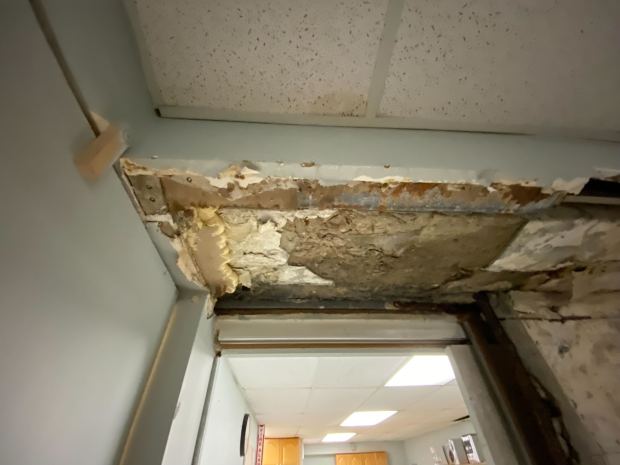 Damage to the ceiling of the 240th St. maintenance shop in the Bronx caused parts of the ceiling to break loose. (Office of the MTA Inspector General)
The report notes that the roof problems have been persistent, with a former head of the shop telling investigators the roof was “in nearly the same condition as far back as 2014.”
Across town at the 240th St. shop — where crews upkeep the cars of the No. 1 train — the roof was in similar disarray. Investigators found that water incursion into the reinforced concrete was causing chunks of it to fall into the shop.
Again, investigators found, the problem had been known for some time, with NYC Transit’s Division of Car Equipment proposing replacement of the roof “multiple times since 1984.”
The conditions found by investigators did not always match the official assessment made by the MTA in it’s most recent five-year capital plan, according to the report.
“Many inspections were completed by facility staff without specialized training in evaluating structural components such as roofs,” investigators wrote.
The OIG report states that investigators visited both shops again with leadership from the subway division’s facilities department and temporary repairs were made.
The inspector general called on the MTA to improve its facilities inspection regime and ensure that those conducting the assessments are properly trained. He also recommended the agency clarify the proper way to report structural issues at MTA facilities.
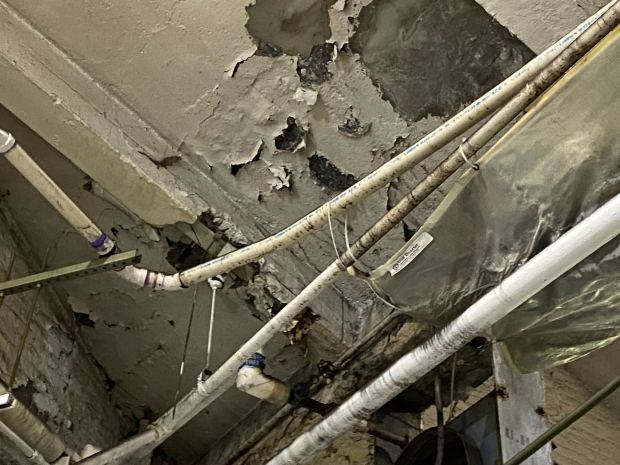 Damage to the ceiling of the 240th St. maintenance shop in the Bronx caused parts of the ceiling to break loose. (Office of the MTA Inspector General)
For its part, the MTA agreed with all OIG recommendations. Spokesman Michael Cortez said a team within the facilities division was already undertaking repairs and that the issues highlighted in the report were being addressed.
“NYC Transit created the Division of Facilities to prioritize needed repairs and build in-house teams to carry them out, with employee safety central to that work,” he said in a statement. “Its dedicated roof team has completed seven repairs, and a new capital construction team will address additional roof and structural deficiencies across shops, yards and other facilities.”
In addition to the two shops highlighted in the report, investigators visited seven other subway maintenance shops: the Cozine Iron Shop in Brooklyn, the Coney Island Overhaul Shop in Brooklyn, the Pelham Maintenance Shop in The Bronx, the Jamaica Maintenance Shop in Queens, the Tiffany Iron Shop in The Bronx, the 148th Street HVAC Shop in Manhattan, and the Pitkin Maintenance Shop in Brooklyn.
Both the E. 180th St. shop and the 240th St. shop are slated to receive major overhauls in the MTA’s 2025-2029 capital program.