
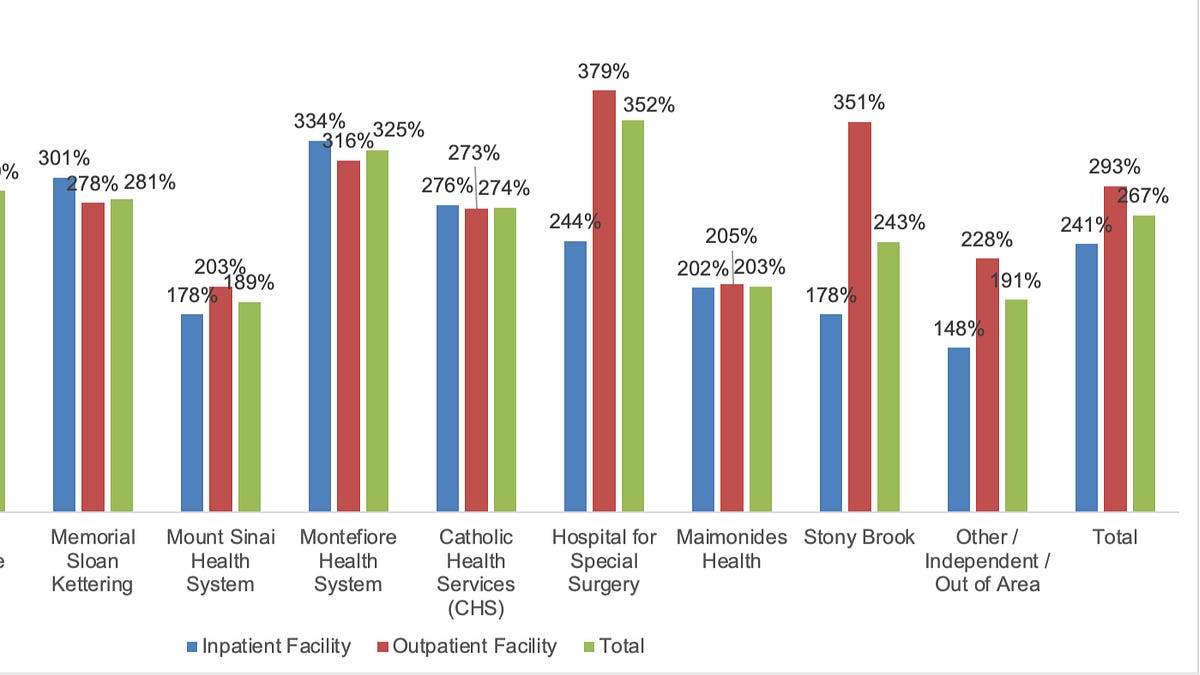
Summary: Commercial health plan payments for the same services in the New York metropolitan area vary enormously. The largest, most market-dominant systems charge the most and outpatient services are priced furthest above Medicare.
New York Metro Hospital Allowable Prices as % of Medicare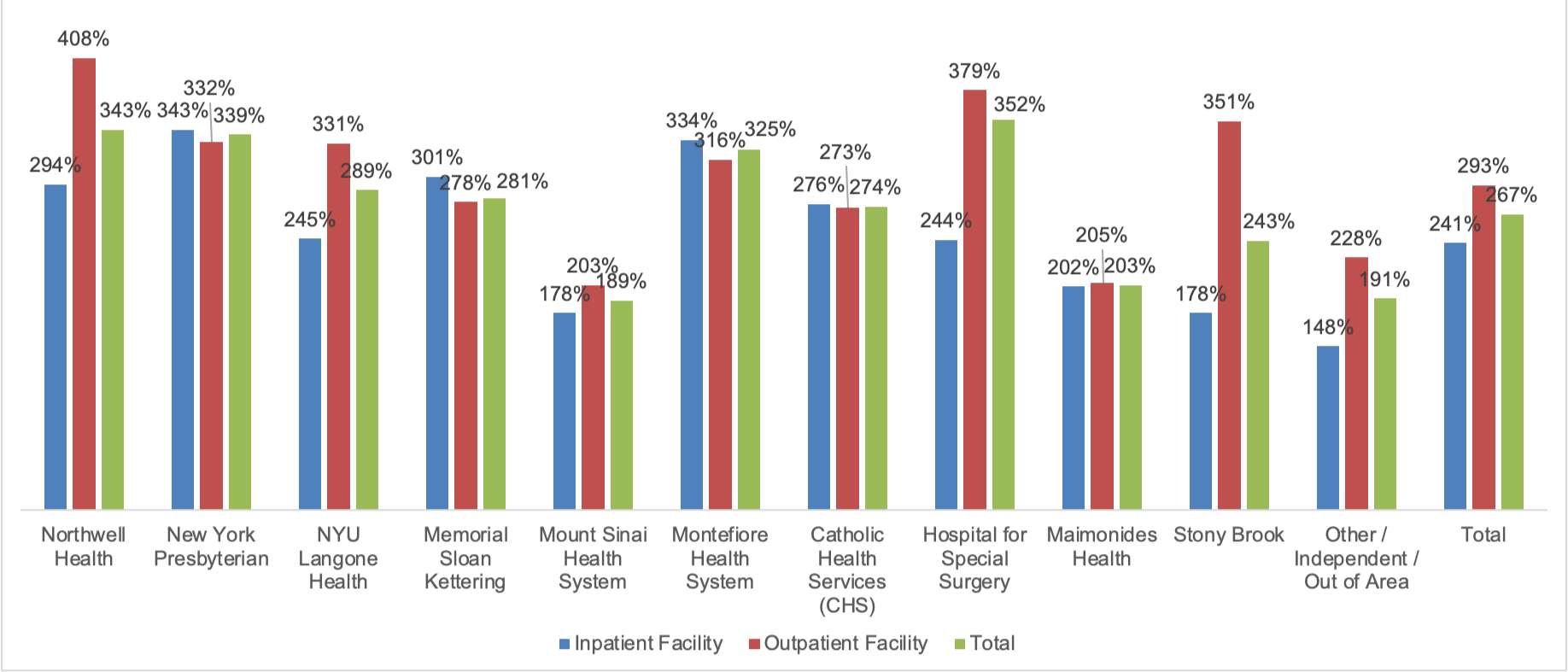
Source: Annual Healthcare Accountability Report, NYC Department of Health and Mental Hygiene, 2026. Prices are actual allowed amounts, not billed charges.
The New York City Department of Health and Mental Hygiene’s Healthcare Accountability Report shows that hospital prices vary widely, and the largest systems with the highest amount of negotiating leverage have the highest prices. The report expresses hospital prices as a percentage of what Medicare allows. The report expresses prices as a percent of Medicare allowable. In most instances, the ratio is highest for outpatient hospital services.
Negotiated rates for cesarean section delivery ranged from $7K to $64K.
Negotiated rates for colonoscopy ranged from $640 to $13,000.
Commercial allowed health plan prices were often twice as high for one hospital compared to another hospital.
Nonprofit hospitals spent just 2% of their revenue on free care (when measured at cost of care. Most hospitals report on free care based on their chargemaster.)
The allowable Medicare-referenced prices for the New York City Health and Hospitals facilities, which have the highest rates of government payers, were on average far lower than the allowable prices for private nonprofits.
For instance, the average allowable price at New York Presbyterian was 336% of Medicare, and the average allowable price for New York Health and Hospitals facilities was 76% of Medicare.
Evaluating health plan discounts is not enough; employers will only know how their health plan choice impacts total costs when they evaluate allowable prices for providers used by their members.
Hospital outpatient departments have high allowable prices; steering members to freestanding centers can substantially lower health care costs.
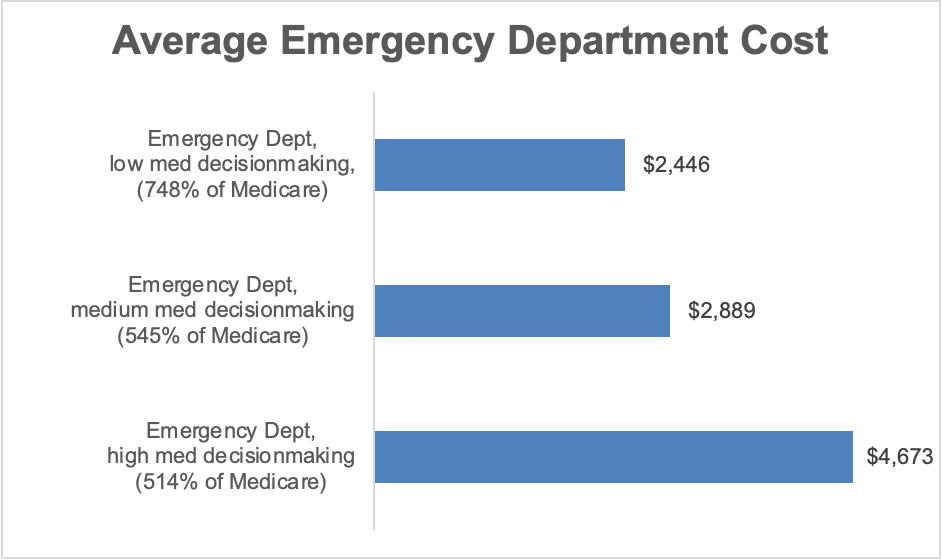
Total costs for emergency department care are very high – highlighting the importance of programs to divert people to urgent care, primary care, or telehealth.
High commercial prices were not associated with a higher proportion of patients on government programs – so we can’t blame high commercial costs on low governmental reimbursement.
Thanks for reading! If you found this useful, please subscribe, like, and restack. You can find previous posts at this link.Views expressed in Employer Coverage are purely my own.