
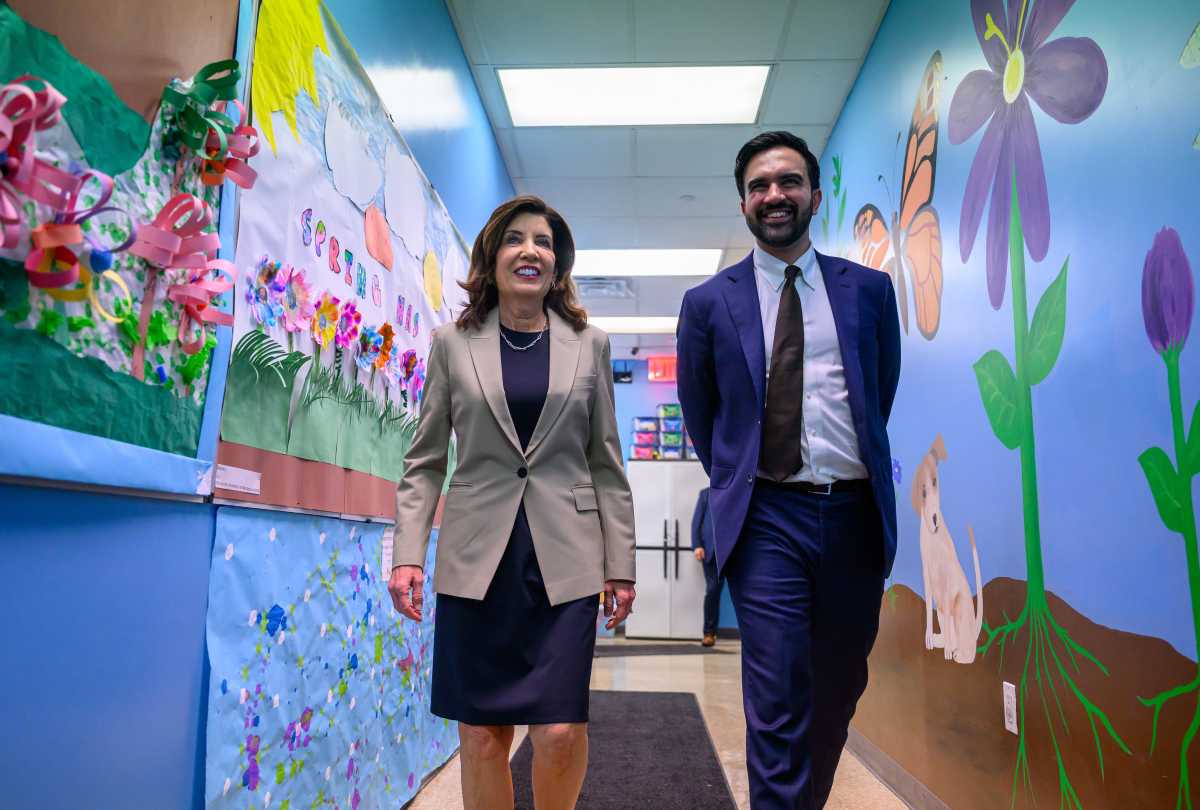
New York City will add 10,000 free 2-K seats next fall, expanding the program to all five boroughs, including the entirety of Staten Island and the Bronx, Mayor Zohran Mamdani and Gov. Kathy Hochul announced Monday as part of their push for universal childcare.
The expansion, set for fall 2027, will bring the program to more than half of the city’s 32 geographic school districts, up from the five where it launched this September. The city also plans to add seats in those original districts, bringing the total number of spots planned for fall 2027 to more than 12,000.
The city is moving ahead with the next stage of Mamdani’s universal childcare plan after more than 5,700 families applied for the first 2,000 seats. Staten Island’s inclusion also follows criticism from borough officials after the administration excluded it from the program’s first year.
“For far too many New York City families, the joy of welcoming a child comes with a terrifying set of questions: How will I afford child care? Will I need to give up my job? Will I be forced to leave the city I love?” Mamdani said in a statement Monday. “Today, for 10,000 more families, we have an answer.”
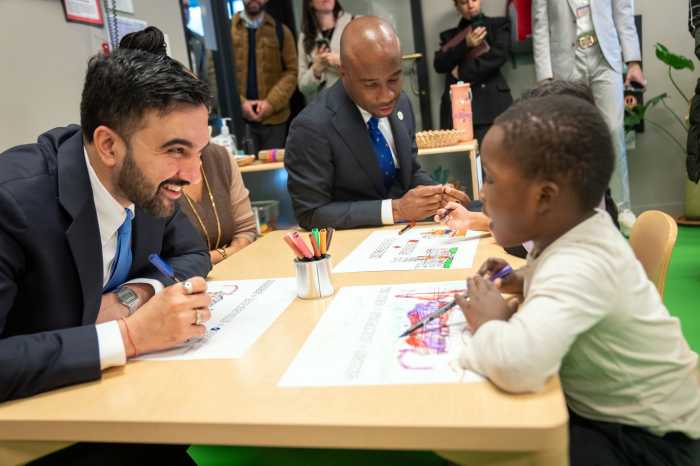 Mayor Mamdani pictured at the Sugar Hill Children’s Museum of Art & Storytelling, Manhattan. Tuesday, March 3, before announcing the 2k pilot locations. Photo by Ed Reed/Mayoral Photography Office.
Where 2-K is expanding
The next phase will cover every school district in the Bronx, expanding beyond District 10, which was included in the inaugural rollout. Staten Island, which has a single school district covering the entire borough, will also be included for the first time.
In March, Mamdani defended his administration’s decision to leave Staten Island out of the first phase, saying that expanding across the entire borough could strain provider capacity. He pledged at the time to include Staten Island in the following year’s expansion.
“One of the key things we wanted to do is not only identify the need in these neighborhoods, but also the readiness to be able to deliver it to an entire school district,” Mamdani told reporters during a visit to Canarsie at the time.
Elsewhere, the program will expand into two additional Manhattan school districts, covering East and Central Harlem, West Harlem, Morningside Heights and surrounding neighborhoods.
In Brooklyn, six additional districts will receive seats, bringing 2-K to neighborhoods including Bedford-Stuyvesant, Crown Heights, East New York, Bay Ridge, Coney Island and Bushwick.
Three additional Queens districts will be included, extending the program to areas including Corona, Elmhurst, Forest Hills, Jamaica, Queens Village, Laurelton and Rosedale.
The city will also add capacity in the five districts where 2-K began this fall: District 6 in Manhattan, District 10 in the Bronx, Districts 18 and 23 in Brooklyn and District 27 in Queens.
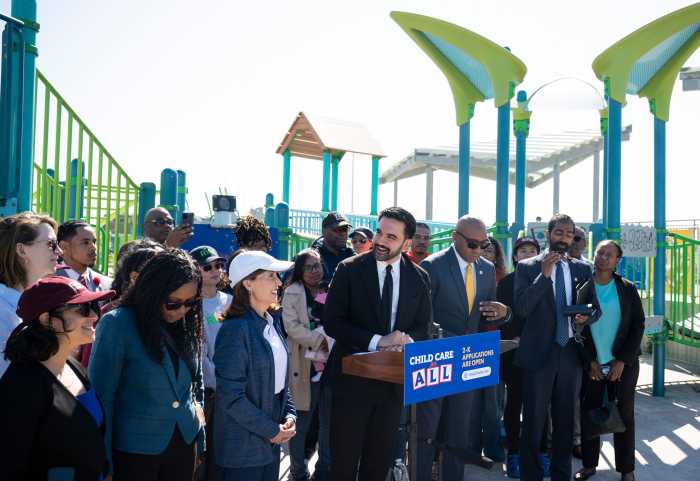 Mayor Zohran Mamdani and Governor Kathy Hochul at 108 Street and Shorefront Parkway on Tuesday, June 2, 2026.Credit: Lloyd Mitchell
Building on the first year
The expansion follows the September launch of the city’s first free 2-K program, which serves roughly 2,000 children in selected districts across four boroughs, and is part of Mamdani’s broader campaign pledge to provide free child care to every 2-year-old whose family wants a seat by the end of his first term.
Demand for those seats far exceeded availability. More than 5,700 families applied for just over 2,000 spots this summer, with approximately 3,700 applicants placed on waitlists when the first offers were announced in August.
City Hall has estimated that a free 2-K seat will save families an average of $26,000 annually in child care costs.
The program is part of a broader $1.2 billion state investment over two years supporting 2-K, improvements to existing 3-K programs and additional child care vouchers. According to the city’s Independent Budget Office, the state has committed $425 million in fiscal year 2028 to expand 2-K to 12,000 seats.
The next phase of the rollout follows longstanding contracting and payment problems affecting early childhood education providers. In an October report, the IBO warned that delays in registering contracts and paying providers, along with reimbursement rates that do not reflect operating costs, had threatened the initial 2-K rollout.
The report also identified difficulties recruiting and retaining workers, citing pay disparities and funding constraints among providers.
“Expanding 2-K to reach 10,000 additional children is a critical step toward delivering universal child care for all New Yorkers,” said Emmy Liss, executive director of the Mayor’s Office of Child Care and Early Childhood Education.
Liss said the administration had learned lessons from parents and providers during the initial rollout and would continue seeking feedback as the program expands.
To prepare for next fall, the city plans to survey providers already under contract with New York City Public Schools and issue a request for information to new providers interested in offering 2-K. Both are expected within the next week.
The city has announced plans to add more than 200 staff members at New York City Public Schools and make changes aimed at speeding up contracting and improving support for child care providers.
As with the initial rollout, 2-K will be offered through child care centers and licensed family child care programs, with full-day, full-year care — generally from 8 a.m. to 6 p.m., 260 days a year — remaining the default model.
City officials said details about the fall 2027 application process will be released in the coming weeks.
This is a developing story, check back for updates.