
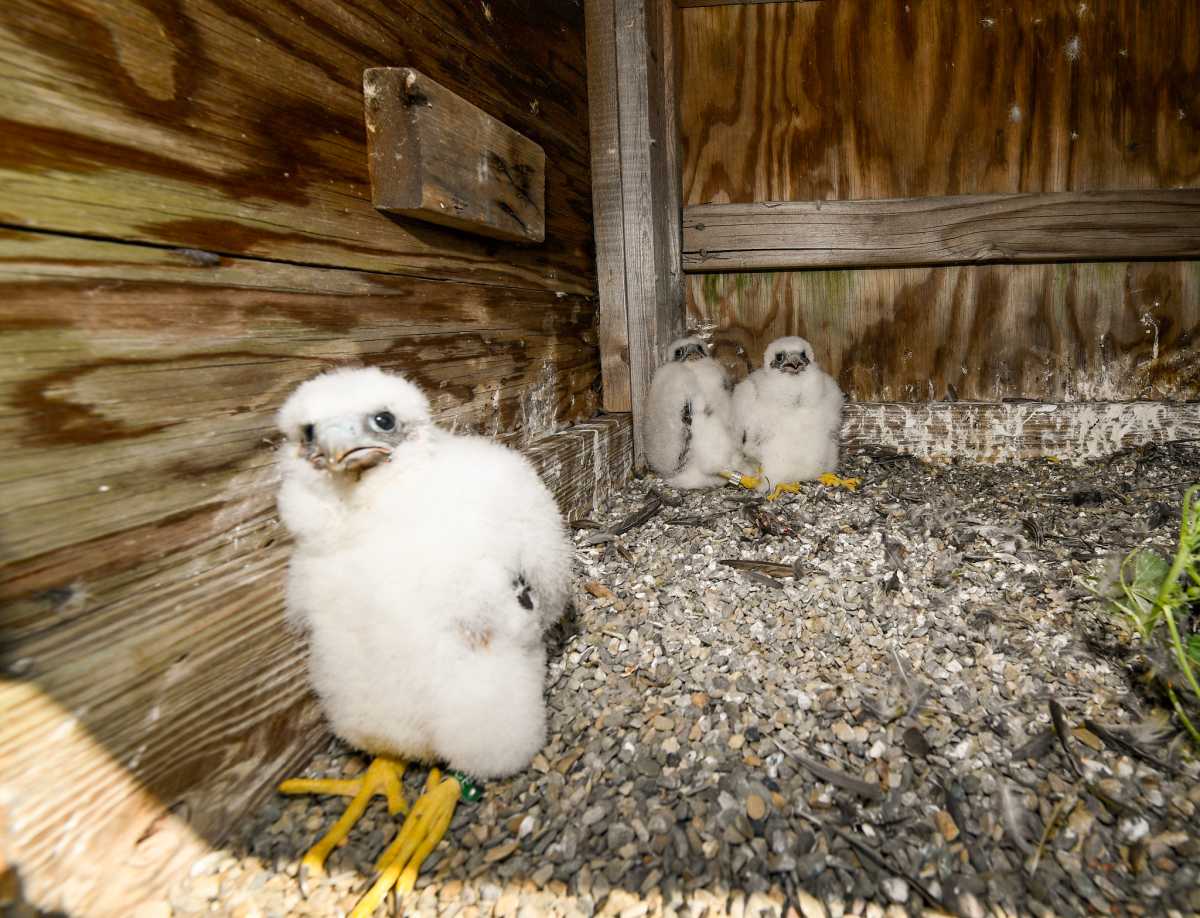
Native New Yorkers have been returning home — not to live in waterfront properties, but in New York Harbor. Not to dwell in historic brownstones, but in sprawling green spaces. They’re nesting on trees, not in houses.
These repatriates are whales, raptors, foxes, and a plethora of other animals that were once in decline in NYC. But thanks to government and private efforts put into action decades ago and continuing today, New Yorkers of the human kind have been enjoying the return of so much native wildlife.
One major wildlife success story is that of the bald eagle. Hundreds of thousands of these majestic birds once lived throughout the country, but their numbers dropped significantly by the 1950s due to the use of the pesticide DDT, which made bird eggshells too thin and fragile to survive.
Fortunately, efforts to protect wildlife helped reverse that decline. Environmental protections, including the Clean Water Act of 1972, signed under President Richard Nixon, played an important role in restoring wildlife populations across the country. In NYC and beyond, these efforts helped pave the way for the return of healthy bald eagle populations.
“Federal protections have since allowed these populations to recover, with over 300,000 individuals present in the lower 48 today, a figure that is expected to continue to increase as long as adequate protections remain,” Marc Parnell, ornithologist and author of “The Birding Pro’s Field Guides Birds of Delaware,” wrote in his book.
Bill Ulfelder, New York executive director at The Nature Conservancy, called the Clean Water Act a bedrock piece of legislation that took decades to work, but has been critically important for improving water quality around New York.
“It is one of the most important environmental pieces of legislation in our country’s history,” Ulfelder told amNewYork. “They have a triathlon every year in the Hudson River. These are swimmable waters – maybe not right after a rain event – but generally the water quality has improved so much that that has been really critical for whales, dolphins, rays, sharks, tuna.”
2026: A year for NYC wildlife
It has undoubtedly been a remarkable year for wildlife in NYC’s air, land and waters. So far, 2026 has seen whales appear in the harbor, among other uncommon animal sightings throughout the Big Apple.
“The things that nature loves and wildlife love are the things that we need,” Ulfelder said while doubling down on the importance of environmental legislation. “So it’s things like clean air, clean water, forests and green space. And as the city has improved in those areas, that has welcomed back in more wildlife.”
Fox populations have also increased significantly on Staten Island, where conservationists have been releasing native diamondback terrapins into the creeks of Freshkills Park as part of a head-start program designed to improve the vulnerable turtles’ chances of survival, despite foxes being among their predators.
In June, a North American river otter was spotted on camera in the Bronx for the first time in about a century. The otter was photographed by a motion-activated camera deployed by local scientist RJ Hawkins, and overseen by the Wildlife Conservation Society’s Education Department based at the Bronx Zoo.
The discovery came as a surprise even to Hawkins, who said the images highlighted the importance of ongoing conservation efforts.
“When I first reviewed the images, I could hardly believe what I was seeing,” Hawkins said in a press release. “Knowing this may be the first documented river otter in the Bronx in generations was an incredible moment. It shows why long-term wildlife monitoring and environmental restoration efforts matter.”
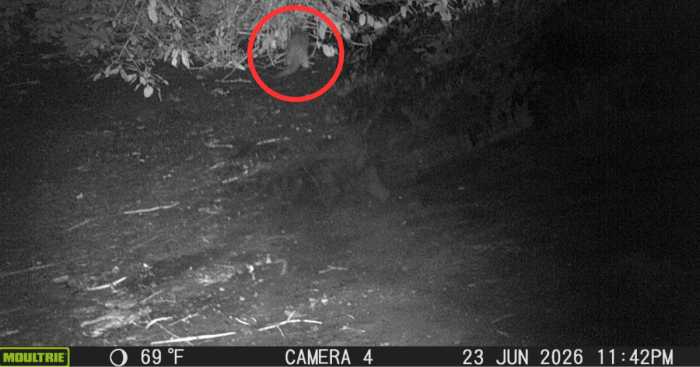 A camera trap photograph of a river otter taken on June 23, 2026, in the Bronx River.Credit: Wildlife Conservation Society Education Department/RJ Hawkins
Similarly, a beaver made an incredibly rare guest appearance on the shores of Manhattan in early June. A lucky water-watcher caught the incredible moment on video, when the aquatic rodent enjoyed some Hudson River waves before emerging onto some rocks on the West Side’s Gansevoort Peninsula in Hudson River Park.
While the beaver was a lone sighting in this case, it is still a compelling case for an improving ecosystem, conservationists say.
“The health of the Hudson River has greatly improved in the last few decades, as we see with the increasing presence of animals like the pollution-sensitive seahorse, striped bass, and even the recent appearance of our first beaver,” Tina Walsh, vice president of partnerships and engagement at Hudson River Park Trust, told amNewYork.
Protecting gains in NYC wildlife
Conservationists said NYC’s recent wildlife comeback shows what decades of conservation can achieve, but the challenge now is protecting that progress.
Animals and habitat face continued threats such as deforestation and climate change, along with more heat and flooding. Also, experts say as cities like New York grow, animals and people are increasingly sharing the same crowded spaces, making today’s environmental decisions critical to nature’s future.
A case in point is the return of humpback whales to local waters. Remarkably, the region’s humpback whale catalog, run by Gotham Whale, reached its 500th individual humpback whale, after researchers were identifying just a few dozen new whales each year when the catalog began in 2012.
There are enough whales now that Gov. Kathy Hochul passed the New York Whale Awareness Act on Aug. 10 to protect whales from being injured or killed by boats as more of the giant marine mammals return to local waters by teaching boaters how to avoid collisions.
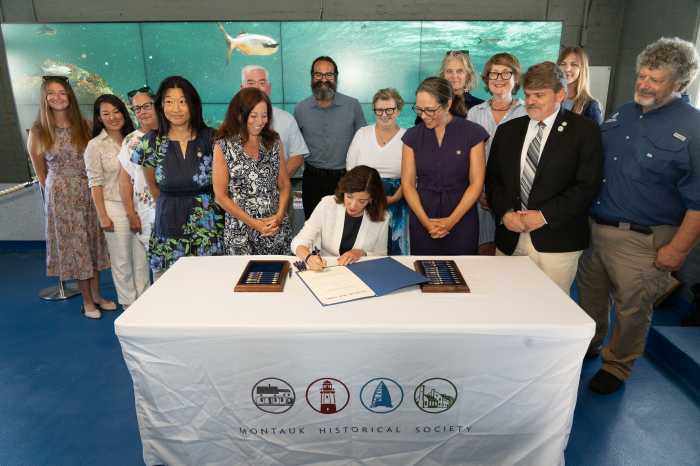 Hochul is signing New York’s Whale Awareness Act designed to prevent vessel strikes.Photo by Gov. Kathy Hochul’s office
Ulfelder also explained that restrictions on Atlantic menhaden – commonly called bunker fish – have led to healthier ocean ecosystems because it is a major food source for many species of fish and marine mammals.
“As the fishing of menhaden was more restricted and those populations grew, that drew the whales, dolphins, sharks, everything back,” he said. “It is incredible.”
Meanwhile, Hudson River Park is doing its part to protect smaller water-dwelling creatures. Over the past five years, the park has worked to improve underwater habitats by installing hundreds of structures, including reef balls, that provide a place for aquatic life to settle and grow.
These structures create hard surfaces where oysters and mussels attach themselves to solid surfaces and live and thrive, helping to rebuild underwater ecosystems and provide shelter for other species.
Keeping animals in NYC
Ulfelder explained that efforts to improve water and air quality and expand urban forests and green spaces can help wildlife thrive and stay in NYC. Planting more trees, maintaining healthy forests and preserving greenery – from individual street trees and small wood areas on private property to larger forests in city parks – all play an important role in protecting ecosystems, he said.
 Tree canopy is the land covered or shaded by trees. As of the latest data from 2021, tree canopy covers 23.4% of NYC.Photo by Michael George
NYC published its first-ever Urban Forest Plan in April, establishing a roadmap toward 30% tree canopy by 2040.
“The more we can expand our urban forest, and get to that 30% goal by 2040, that would be really good for wildlife,” Ulfelder said.
Off land, Walsh said continued waterway monitoring is also important.
“While the health of our waters has improved, there is still more we can all do to support the Hudson River and waterways across New York City,” she said. “Continued environmental monitoring is one key consideration because data collected about our local waterways helps inform regional science and supports larger initiatives on local, regional and national levels.”
Overall, just being aware of wildlife and the environment in the city is becoming more important to New Yorkers.
“While this is the densest, most populated city in the country, at the same time, there’s some incredible nature, including wildlife, and it’s all around us — if we just have the chance sometimes to slow down, pay attention, and we’ll get to see it,” Ulfelder said.