
On the morning of Sept. 23, Richie O’Brien was walking to his job at the Metropolitan Museum when a cyclist struck him on the East Drive near 84th St. He died four days later. On Oct. 5, Douglas Adams, a 71-year-old cyclist riding the same stretch hit an off-leash dog, fell and died.
These deaths had very different causes, yet the Central Park Conservancy, which manages the park under contract with New York City, principal response was to reiterate its support for a 15 miles per hour speed limit for cyclists on the Park Drive — despite the lack of evidence showing that the lower limit will make the park users safer. Here’s what would.
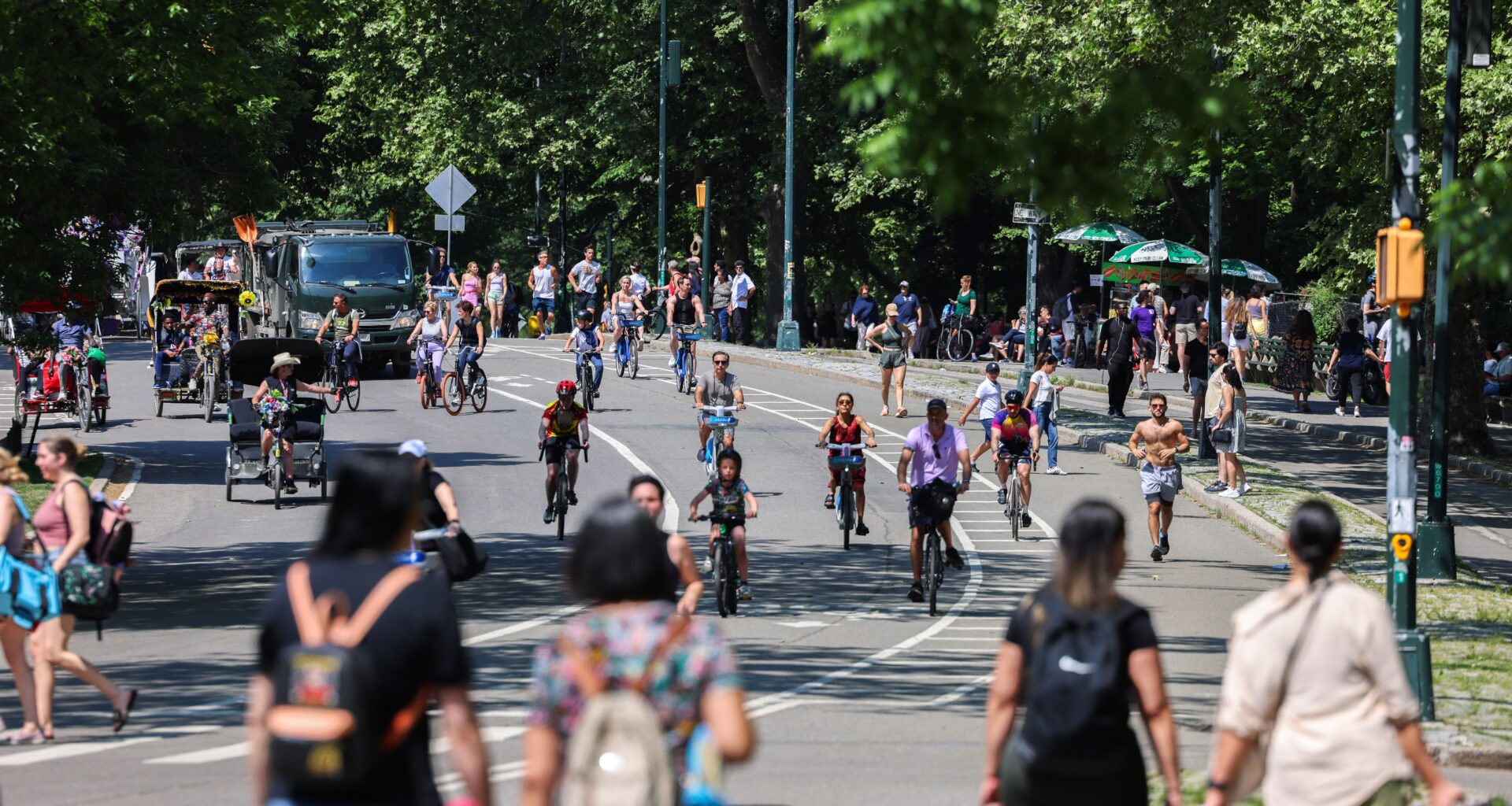
Recognize that the real problem — scarcity. The Conservancy’s 2024 Central Park Drives Safety and Circulation Study show a near parity of visitors who arrive by foot (48%) vs. bike (45%). Yet pedestrians can access all 58 miles of the Parks paths, while cyclists are confined to a single 6.1-mile loop — which they must share with everyone else. This forced mixing all but guarantees conflict when the park is busy.
Separate uses by the clock. Since 2012, the city’s cycling clubs have voluntarily kept group training to off-peak hours. The city and the Conservancy should make that official: designate 5 to 8 a.m. and the hours after sundown, as training windows with riders still required to yield fully at crosswalks, and use lights after dark.
Enforce behavior, not a number. The 15 mph limit is on hold while a court hears a challenge by the New York Cycle Club. It should stay off the books. State law already punishes what hurts people: failing to yield to a pedestrian in a crosswalk, and riding faster than is reasonable and prudent for conditions, whereas a flat limit turns the Drive’s long downhills into a speed traps for even casual riders.
Follow the evidence about what causes user conflict. Federal Highway Administration models for shared use paths predict conflict from crowding and the mix of users, not top speed. On the Drive, that points to 10 a.m. to 4 p.m., when average bike speeds are already under 12 mph.
Enforce the leash laws. The Oct. 5 death shows the cost when leash laws are ignored. Press releases urging individual responsibility accomplishes nothing. Given cyclists’ numerous citings of encounters with dogs, the Conservancy must station its Parks Enforcement Patrol officers along the Drive to cite irresponsible owners.
Build the bike infrastructure around and through the park. The 2024 Study also called for protected lanes around the park’s perimeter and bikeways across the transverses at 66th, 79th, 86th and 96th Sts., so that commuters and delivery workers don’t have to cut through the park.
Count the lives the Drive saves. Regular exercise protects against heart disease and early death. Using the World Health Organization’s health-economics tool finds the Drive’s regular riders avoid at least eight premature deaths a year, worth about $118 million. Any rule that drives cyclists away reduces those benefits, and pushes them onto streets full of cars.
Olmsted and Vaux designed Central Park to keep its users apart: carriages on the drives, horses on the bridle path, walkers on paths with arches that dip beneath both. A speed limit treats a design problem as a discipline problem. If we give people time, space and clear rules, the Drive can be safely enjoyed by everyone who loves it, whether they walk, run or ride.
Weissman heads Complete George, a cycling advocacy group, and is public affairs director of the New York Cycle Club, a plaintiff in the lawsuit challenging the 15 mph limit.