
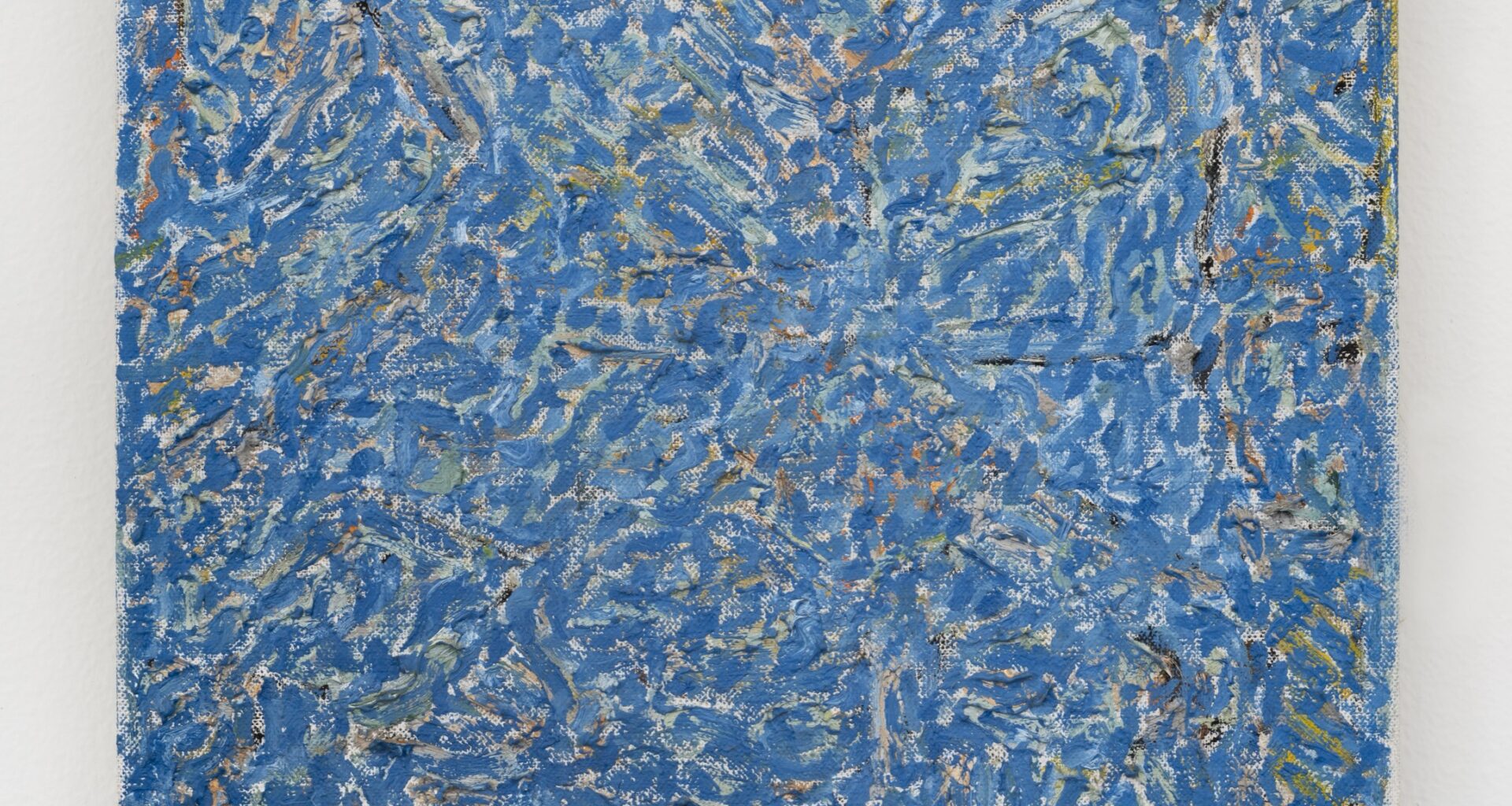
Tomorrow isn’t Yesterday
Jane Lombard Gallery
September 9–October 24, 2026
New York
Remarkably, Howard Smith proves himself to be, in this vast, punctilious retrospective, more than a painter of considerable subtlety, but also a practitioner of various genres that together write his place in the abstractionist art history of the twentieth and twenty-first centuries. He is as much a sculptor, who, as he builds with color creating layered imagery, is a poet able to describe in words the weight of his paintings and what constitutes them. He is something of a musician, as he generates motion and emotion with color intensity gradually emerging. Not least, he is a psychologist, as he seems to parse moods and attitudes through subtle tonalities.
Like confetti, his paintings seem to think themselves into shape as they emerge variously actively and calmly. The action in Smith’s paintings is in revealing how works are put together—how they are assembled, shape upon shape. At first, given the multiplicity of small, irregular forms, one is tempted to suggest that the components of composition are compulsive creations rather than carefully thought-out compositions and elegant designs, which they indeed are.
Enriched by abundant allusions, whether intended or not, the paintings and works on paper call to mind a plethora of associations, curiously extending from moody landscapist John Constable, with his tight, dense markings and deep understructures, and Jean-Baptiste-Camille Corot, whose dots of color hold and direct our eyes while activating the images and drawing us to look beneath the surfaces. From another angle, we can detect such antecedents as Clause Monet, who shapes with light and air, and with Piet Mondrian, who takes us on dances with jazz and color, and then sometimes with Jasper Johns and his hatchmarks. Not least, paintings such as the oil-on-paper Red Shape (1966), can’t help assuming prominence in this gathering by virtue of intensity and slight irregularity in shape that command the eye.