
A modest two-room auto shop on Boston Road in the Bronx once restored cars for Franklin D. Roosevelt, Woodrow Wilson, and Nelson Rockefeller, and now a photograph capturing that legacy hangs inside the newly renovated Waldorf Astoria New York. The image, a 1926 Rolls-Royce Silver Ghost photographed at the old Reuter’s Coach Works garage at 4067 Boston Road, is the work of historian John J. O’Leary IV, who has spent years piecing together the forgotten story of his wife’s family business.
From Junkyard Roots to Presidential Clients
Gustave “Gus” Reuter established Reuter’s Coach Works in the Bronx in 1929, according to the Bronx Times. The shop went on to develop a nationwide reputation for automobile restoration, painting, upholstery, and woodwork, serving a client roster that read like a who’s who of mid-century American wealth and fame, including opera singer James Melton, Long Island Automotive Museum founder Henry Austin Clark Jr., racing figure Briggs Cunningham, IBM World Trade Corporation president Arthur K. Watson, writer Ken Purdy, and Nelson Rockefeller. Vehicles belonging to Franklin D. Roosevelt and Woodrow Wilson also passed through the shop’s doors, the Bronx Times reports.
Reuter’s own path to the business began on less glamorous ground. His father-in-law operated a junkyard in the Bronx, and Gus Reuter estimated, as reported by the Bronx Times, that millions of dollars’ worth of automobiles, adjusted for inflation, were ultimately destroyed there. That early exposure to cars, salvaged and scrapped alike, set the stage for a workshop that would later be trusted with some of the rarest automobiles in the country, occupying just two rooms that held two or three cars at a time, according to the Bronx Times.
How Word of Mouth Built an Elite Clientele
The shop’s reputation among wealthy collectors traces back to a story involving Sebring 12-Hour Race founder Alec Ulmann, who discovered Reuter’s Coach Works in the 1950s after a Manhattan garage accidentally left an invoice inside his Hispano-Suiza revealing that the Manhattan shop had doubled Reuter’s fee, according to THE SHOP Magazine. Ulmann began bringing his own cars directly to Reuter and referred other high-profile collectors, including opera singer James Melton. Melton, one of America’s most famous tenors and classic car collectors during the 1940s and 1950s, entrusted Reuter’s with restoring roughly 100 of his 150 vintage automobiles, and the two men became close enough that Melton traveled to the Bronx every Christmas Eve to sing for the Reuter family, per the same magazine account.
Henry Austin Clark Jr., founder of the Long Island Automotive Museum, commissioned Reuter’s in 1949 to restore his rare 1933 Pierce-Arrow Silver Arrow, one of only three known surviving models in the world, as reported by Sports Car Digest. O’Leary has since found receipts documenting Clark’s enlistment of Reuter’s to save the car, the Bronx Times notes, and the Pierce-Arrow was eventually auctioned through RM Sotheby’s for $3.74 million in New York City in 2015. Other landmark Reuter projects included the 1932 Marmon Sixteen restored for Daniel E. “Hap” Motlow, chairman of Jack Daniel’s Distillery, and Arthur K. Watson’s 1930 Duesenberg Model J, both cited by RM Sotheby’s as landmark examples of American Classic Era coachwork.
A Family Archive Rescued From Obscurity
O’Leary began preserving the history of the Reuter family workshop after he and his wife inherited boxes of family archives, the Bronx Times reports. He has since contacted former and current owners of vehicles serviced by Reuter’s Coach Works, gathering documentation that has made him a go-to resource for major auction houses. O’Leary serves as the official archivist for Reuter’s Coach Works, providing archival research assistance to RM Sotheby’s, Bonhams, and Bloomberg Intelligence, according to Westfair Communications, which also notes he has taught business and strategy at universities including Denver and Hartford.
That scholarly work recently earned wider recognition. O’Leary was selected to present research on rediscovered archives from the 1940s Melton Museum at a Fall Meeting of the New England Historical Association at Fairfield University, per a release from the New England Historical Association. The Melton Museum in Norwalk was one of America’s earliest car museums, underscoring how O’Leary’s research connects multiple threads of lost Connecticut and New York automotive history.
The Photograph Behind the Waldorf Exhibit
The image now on view captures a 1926 Rolls-Royce Silver Ghost at Reuter’s Coach Works as the car was being shipped back to its owner, O’Leary told the Bronx Times, adding that Bronx restorers were sought out specifically for the quality of their work. That particular Rolls-Royce was restored by Reuter’s in a custom Reuter Red finish, was exhibited at the San Antonio Museum of Transportation from 1979 to 1994, and was later auctioned by RM Sotheby’s in London in 2016, according to the auction house’s own lot history.
O’Leary’s photograph will be displayed at the official MvVO ART gallery through November 30, presented in conjunction with the 2026 MvVO ART Show at the Waldorf Astoria New York, per the Bronx Times. The exhibition itself ran along the Peacock Alley Corridor at the newly renovated hotel from September 21 to 27, organized in partnership with Guerlain Wellness Spa to coincide with Armory Week, according to JustLuxe.
What’s Left on Boston Road
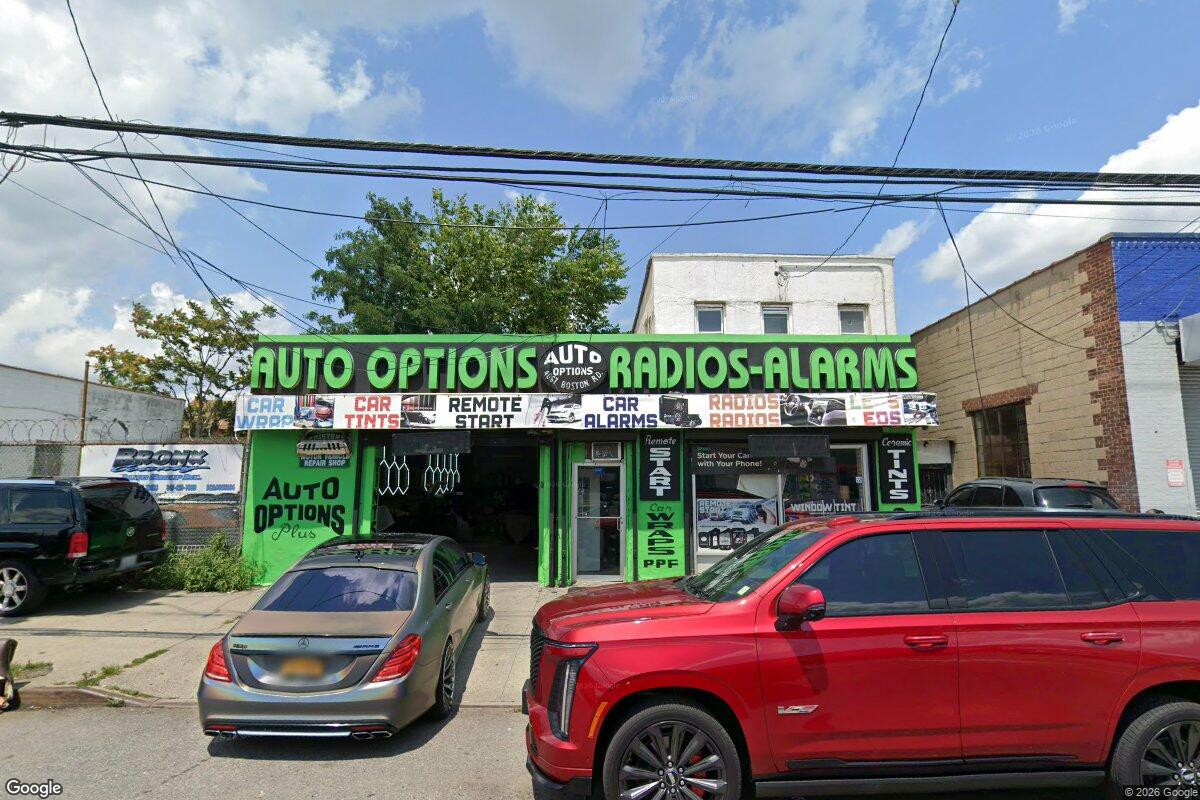
Gus Reuter died in 1986, and his sons, Richard and Robert Reuter, are now retired, the Bronx Times reports. The physical building at 4067 Boston Road still stands today, currently occupied temporarily by an auto parts store. O’Leary is now seeking to have the structure preserved as a historical place, according to the Bronx Times, and is also working on books about Reuter’s Coach Works and the family’s automobile-restoration legacy.
O’Leary has said Gus Reuter’s work was considered flawless and demand for it was high, a reputation that helped push the broader trade toward more standardized restoration practices. Vehicles that once rolled out of the cramped two-room Bronx garage remain on display in museums and private collections nationwide, a scattered but lasting testament to a workshop that, for more than six decades, quietly outfitted some of the most recognizable names in American business, politics, and entertainment.