
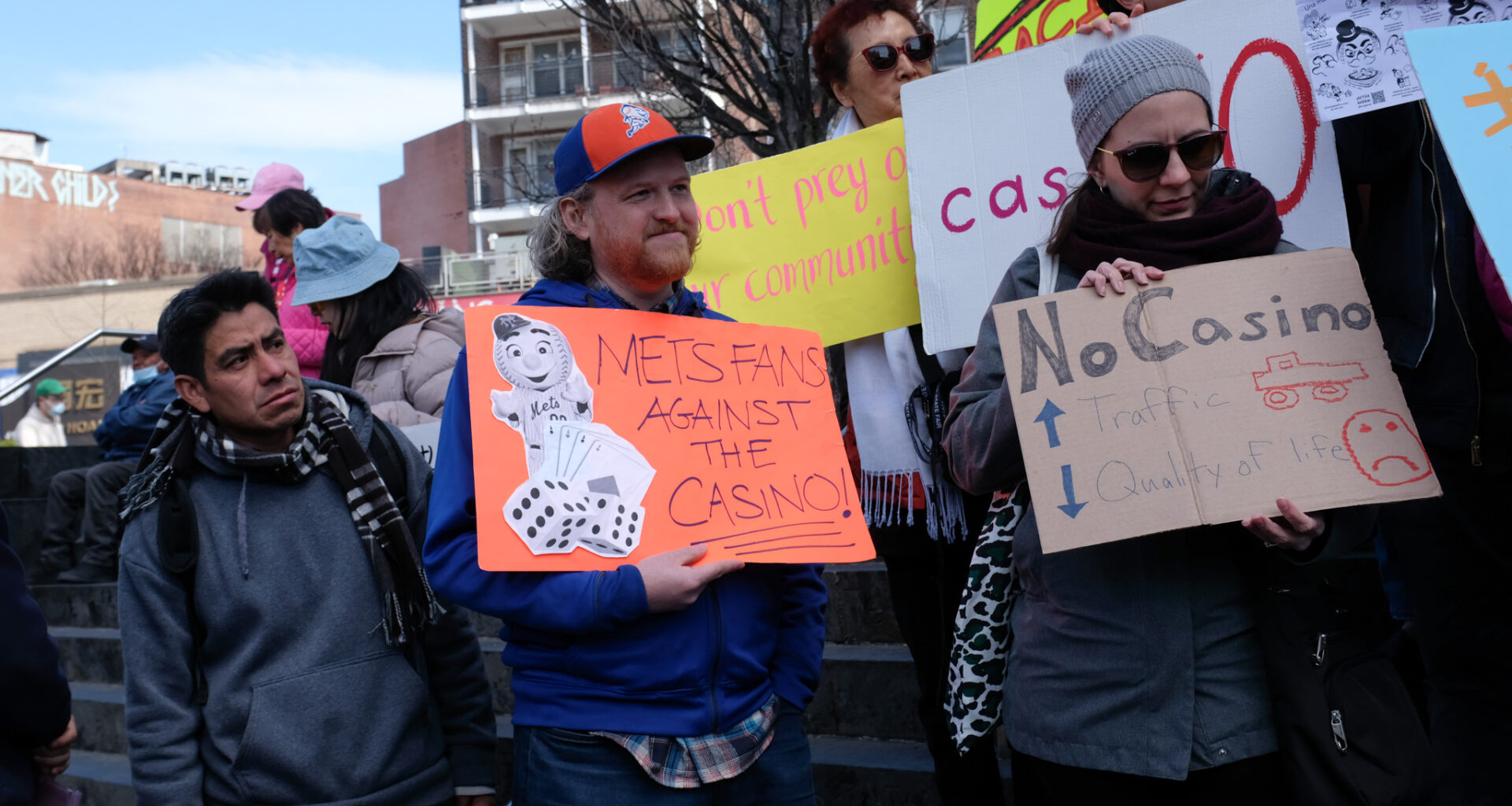
The city’s former parks commissioner had serious concerns about the proposed Metropolitan Park casino in Queens before it was approved by the state, noting the potential to increase flooding in the area and restrict parks access, documents shared with The City Reporter show.
Sue Donoghue, who left the Parks Department as commissioner in June 2025, wrote her fears in an internal November 2024 memo which was prepared for the agency’s capital division to submit to the Public Design Commission. The commission is still in the process of approving specific elements of the project, and held another hearing Tuesday.
The state gaming commission approved the casino project alongside the nearby Resorts World in Jamaica and Bally’s in The Bronx last December. Construction is underway at the parking lot surrounding Citi Field, where the 50-acre project will be built.
To win approval for Metropolitan Park, on the site of a Citi Field parking lot, Mets owner Steve Cohen agreed to pay a $500 million fee and hundreds of millions more in anticipated tax revenue, along with a promise to invest more than $8 billion, in exchange for the 30-year gaming license.
The site of the future casino on the parking lots around Citi Field are legally parkland, and required state legislation to allow development.
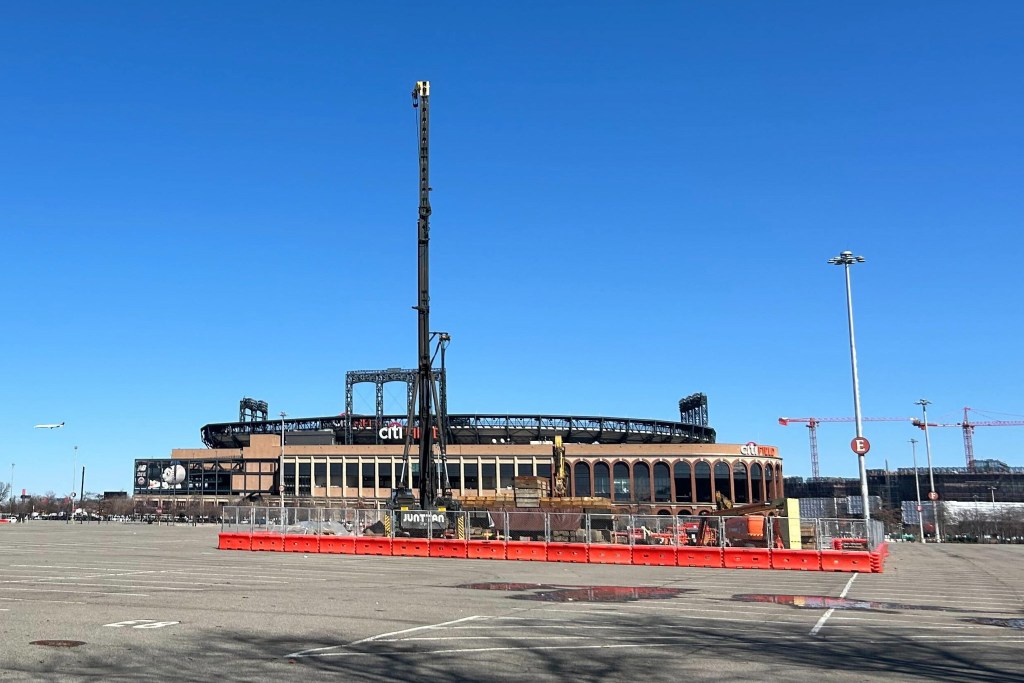 A construction crew uses a boring machine in the Citi Field parking as part of Steve Cohen’s casino project, March 28, 2025. Credit: Katie Honan/THE CITY
Metropolitan’s community outreach was broad, including multiple meetings and donations to local organizations. They retained 11 separate lobbying firms, spending more than $1.6 million in 2025, according to the city’s lobbying report.
Metropolitan Park is centered around a casino to be operated by Hard Rock International, but also includes an entertainment complex, a hotel, a parking structure and parkland.
Donoghue, though, said the proposed park didn’t “fully align” with city parks design standards, according to the memo.
She also shared concerns over accessibility to the new park, its maintenance, when it would be open, and how it could integrate with Flushing Meadows Corona Park, the borough’s largest.
“We are supportive of the creation and development of public open spaces and recreation opportunities in this location,” she wrote.
“This masterplan includes primarily passive use of green space and a limited mix of active recreation spaces,” she wrote. “It lacks fundamental qualities that would make it a true asset to the local community and the city overall.”
She continued that “as designed, some aspects of the masterplan may make the visitor experience of those who use and travel to Flushing Meadows Corona Park worse.”
Whose Park?
In her memo, Donoghue asked the developers to “share examples of thriving and welcoming public open spaces next to casino resorts,” noting the Parks Department hadn’t found any good existing examples.
Donoghue also expressed her concerns that the land for the project has one of the “highest subsidence rates in the city,” which measures sinking due to shifts in the Earth. The area was mostly wetlands up until the 1900s.
The project’s developers began “exploratory boring” on the site in April 2025, before the casino was approved, as part of its development.
And Donoghue also noted that the proposed park around the complex could be closed to the public as many as up to 200 days a year, depending on what was happening at Citi Field or the casino. The construction was also set to cut down 575 trees, she noted.
Karl Rickett, a spokesperson for Metropolitan Park, told The City Reporter on Tuesday that the park is expected to be open year-round.
“This will be a New York City public park owned by the city,” he said in a statement. “Maintenance will be done and paid for by Metropolitan Park. Hours of operation will be determined by the Parks Department, and we expect it to be open 365 days a year.”
He did not confirm or deny the destruction of existing trees, saying the 25 acres of green space will include planting more than 1,000 trees.
Donoghue, who is now the head of the Brooklyn Botanic Garden, declined to comment.
MORE: Follow The City Reporter’s Coverage of NYC Casinos
The city’s Public Design Commission, which authorizes certain elements of new designs and construction, held an hours-long meeting at City Hall on the project Tuesday as part of its preliminary review.
The commission still had questions and concerns on various design elements, like glass on the hotel and entrances and exits. The commission voted unanimously to continue holding hearings on the project, delaying it.
In public testimony, supporters of the project praised the company’s investment in Queens and highlighted not the casino but instead the other aspects, like the park and entertainment complex.
Former City Councilmember Costa Constantinides, who is now the CEO of Variety Boys & Girls Club and a longtime supporter of the project, said he looked forward to the family-friendly aspect of the complex.
“I know what’s there now — seeing it now it’s truly a parking lot, it’s not parkland by any stretch of the imagination,” he said. “It’s an asphalt parking lot that attracts heat, makes our community hotter.”
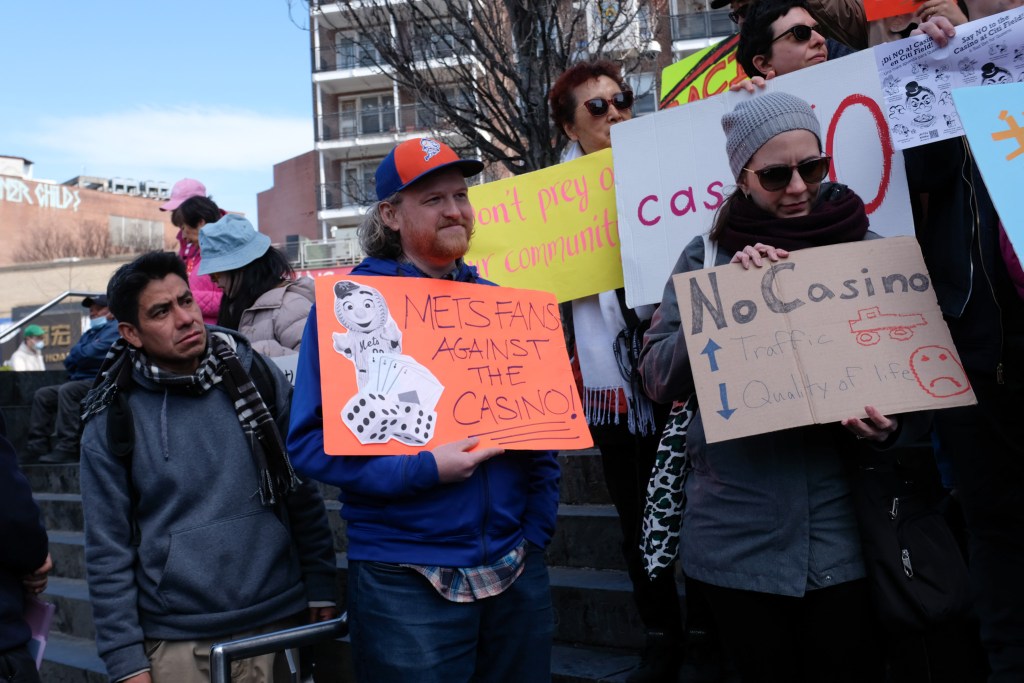 Neighborhood advocates rally at the Flushing Public Library against the proposed casino next to Citi Field, March 28, 2025. Credit: Katie Honan/THE CITY
Constantinides’s organization was selected to operate an upcoming community center in Jackson Heights, which was funded with a $10 million donation from Metropolitan Park. Hundreds of local residents later signed a letter expressing concern over the casino’s involvement in the community center.
Those opposed to the project testified for hours about their concerns over gambling, which they found predatory, and fears of increased flooding and traffic.
Naveed Ahmed, a musician from Woodside, said the casino was a threat, particularly to immigrant communities.
“In a time where New Yorkers, let alone all Americans, are crushed by record-high rents and cost of living, it is simply unethical to extract from them further by building a casino,” he said.
Related