
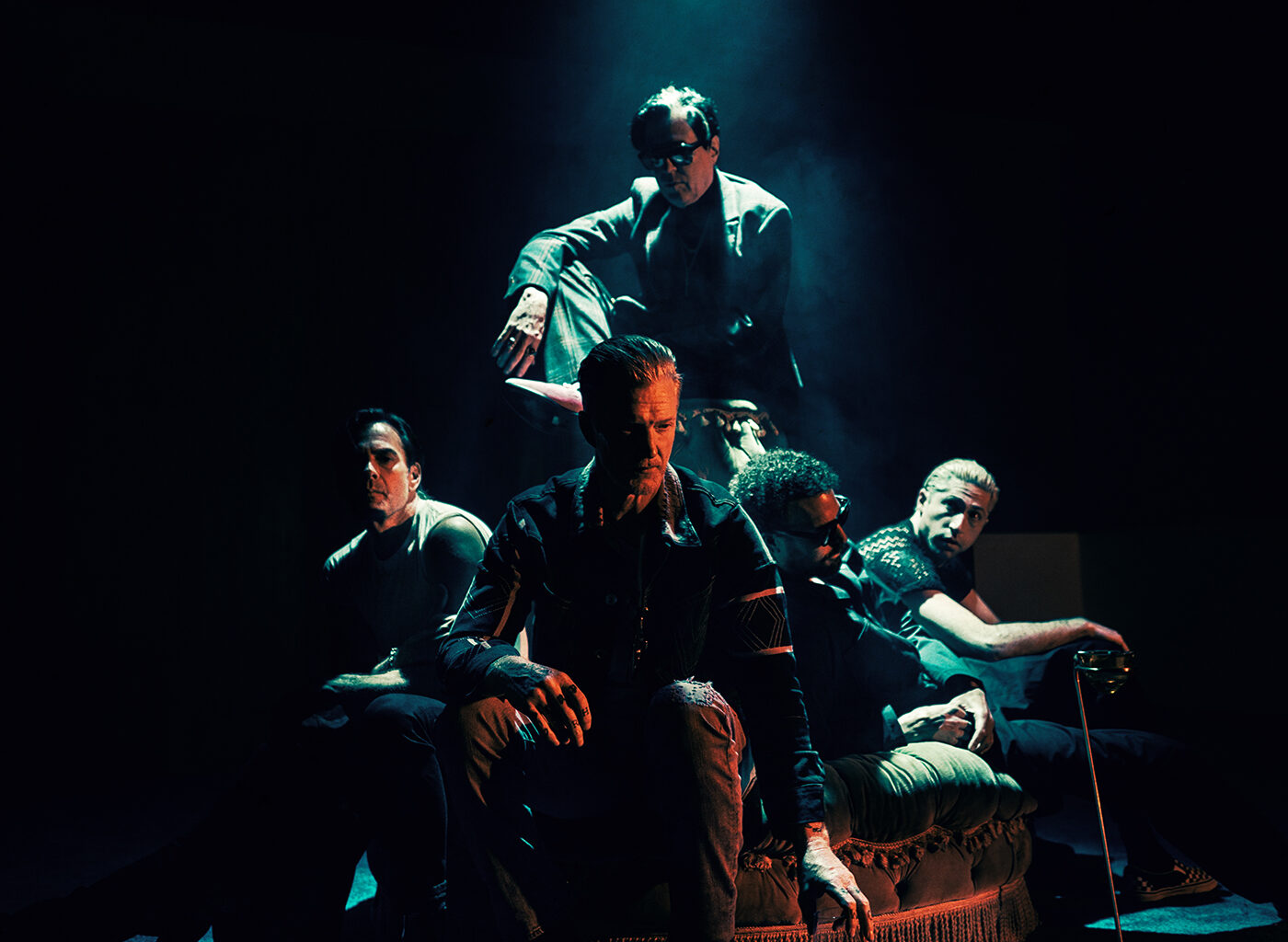
For many of us who have a faint aversion to heavy rock, Queens Of The Stone Age have long occupied a strange loophole. On paper, they ought to repel: the bulldozing riffs, the desert-rock machismo, the leather-jacketed sneer. And yet the songs slip past the defences. Beneath the fuzz and menace, Josh Homme has always had the instincts of a classic pop craftsman making MOR in disguise – decisive chord changes, gleaming hooks, tight structures, middle-eight pay-offs – dragged through a heavy-rock filter and left out in the sun to warp.
It’s true of their biggest songs. “No One Knows” has the melodic snap of vintage radio rock; “Go With The Flow” turns motoric velocity into power-pop; “Make It Wit Chu”, for all its leer, is essentially a soft-rock seduction ballad. On their most recent stadium tour, QOTSA’s walk-on music was “Afternoon Delight” by the Starland Vocal Band, and much of their new album, Perfecth, seems weirdly reminiscent of that guiltiest of guilty pleasures.
The two singles suggest its range. “Easy Street” is a deceptively sunny piece of major-key flamenco, built around acoustic guitar and handclaps, with outlaw country singer Nikki Lane shadowing Homme’s vocal. The lyric, however, is a catalogue of emotional dysfunction: drinking, violence and self-sabotage offered as jokes by a narrator who knows he is his own worst enemy. “Insignificant Other” is more sumptuous: Wurlitzer piano, funky guitar, falsetto vocals and 1970s chord changes wrapped around a break-up song. Homme sneers at his ex’s “psychobabble” and birth charts, but eventually arrives at something almost tender: “Letting go of you is beautiful.”
That pattern repeats across Perfecth. Homme’s lyrics are often as sardonic and surreal as ever, but the cynicism increasingly feels like self-protection. Underneath are lonely narrators who want connection and are embarrassed by how much they need it.
“It’s Only Love” opens the album as a comically doomy, drumless tango, embroidered with sighing violin. Its narrator imagines himself throwing himself under trains (as field recordings of trains rattle past us), then dismisses the cause with a shrug: “It’s only love.” “Phantom Limb”, by contrast, is a sturdy major-key rocker, full of country harmonies and chunky grunge chords, but its emotional core is startlingly plain: “I need help”, “I need you here”. The missing person becomes the phantom limb – gone, but still felt.
Other songs approach dependence from different angles. “From The Cliff”, built around clawhammer-style acoustic guitar and close harmonies, is the most naked love song here, all sunlight, skin and a shared leap “from the cliff of love into the blue”. “Mono” is woozier: a dreamy jazz waltz hovering on a single major-seventh chord while strings and keyboards drift around it. Its imagery is cryptic but the plea is simple: come home, don’t leave me alone.
Even the fuzz-bass-heavy “Where The Goth Girls At?”, which has the title of a novelty song, is more affectionate than mocking. Its suburban goths apply make-up at the mall, smoke cloves, lace themselves into corsets and vomit while somebody holds back their hair. They are inventing their identities because ordinary life is too sterile to bear: “Never felt so alive as the day I almost died”.
“Sunday” broadens the frame. Originally written for Iggy Pop’s Post Pop Depression, a 2016 LP co-written and produced by Homme, it is essentially a late-1970s Bowie pastiche: with clipped Carlos Alomar-style guitar, grinding George Murray-esque bass, pounding toms and Homme dropping into his best Bowie baritone. The lyric turns from romance to work and consumerism: the narrator’s house is “as slick as a senator’s statement”, his job “a masquerade of recreation”. Sunday becomes the one day on which he does not have to prove himself.
The closer, “Run Away From The Mob”, builds from a stark guitar figure into a minor-key rocker driven by a Motown beat (courtesy of Dave Grohl, a vestige from the Like Clockwork sessions from 2013). The lyric attacks tribalism, public shaming and collective punishment. Yet this is not so much a lecture on cancel culture but a celebration of attachment: against the mob’s appetite for rejection comes a private promise of loyalty.
Homme’s characters sneer at love, work, therapy, sobriety and society, only to keep discovering the same embarrassing fact: they need other people. The sarcasm is camouflage. So, increasingly, is the heaviness. These songs are full of distorted bass, big riffs and deadpan menace, but all come with a 1970s studio rock sheen: you can imagine much of this drifting from a Californian car stereo in between Steely Dan, Fleetwood Mac, Queen and the Doobie Brothers. The music keeps revealing the emotional truth that the lyrics are trying to disguise.