
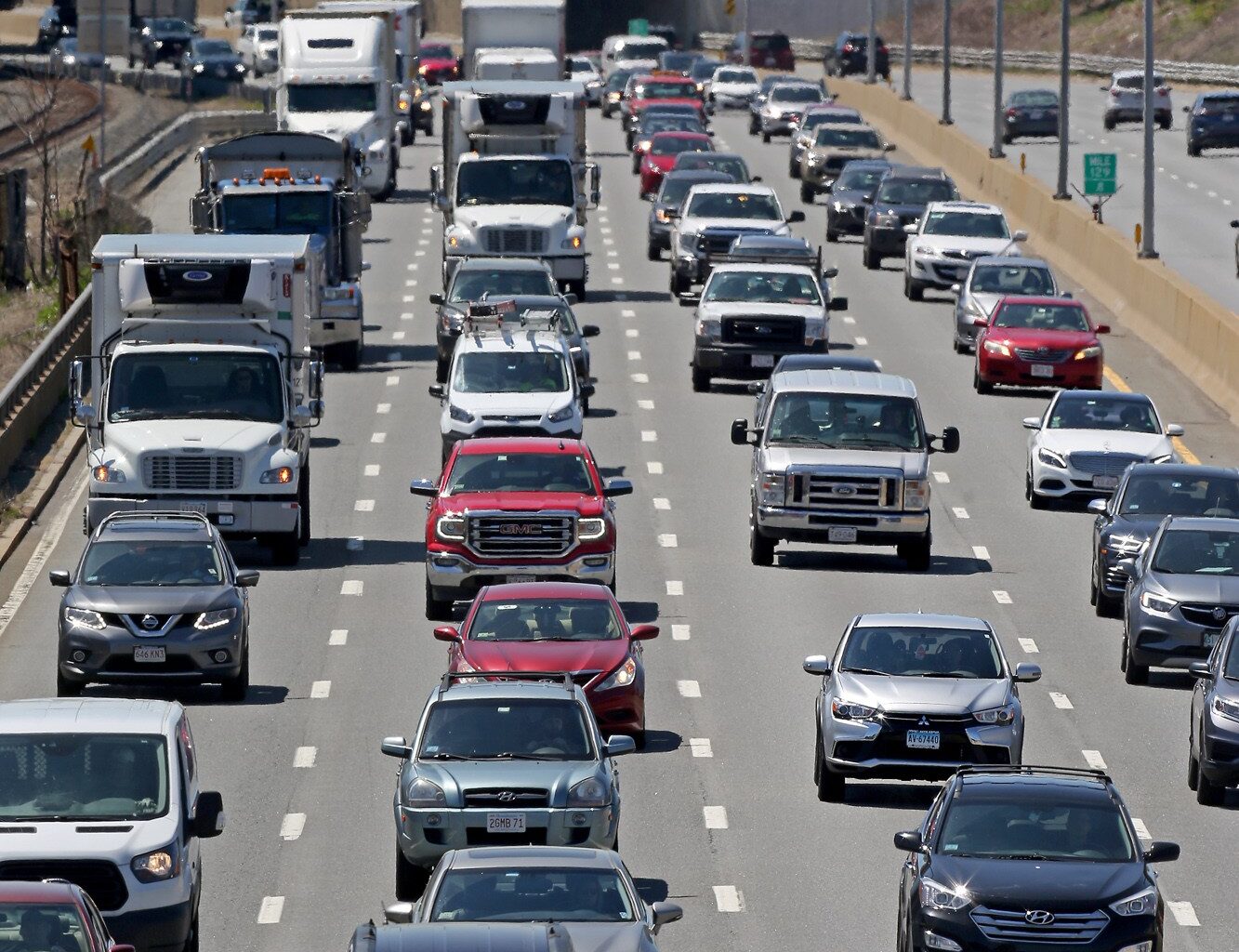
Boston Mayor Michelle Wu said the city plans to keep exploring congestion pricing and is deploying her team to New York “in a couple of weeks” to learn more about how the contentious tax on drivers has cut traffic in Manhattan.
Wu said congestion pricing has “been a huge source of funding for public transit improvements” in New York City, and wants to learn more about how Boston may benefit from a similar tolling system that charges drivers entering downtown.
“We have been in touch with New York,” Wu said Wednesday on GBH’s Boston Public Radio. “There’s a delegation going down in a couple weeks that’s going to represent city, state, business, Transportation for Massachusetts, and some other organizations are leading that.
“So, from everything I hear from our colleagues in New York, it’s served multiple purposes. It’s obviously very big and complicated and has to fit the situation, but we’re going to learn more,” Wu added.
Speaking with reporters outside the station, Wu said she won’t be part of the delegation traveling to New York, but members of her team will be going. She didn’t name specific employees.
Wu emphasized that the city does not have concrete plans to implement congestion pricing at this point in time.
“There’s not a specific plan on the table,” Wu said. “It’s really just learning and understanding what the real before and after has been for New York. They’re a very high-profile example of finding ways to cut traffic, make air quality better … so we’re sending our team to hear it directly.”
However, the trip advances the mayor’s idea to implement a potential congestion tax since it was floated last April in the city’s climate action plan as a way to discourage driving.
In New York, a passenger car entering Manhattan at or below 60th Street is $9 during peak hours with an E-ZPass.
A Suffolk University/Boston Globe poll released in June found 69.2% of respondents would not be willing to pay to drive downtown if there was less traffic.
When asked about polling, Wu indicated the opposition wouldn’t factor into the city’s plans.
“Everything should be on the table when it comes to finding ways to fix traffic and have the quality of life that we all deserve,” Wu said. “We have a lot of challenges in Massachusetts. We want to be a community that is growing rather than one that’s losing population, and we have to find ways with every possible idea to understand if there’s any benefit that could apply locally too.”