
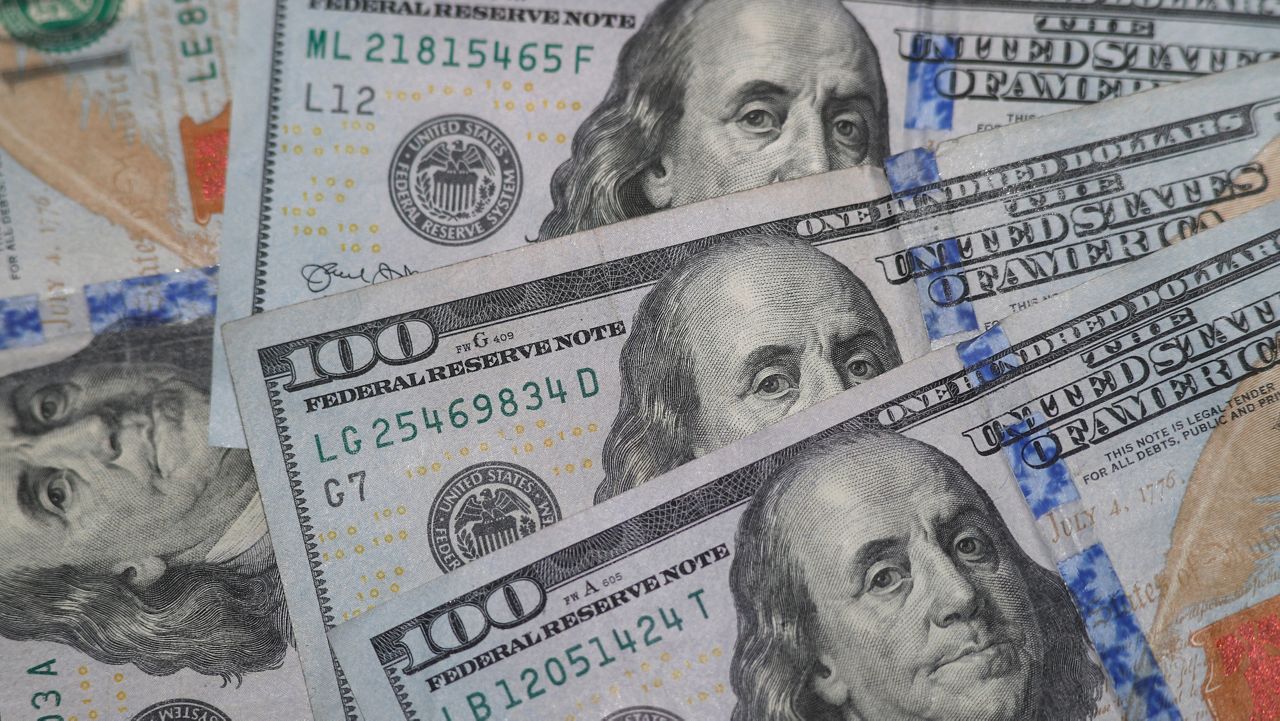
As candidates finish the final leg of their campaigns heading into Election Day, there’s a surge of big donors pouring millions into both state and national races.
But what about small campaign donations and their impact on helping candidates get across the finish line?
Spectrum News 1 spoke with some New York candidates who are hoping to step into the next chapters of their political careers about how small donors have impacted their campaigns.
“When somebody gives $5 to your campaign, they’re like 90% more likely to vote now. They’re invested,” said Maurice “Mo” Brown. “You get that buy-in.”
Brown, an Onondaga County legislator, is running against Republican Shawn Fiato to represent New York’s 129th Assembly District on the Democrat and Working Party lines.
In the June primary, he edged out Democratic incumbent Bill Magnarelli in a race that was so close, it took a week for Onondaga County election officials to announce who won.
As we approach Nov. 3, Brown says small donors are fueling his campaign’s final push.
“I think the small donors they don’t get enough credit because it’s not flashy, but they’ve powered my campaign,” he said. “I would not be here as the Democratic nominee if it wasn’t for small donors.”
“It should be the people that are really motivating these campaigns,” said Virginia McIntyre.
McIntyre, a Monroe County legislator, is running against Democratic incumbent Rep. Joe Morelle in New York’s 25th Congressional District race for a seat in the U.S. House.
McIntyre says she’s rejected PAC money, and her grassroots campaign is funded largely by small donations.
She says she’s also spending money out of her own pocket.
“What we’ve had in donations is less than $50,000, which again it would be a lot for some,” said McIntyre. “It’s not a lot for a congressional campaign. The largest donors we’ve had actually have been there was one that was the max of $3,500.”
Small campaign donations are typically defined as donations that are $200 or less.
In years past, they’ve provide major boosts to campaigns in U.S. elections with the familiarity of online donation platforms like ActBlue for Democrats and WinRed for Republicans.
Marina Pino, counsel for the Brennan Center’s elections and government program, focuses on issues related to money in politics.
“This empowers the small donors to believe they have a fighting chance to be heard by the very candidates that they’re supporting, and at the end of the day when you have more small donors participating in elections, that’s going to make for a more participatory democracy,” said Pino.
In the state of New York specifically, the small donations can add up for a campaign through the Public Campaign Finance Program which matches contributions to candidates running for statewide and state legislative offices.
According to New York State Public Campaign Finance Handbook, the voluntary program matches individual contributions from $5 to $250, “provided the contributor does not exceed $1,050 in total contributions during an election cycle.”
“The matching funds that you would need to qualify as a candidate were pegged towards economic factors that you didn’t have to reach such high thresholds to qualify in poor and less economical advantaged districts,” New York Law School professor Jeffrey Wice said. “So, there was a lot of equity in this.”
The matching funds are only for small individual donors. Other groups like businesses, political action committees and lobbyists, while they can contribute to a campaign, would not be eligible for matching funds.